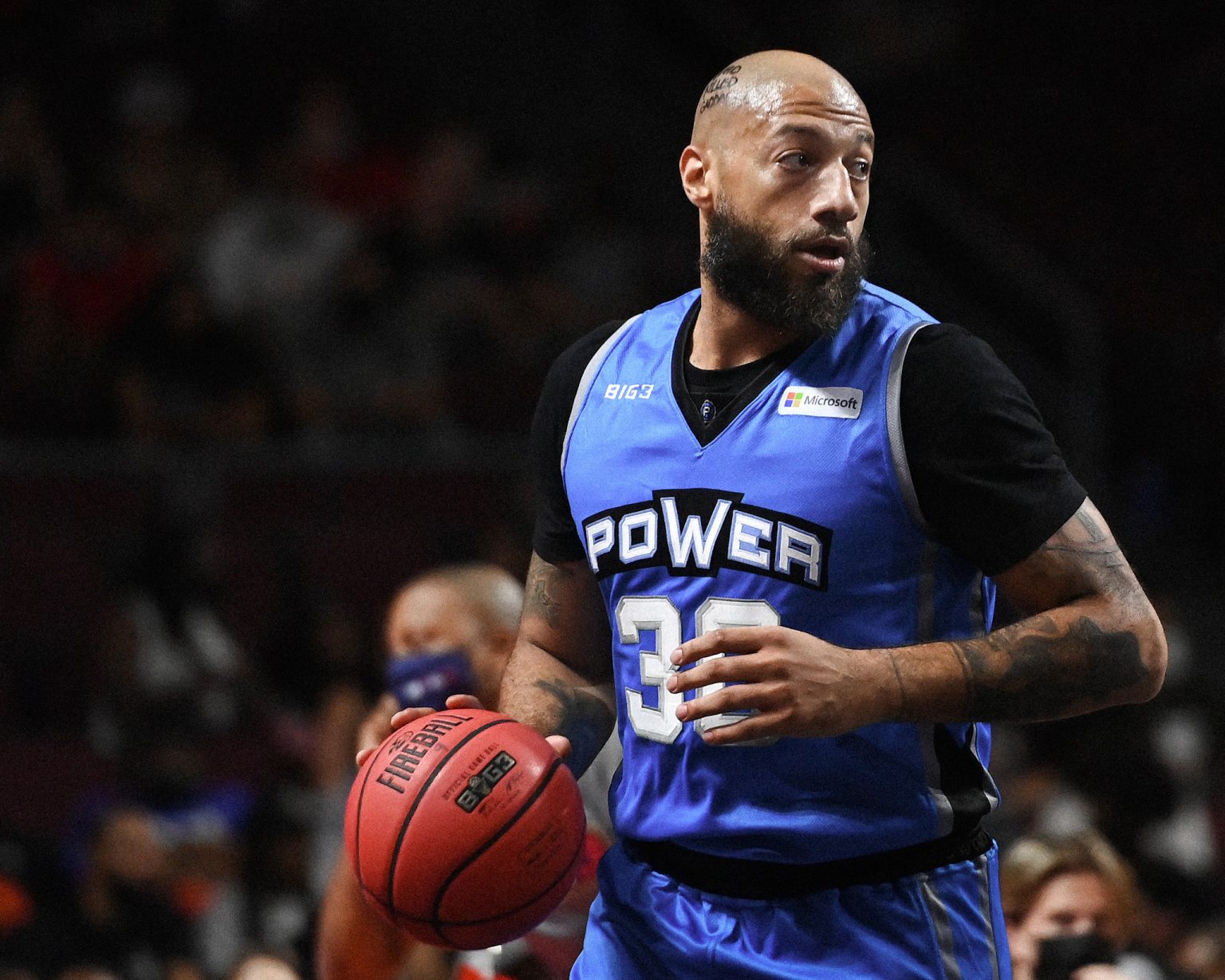
Enes Kanter Freedom spent 11 years in the NBA. He played for the New York Knicks, Boston Celtics and Portland Trail Blazers, stands 2.08 m tall and averaged more than 11 points per game during his career. Now the 34-year-old has announced a new goal: entering the 2027 WNBA Draft. He wants to play in the women’s basketball league as a woman.
Of course, this is hardly an ordinary basketball comeback. Freedom said in a video that his team had examined the women’s league eligibility rules. If self-identification and inclusion are the decisive standards, he argued, then he meets the requirements as well. At the same time, he explicitly stressed that he did not intend to mock transgender people. He merely demanded that publicly stated rules and principles apply equally to everyone.
Shortly afterward, former NBA first-round pick Royce White followed suit. He also declared for the 2027 WNBA Draft and said that he identified as a woman. Freedom’s individual stunt had become a remarkably effective satire of America’s gender debate. The WNBA has so far confirmed neither man as a draft candidate.
Freedom and White are putting the logic of woke self-identification to the simplest possible test: if a person’s declared gender identity is to be respected by society, why should an objective boundary suddenly apply when it comes to admission to the women’s league?
The Joke Works Because of the Rules
The WNBA’s collective bargaining agreement contains a remarkably concise sentence: “Only players who are women are eligible to play in the WNBA.” No further definition or clarification follows. According to the Associated Press, the agreement neither specifies what role biological sex plays in eligibility nor contains more detailed provisions on gender identity.
That certainly does not mean that a simple declaration of identity automatically makes someone eligible to play. But it explains why Freedom and White found an opening in the first place.
The purpose of having a separate women’s league is hardly complicated. Women compete in their own category because fair athletic competition is meant to be protected. If that boundary depends solely on personal identity, the very basis of the category is reduced to absurdity.
The debate thus also touches on what women in sports have fought for over decades: their own competitions, records and squad spots, and the opportunity to compete at the highest level under fair conditions.
A Long-Simmering Debate Intensifies
The question of what constitutes a woman and who should therefore be eligible to play on women’s NBA teams is not new. The debate has intensified considerably in recent months, not least because of Indiana Fever player Sophie Cunningham, who has taken a clear and public position on the issue.
She has spoken out against transgender women participating in women’s and girls’ sports. Her comments prompted demonstrations by supporters and opponents during away games. Other WNBA players and coaches take the opposing position, arguing instead for inclusion and the rights of transgender people.
The Women’s National Basketball Players Association (WNBPA) has also entered the debate. It affirmed its commitment to “justice, equity, diversity and inclusion” while simultaneously saying that it wanted to protect women’s sports. The union said it would not allow itself to be used as a political pawn.
That sounds good, but it struggles when put to a practical test. Freedom and White have turned those grand principles into one small, practical question: Who, exactly, is allowed onto the court?

The WNBA Has to Pick a Side Now
The league is now responding. WNBA Commissioner Cathy Engelbert sent teams a memo before the weekend acknowledging that the question of transgender athletes’ participation is receiving increasing attention. The league intends to address the issue “thoughtfully” and “respectfully”. At the same time, Engelbert described the integrity of the game and fair competition as top priorities.
A working group of team presidents and general managers is due to address the issue this week. Further discussions and so-called listening sessions have also been announced. The players’ union will also be involved, as the league’s eligibility rules form part of the collective bargaining agreement. The provocation has therefore already achieved its purpose.
The WNBA can decide that biological sex is the determining criterion for eligibility in its women’s league. It can establish specific rules for transgender players or it can explain which other criteria it uses to determine who falls within the definition of “women”.
What is becoming increasingly difficult to maintain is the comfortable middle ground favored by sports organizations and other social institutions. They advocate broad tolerance and the inclusion of multiple genders in the wider social debate. Yet when sporting rules require separate categories for men and women, they often leave the boundary between those categories unclear.
Kanter Freedom and Royce White needed neither a lawsuit nor a lengthy political campaign to force this debate into the open. They have now put those responsible on the spot with a simple announcement: they will show up if nobody stops them.
Perhaps, in the end, it will be men who save elite women’s sports.