Amid Favorable Political Winds, Reform UK Is Suddenly Adrift
For Reform UK, problems are growing – just when the party’s opportunity should be clearer than ever. Can Nigel Farage, written off many times before, turn it around?
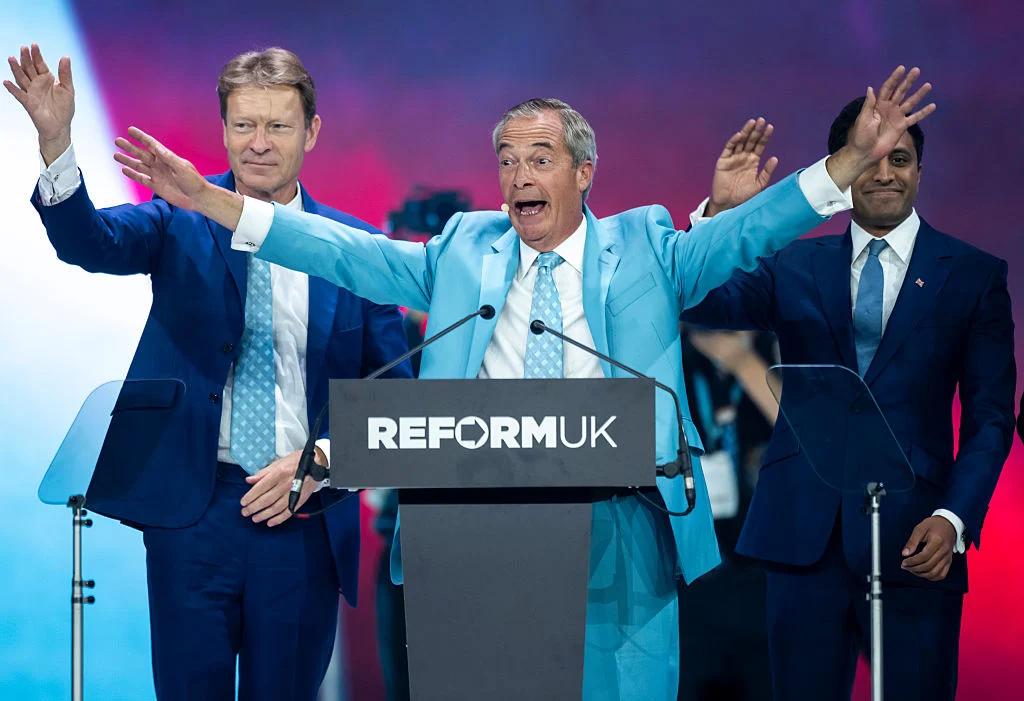
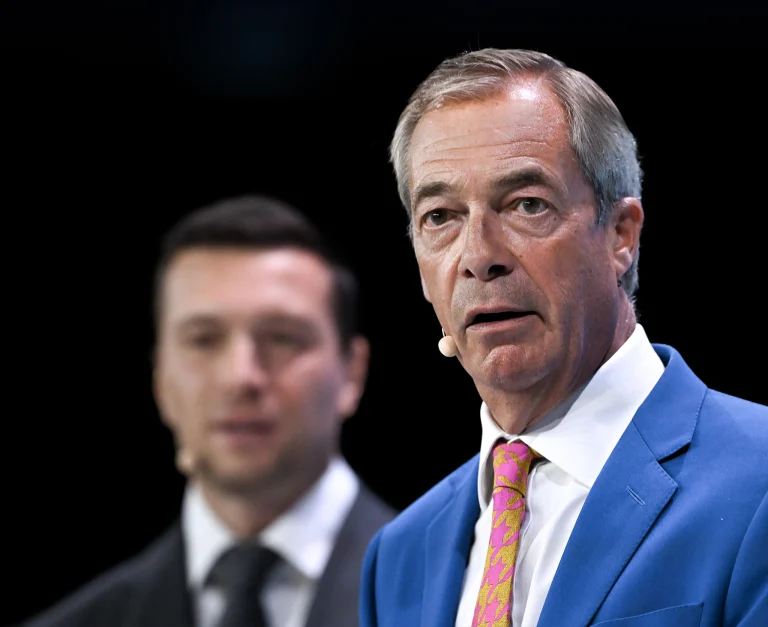
For Reform UK, a recent series of scandals and reversals has stalled momentum. Photo: Anthony Devlin/Getty Images
|
The most devastating critique of Reform UK in the aftermath of its sub-optimal party conference did not come from one of Nigel Farage’s many enemies on the political left. It came instead from somebody who should be one of the party’s most natural supporters.
Writing in the highly influential Daily Telegraph, that paper’s associate editor Camilla Tominey – co-host of one of the biggest UK daily podcasts – wrote that “these blokes (and let’s be honest, Reform is a very male outfit) think they’re all so bloody clever, yet they repeatedly remind us of their own idiocy”. She went on to bemoan the recurring scandals around the party’s finances, fundraising and personnel, summing her views up in a headline that read: “Amateurish Reform is letting down the British Right”.
Little, if anything, that she wrote is obviously untrue.
Reasons for Concern
Looking at the Reform project, there is certainly good reason to be concerned. The most obvious issue is that the party appears, despite a very favorable political environment, to be stuck.
The British Labour government is, objectively, in a bad place. It is marred on several fronts by crises, some – such as Britain’s declining fiscal position and the jittery bond markets – of its own making. Others, like the small-boats immigration crisis, were largely inherited. The new prime minister has made a whole series of promises that appear deeply at odds with economic reality, while public anger continues to grow.
The opposition Conservatives, meanwhile, are compromised. Burdened with the legacy of their chaotic period in government post-Brexit and denuded of much talent, the party’s brand is deeply unpopular, and its leader, Kemi Badenoch, has struggled to cut through with the public in the way that Farage routinely does.
A Polling Reverse
And yet, amid this inviting sea and favorable winds, the good ship Reform is, per the polls, badly marooned and even reversing.
In June of this year, a survey by the opinion pollster More in Common gave Reform 30% of the vote and a 10-point lead over both Labour and the Conservatives. The most recent survey by the same pollster, taken at the end of August, has Reform on just 22%, four points behind Labour.
That some of this is a “Burnham bounce” for Labour’s new prime minister is likely. But that does not explain all of the reversal. Reform’s own difficulties have also played a significant role.
For Farage, an Image Problem
The party leader has seen his support collapse: asked by YouGov to describe the Reform leader in three words, fully 71% of Britons on 1 September used at least one negative term. This does not make him, by any measure, historically unpopular – but it is evidence that Farage has sunk considerably in the public’s view, going from political outsider to being seen as just like all the rest of them.
In that cause, his by-election stunt cannot have helped. Convincingly accused of having accepted a £5m ($6.8m) donation from a supporter into his personal bank account and facing a parliamentary standards investigation, Farage chose to resign and trigger a by-election, which he then won. However, despite that victory, a larger point was conspicuously ignored by Reform supporters: Farage’s “man of the people” appeal is at odds with the basic reality that most Britons do not have friends willing to give them £5m personal gifts.
Mo’ Money, Mo’ Problems?
On the eve of Reform’s conference, another scandal broke: this one – a sting operation by a partisan and radical left-wing group, eagerly promoted by the equally partisan Channel 4 – caught Reform officials seeking large donations from somebody posing as a conduit for foreign funding. But perhaps more damaging was the perception of sleaze: one of the officials, close to Farage, chose to brag to the supposed donor that should the donation be made, the donor would have a friend in Downing Street, working alongside Farage. Again, not a privilege that most ordinary people would enjoy.
Populism, at its purest, casts the politician as vox populi: the voice of the people. For Reform, financial scandals of the nature that it has suffered this summer make that harder to sustain. Is the party the voice of the people, or the voice of wealthy and in some cases secret donors? Is the party something different, or is it just as compromised as its competitors?
These mistakes, as Tominey explains, have been devastating to Reform’s credibility. And they come amid a bigger strategic challenge.
The Overton Window Problem
On Sky News on 7 September, Reform spokesperson Zia Yusuf was being interviewed by the broadcaster about disturbances and protests outside immigration reception centers in Dover and Portsmouth. The broadcast was then interrupted by one of the protest organizers, who attempted – live on camera – to make a deal with Yusuf in return for the votes of the hundreds of masked men who had taken part in the protests.
https://www.youtube.com/watch?v=Gt2pAsZ0PNE
At the same time, Reform is dealing with the rise of a competitor party – the much more hardline Restore UK, led by former Reform MP Rupert Lowe. Thus, Reform is caught in a political vise.
To its political right, groups like Restore UK paint it as insufficiently tough on migration and other issues, while Farage finds himself forced to condemn actions such as the Dover and Portsmouth protests. To its left, the Conservatives and Labour present it as too extreme for middle-class voters. Given Britain’s take-no-prisoners electoral system, Reform’s path to parliamentary seats means somehow navigating between those two positions without bleeding the votes it needs to come first in hundreds of seats.
Reform Has an Asset: Time
There is, of course, a long time to go until the next UK election. The Labour Party has a large majority in the House of Commons and can stay in power until 2029 if it so wishes. That gives Reform time to correct recent errors and emerge in a more coherent state.
However, time is an enemy as well as a friend. The Conservatives, for one, believe that the more time they have until the next election, the more British voters – amid fiscal and migration crises – may opt for the steady hand instead of the risky bet. The Labour Party, like all governments, believes it may somehow recover. And Reform’s legion of enemies in the media will have longer to dig into its finances and scandals. There is certainly reason to be doubtful that those have all been exposed this summer.
And so, for the most transformative politician since Margaret Thatcher, the architect of Brexit and the founder of UKIP and Reform, this is one of the most challenging periods of Nigel Farage’s long career.
As related parties surge ahead in Germany, France, Italy and Spain, Reform UK appears to be stuck and in reverse. Changing that trend will be one of Farage’s big challenges.
But his political obituary, of course, has been written many times before.
Welcome to the comments section of the Štandard daily. Please take note of our guidelines, comments are moderated by us. You can contact the moderators at support@statement.com.
Participate in the discussion
Comments are available to subscribers only. If you'd like to join the discussion, choose a subscription starting at €6.72 per month.
All comments 0
Register
Comments are available to registered users only. If you'd like to join the discussion, register here.