Raves in the Nave: When the Sacred Becomes a Spectacle
A partnership with legendary nightclub Fabric is bringing electronic music to London’s St Paul’s Cathedral and provoking a fierce backlash.
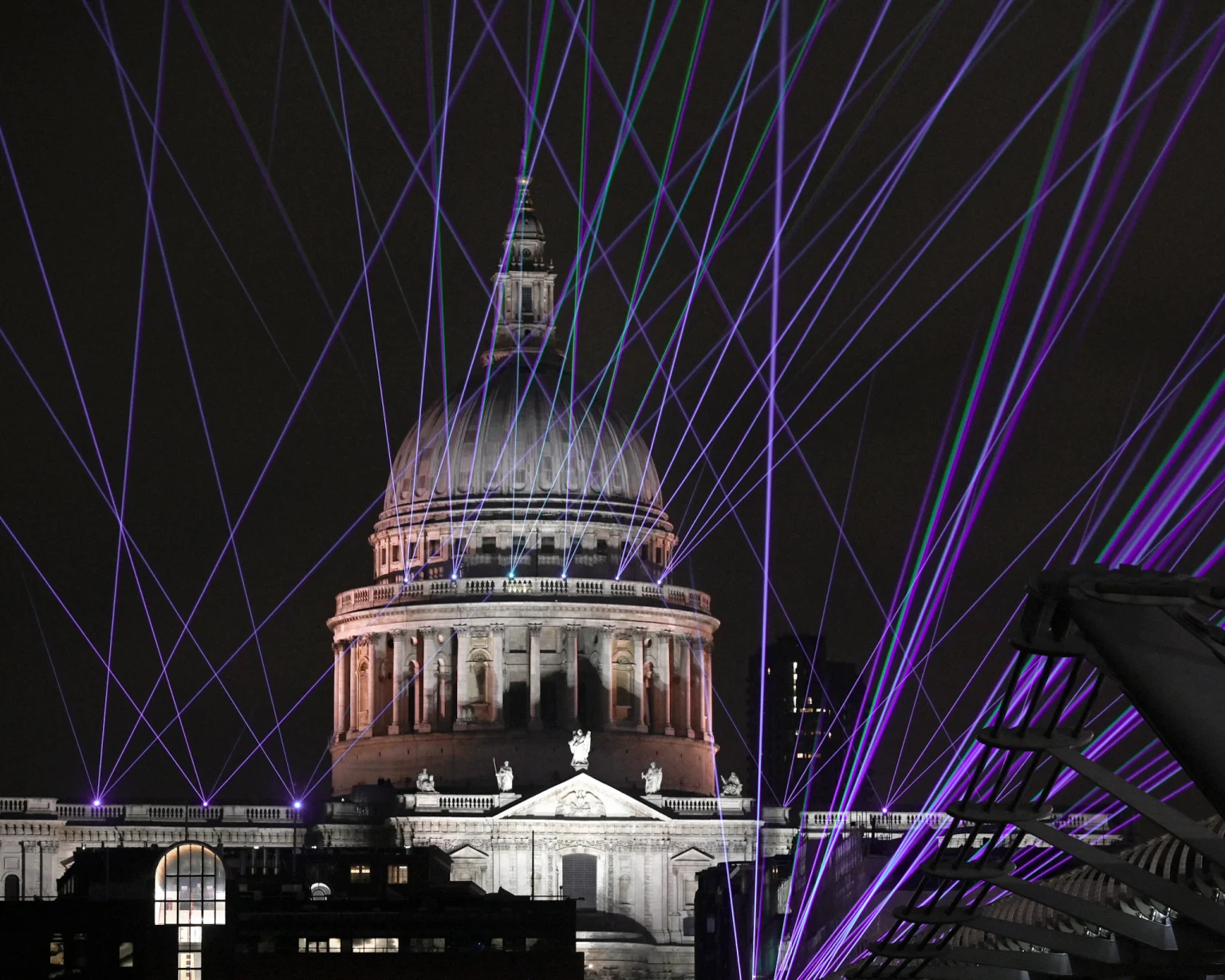
St Paul’s Cathedral. Photo: Leon Neal/Getty Images
|
This is not about turning St Paul’s into a nightclub. But the image is striking enough to have sparked controversy across the Channel: the London cathedral has just signed an exclusive four-year partnership with Fabric, one of the British capital’s most famous electronic music clubs. Through 2030, the club will stage contemporary concerts there, with the first scheduled for 29 October. The artist has not yet been announced.
Rave in the nave? The term “rave” is, strictly speaking, misleading. The events will take the form of seated concerts: audience members will be required to remain in their seats and the events will not take place in the crypt where Admiral Horatio Nelson is buried. But this detail is not enough to soften the blow: an Anglican cathedral more than three centuries old has become the preferred venue for events associated with club culture.
Ecclesiastical Clubbing
How could such a decision have been made? St Paul’s belongs neither to the British government nor to the City of London Corporation. The cathedral is owned by the Corporation of the Cathedral Church of St Paul in London. This ecclesiastical organization is governed by a chapter chaired by the dean and including residentiary canons and additional members. The current framework stems from the Cathedrals Measure 2021, which brought cathedral chapters under the regulatory framework governing Church of England charities.
In other words, the decision to rent out or make the building available for events does not fall under the authority of a minister, the mayor of London or a vote by the Court of Common Council. It rests with the institution that administers the cathedral, subject to the ecclesiastical and heritage framework applicable to it. In this case, therefore, the Church of England is solely to blame.
St Paul’s is far from an ordinary building. Rebuilt by Christopher Wren after the Great Fire of London in 1666 and completed in 1710, it is Grade I listed, the highest level of protection for listed buildings. It also remains an active church and the seat of the Diocese of London. Its status as a cathedral serves as a reminder that its primary function remains “a place of worship and prayer”.
The British context, however, allows for a certain degree of flexibility. Cathedrals benefit from a special heritage protection framework, the “ecclesiastical exemption”, which exempts them from the standard system of listed building consents while subjecting them to their own regulatory framework. The Church of England explicitly states that this framework is intended to reconcile “mission, worship and use by the wider community”.
The door is therefore open to uses other than worship. St Paul’s has long hosted concerts and cultural events. The controversy erupted this time because of the nature of the partner, suggesting that the expansion of such uses may be going a bit too far and that a response is needed before the cathedral becomes primarily a spectacular backdrop for activities that no longer have much to do with religion.
St Paul’s explains that the partnership with Fabric builds on two successful contemporary music events, featuring the Australian singer RY X in 2023 and Patti Smith in 2024. Fabric will now serve as the cathedral’s exclusive partner for contemporary music events through 2030. The cathedral’s leadership says it aims to offer a “carefully curated” program designed in particular to attract visitors who would not otherwise have visited St Paul’s.
“Carefully curated”, is that so? Fabric is a staple of London’s nightlife, particularly its electronic music scene. In 2016, its operating license was revoked following the deaths of two 18-year-olds who had taken the synthetic drug MDMA at the club. An investigation concluded that there were serious shortcomings in the club’s drug screening procedures.
Fabric finally reopened in 2017 after agreeing to new, extremely strict conditions, including ID checks and enhanced security measures. This history partly explains the current outrage. The controversy centers on the association between a place of Christian worship and an iconic brand of London nightlife whose recent history includes a major drug-related scandal.
“Is Nothing Sacred Anymore?”
Nelson’s descendants were among the first to protest. Horatio Nelson, hero of the Battle of Trafalgar, is buried in the crypt of St Paul’s. Peregrine Hood, president of the Nelson Society and a descendant of the admiral’s brother, denounced what he considered a deeply disrespectful use of this historic and religious site. He asked: “Is nothing sacred anymore?” and argued that the issue went far beyond respect for his ancestor.
St Paul’s leadership responds that the concerts will not take place in the crypt and that the audience will remain seated. But the Nelson family’s objection goes beyond that: even without literally dancing on a grave, is it appropriate to transform the nave of a cathedral – which houses the graves of great figures in British history – into a stage for secular performances?
The issue took on a political dimension when London Mayor Sadiq Khan publicly praised the partnership: “Fabric. St Paul’s Cathedral. Name a more iconic duo. Bringing together these two institutions will create a one-of-a-kind experience, pairing world-class music with one of our most special landmarks.”
“London Central Mosque is also an iconic venue. When’s the rave?” writer Douglas Murray immediately retorted.
The question is obvious and legitimate. Transforming a major Muslim place of worship into a venue for a clubbing event would never occur to anyone, and certainly not to Sadiq Khan. By comparison, tolerance for the desacralization of Christian sites has reached highly questionable levels.
Can a Church Become a “Landmark”?
There is a notable semantic shift here. St Paul’s itself presents these events as a way to allow the public to “discover and engage with this historic building in new and exciting ways”. The place of worship first becomes a “historic building”, then an “iconic” space and finally a “landmark”. Yet St Paul’s is not merely a spectacular London landmark, but a cathedral. Its historical and architectural value is inseparable from its religious function.
The "silent discos" at Canterbury Cathedral already sparked intense controversy in 2024, showing that this phenomenon is not an isolated one. A petition against these “raves in the nave” gathered more than 1,600 signatures. With Fabric’s arrival within its walls, St Paul’s crosses a new line, turning the sacred space into the main marketing hook for a cultural experience.
Welcome to the comments section of the Štandard daily. Please take note of our guidelines, comments are moderated by us. You can contact the moderators at support@statement.com.
Participate in the discussion
Comments are available to subscribers only. If you'd like to join the discussion, choose a subscription starting at €6.72 per month.
All comments 0
Register
Comments are available to registered users only. If you'd like to join the discussion, register here.