The issue is no longer an internal matter for a single small Baltic country. It is a question of where contemporary Europe draws the line between the state’s right to protect its security and the individual’s right to freely decide what to believe and which church to belong to.
The Convention for the Protection of Human Rights and Fundamental Freedoms is the most important international human rights treaty on the European continent. It ensures respect for the most fundamental human rights while providing an institutional framework through the European Court of Human Rights. Religious freedom is guaranteed by Article 9 of the Convention, which was adopted by the Council of Europe in 1950. All member states, including Estonia, signed it upon joining the Council of Europe.
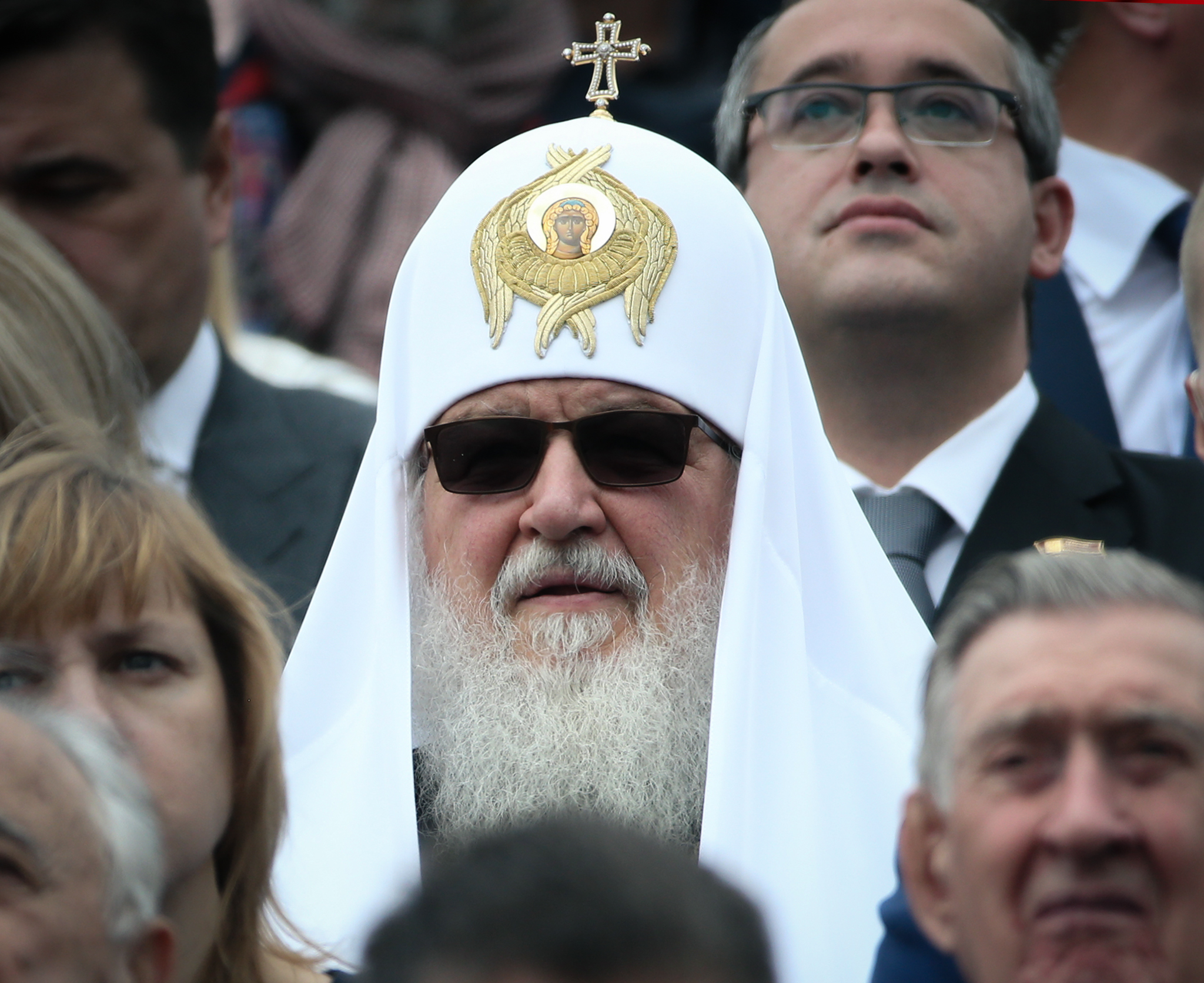
For the past four years, the Estonian Orthodox Church – now known as the Estonian Orthodox Christian Church – has been under almost constant political and legal pressure. First, it was required to achieve greater independence from Moscow; subsequently, it was required to change its bylaws and name; then the question of completely severing its remaining canonical ties with the Moscow Patriarchate was raised.
At the same time, Metropolitan Eugen’s residence permit was not renewed, forcing him to leave Estonia. Clergy faced restrictions on entering the country, while former Interior Minister Lauri Laanemets publicly spoke of plans to designate the Moscow Patriarchate a terrorist organization. He personally discussed the possibility of transferring to a different ecclesiastical jurisdiction with the Pühtitsa Convent.
The government may justify each of these steps on national security grounds. Viewed as a whole, however, they paint a picture that can hardly be described as routine state enforcement of the law. The state is encroaching ever deeper into a sphere where a secular state official should not have the final say. After all, decrees and decisions on such matters do not fall within the jurisdiction of the Ministry of the Interior, and the canonical structure of the church should not be determined by the state’s security agencies.
One may take an entirely negative view of the Moscow Patriarchate’s stance; one may consider it politically unacceptable or even dangerous. But the European understanding of freedom of conscience rests on the principle that the state does not dictate to individuals the “correct” religion or the “correct” patriarch.
If a specific clergyman has broken the law, collaborated with a foreign intelligence service, financed illegal activities or incited violence, there are criminal investigations, prosecutors and courts to deal with such conduct. But if canonical affiliation itself, rather than a specific illegal act, becomes the basis for state pressure, we enter an entirely different legal reality.
The Estonian Orthodox Church attempted to find a compromise. In 2024, it amended its bylaws and emphasized its administrative and financial independence. In March 2025, it adopted a new official name that no longer mentioned the Moscow Patriarchate. If the state’s true goal was to prevent political control of a religious organization from abroad, this could have served as a basis for further dialogue.
Pressure to Sever Canonical Ties
Gradually, it became clear that the issue was significantly broader: the church is expected to sever the canonical ties themselves. This is where a fundamental problem arises. The state has the right to demand compliance with its laws, but it does not have the right to demand theological loyalty to a religious center that it finds politically acceptable.
It is particularly noteworthy that the first serious obstacle to this course of action was not the Kremlin or the Moscow Patriarchate, but Estonia’s own president, Alar Karis. He twice refused to sign the amendments to the Law on Churches and Parishes, citing among other things an unreasonable restriction on freedom of religion. He subsequently referred the matter to the state court for review.
In June 2026, the court ruled that the amendments were in accordance with the constitution. But it would be strange to consider the problem itself resolved on that basis alone. The court addressed the question of the law’s constitutionality, not the far more important question: should a democratic state even use such a tool to reshape the religious lives of its citizens?
More importantly, international human rights organizations have also expressed concern about the situation. Their intervention takes the discussion outside the comfortable framework in which any objection to Tallinn’s policies can be dismissed as Russian propaganda.
There is one more aspect that people in Europe tend to discuss with considerably more caution. We have already seen how the political conflict surrounding canonical Orthodoxy unfolded in Ukraine. The situation is, of course, different: the country is at war, and the issue of relations with Moscow is far more urgent. For that very reason, the Ukrainian experience should serve as a warning to other European states, not as a blueprint for action.
Religious Choice Becomes a Matter of National Loyalty
When a religious organization begins to be viewed primarily through the lens of its geopolitical affiliation, the line between suspicion of the institution and suspicion of its millions of believers very quickly blurs. A religious dispute becomes a political one, a political dispute becomes an administrative one and eventually the average person finds that his or her religious choice has unexpectedly turned into a question of national loyalty and integrity.
This is where Europe must be extremely cautious. We have not spent decades upholding the principle that human rights are universal and independent of political circumstances only to introduce geopolitical exceptions to it now. Freedom of religion does not need protection when a person chooses a church that pleases the state.
The true test of this freedom begins precisely when the state disapproves of a person’s choice.
I am not suggesting that Estonia ignore real threats, and certainly not that it be naive in the face of Russian influence. If there is evidence of Moscow’s interference in the activities of specific parishes, it must be presented. If there are illegal financial ties, they must be investigated. If a specific clergyman poses a security threat, the state has all the necessary legal tools at its disposal to respond.
Estonia Has Reached a Dangerous Threshold
There is a huge difference between combating foreign interference and combating canonical jurisdiction. The former is the state’s duty. The latter risks turning the state into a party to a religious dispute.
Estonia has now reached a very dangerous threshold. The danger lies not so much in the fate of a single Orthodox church as in the precedent that could be set if Europe accepts the principle that a politically inconvenient religious affiliation is, in and of itself, sufficient grounds for restricting the rights of believers.
And such precedents have unpleasant consequences – they rarely remain confined to the original context in which they arose. It is possible to sincerely protect the European order from external influence while gradually undermining one of its fundamental principles.
It is possible to search so relentlessly for external threats to freedom that one day we realize we have already begun to restrict freedom from within.
That is why the events in Estonia deserve not applause for yet another display of resolve but a very serious European debate. A state that begins to determine which church is the “right” one for its citizens is setting out on a path whose consequences European history knows all too well.
Hyde Park is a space for free discussion. The opinions published here do not necessarily reflect the editorial line of Statement.