Could Spain Be on the Cusp of a Right-Wing Government?
Spain’s Socialists are sliding as the conservative People’s Party and right-wing Vox surge. With elections due next year, Pedro Sánchez could be facing the end of his government.
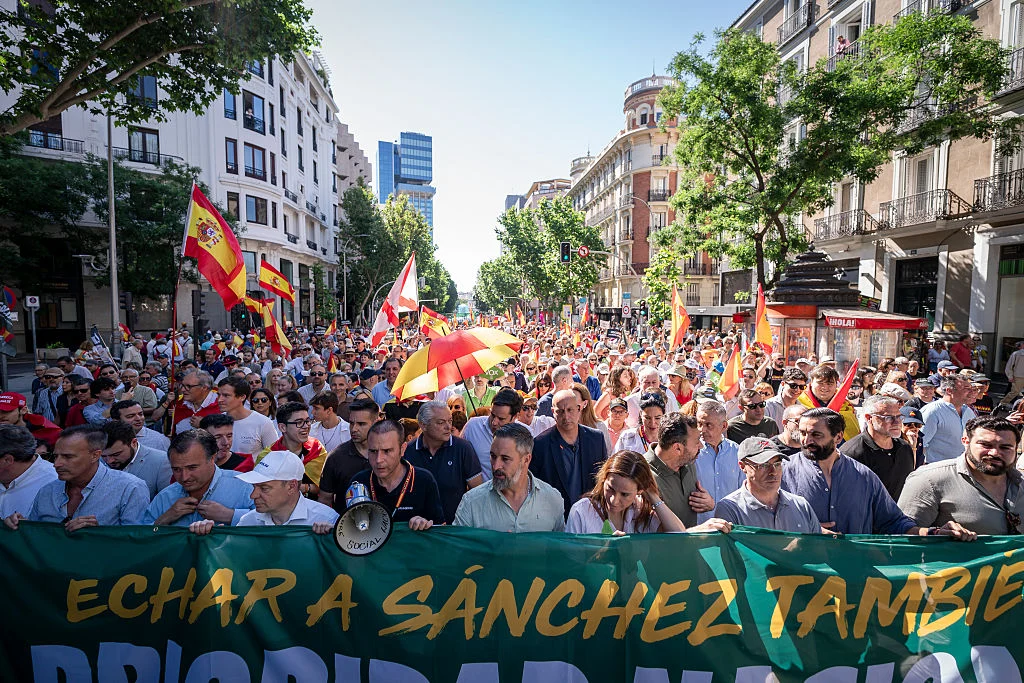
Vox leader Santiago Abascal attended a demonstration in Madrid calling for Prime Minister Pedro Sánchez to resign on 23 May 2026. Four months later, Vox is surging in the polls, with the party and the PP now threatening to end Sánchez’s premiership at the next general election. Photo: A. Perez Meca/Europa Press via Getty Images
|
Has the time come for change to sweep Spain? The Partido Socialista Obrero Español (PSOE) has dominated Spanish politics for much of the democratic era, governing the country for more than three decades in total. Next year, Spaniards are due to vote in a general election and, if the polls remain roughly where they are today, Pedro Sánchez’s PSOE government is heading for defeat.
The conservative Partido Popular (PP) is leading in several polls, while Vox has climbed sharply, raising the prospect that the two parties could together command a parliamentary majority. With a sluggish economy and high-profile corruption scandals implicating the government, Sánchez was already struggling. Yet one issue has pushed his government into still deeper trouble: Ceuta.
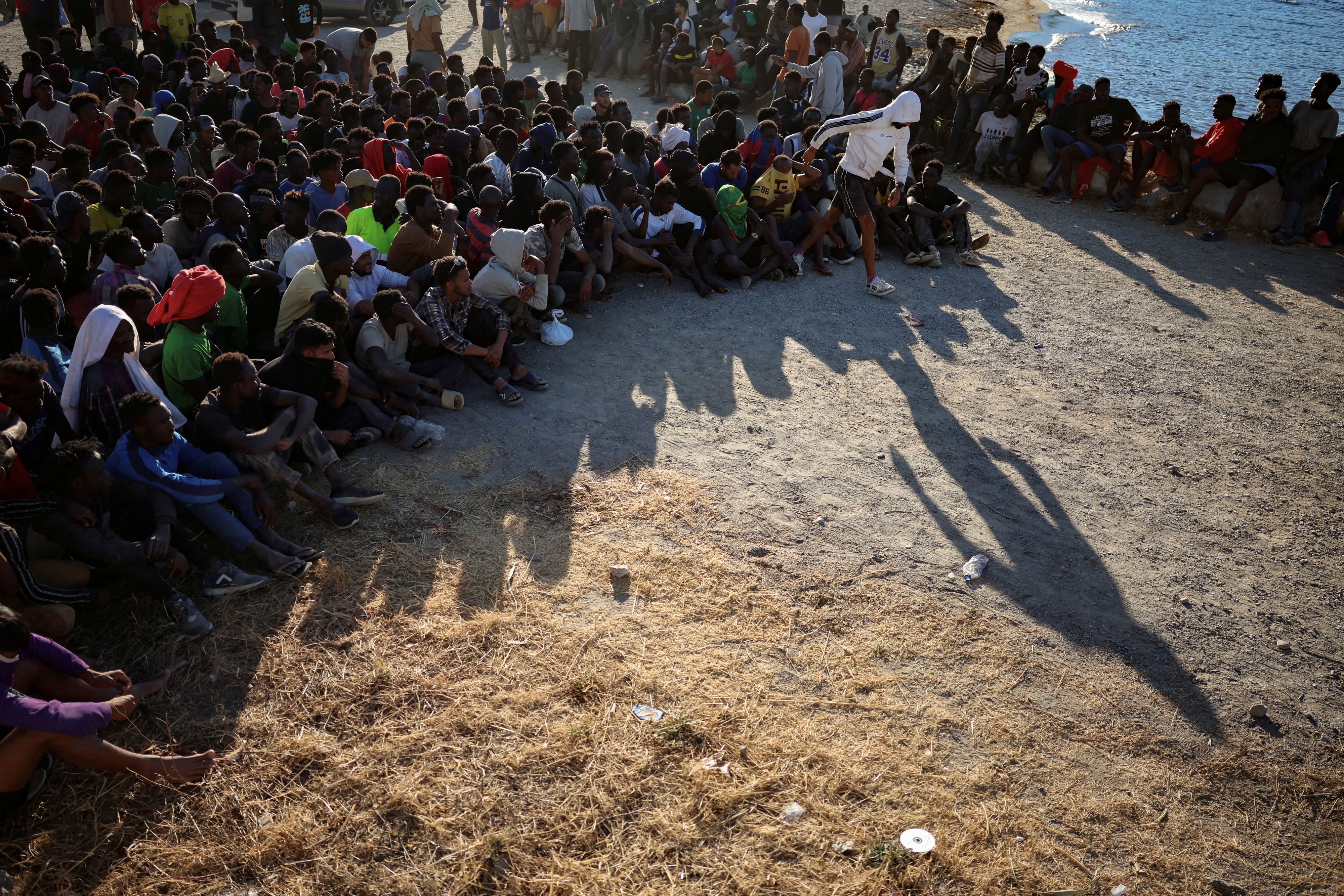
The small city on the North African coast has been part of Spain since the 17th century. Yet it is also claimed by Morocco. A month ago, anywhere from 50,000 to 80,000 illegal immigrants stormed across the frontier, swamping the city of 83,000 residents. The handful of Spaniards guarding the border were overwhelmed. Around 100 illegal immigrants died, drowning in the sea or being crushed to death in the human wave.
Within a few days, most of the illegal immigrants had returned across the border. Without food and with no prospect of reaching the Spanish mainland, they chose to go back. Several thousand remained, many of them sub-Saharan Africans whom Morocco does not want back. Others are minors, who have special legal protection. After a similar border breach in 2021, many of the minors who crossed were transferred to mainland Spain.
There was looting during the initial wave. Since then, prosecutors have recorded 23 sexual assaults, nearly one a day. Nine involved children. There have also been five rapes so far. Most of the victims are themselves illegal immigrants. More than 200 of those who crossed have been expelled for crimes including attacking police officers and selling drugs. Official statistics are still pending, but the police union claims crime rose eightfold.
Faced with this violation of Spanish sovereignty, Sánchez reacted poorly. Nowhere was that more apparent than over the question of what had caused the wave of illegal immigration.
Initially, much of the blame fell on the Spanish Supreme Court. A recent decision had ruled that although Spanish authorities could turn back illegal immigrants at the wall protecting Ceuta, this applied only where there was a physical barrier. With no such barrier at sea, those who arrived illegally by water had to be processed.
Illegal immigration into Ceuta is not unknown, with many migrants hoping eventually to join the more than one million Moroccans who already live and work in Spain. Yet this was an unprecedented wave, emerging suddenly and with little warning. Experienced observers looked to Morocco.
In the aftermath, evidence mounted that the illegal immigrants had been directed by agents of the Moroccan intelligence services. That appeared to receive further support when a leaked report by the Spanish National Immigration and Borders Center was published in El Español. It claimed that Moroccan security forces had planned and facilitated the transportation of illegal migrants to crossing points. Moroccan border forces had been reduced, while unidentified individuals using phones with Moroccan numbers had organized and directed the migrant wave.
All of this was on a much larger scale than any previously known smuggling network. The report suggested that Morocco may have directed the border wave as a way to demonstrate its ability to seize Spanish territory and test Sanchez’s unpopular government.
Such tactics would not be without precedent. In the 1970s, the Moroccan government marched hundreds of thousands of civilians into Western Sahara, daring the Spanish troops stationed there to open fire. With Franco dying, the Spanish forces held back and Morocco subsequently seized control of much of the territory.
Despite this, Sánchez has refused to blame Morocco, arguing that there is no “solid evidence” that it was behind the events in Ceuta and calling the country a “trustworthy ally”. His ministers have blamed Russia and Israel, as well as “social media disinformation”.
When Sánchez was forced to acknowledge that Moroccan authorities had allowed illegal immigrants to cross the border for 10 hours, he still refused to blame them for organizing the crossing. That has united critics on both the right and left, with Santiago Abascal of Vox and Ione Belarra of Podemos demanding that he acknowledge Morocco’s involvement. Under that pressure, Sánchez has said that any relevant intelligence reports will be declassified.
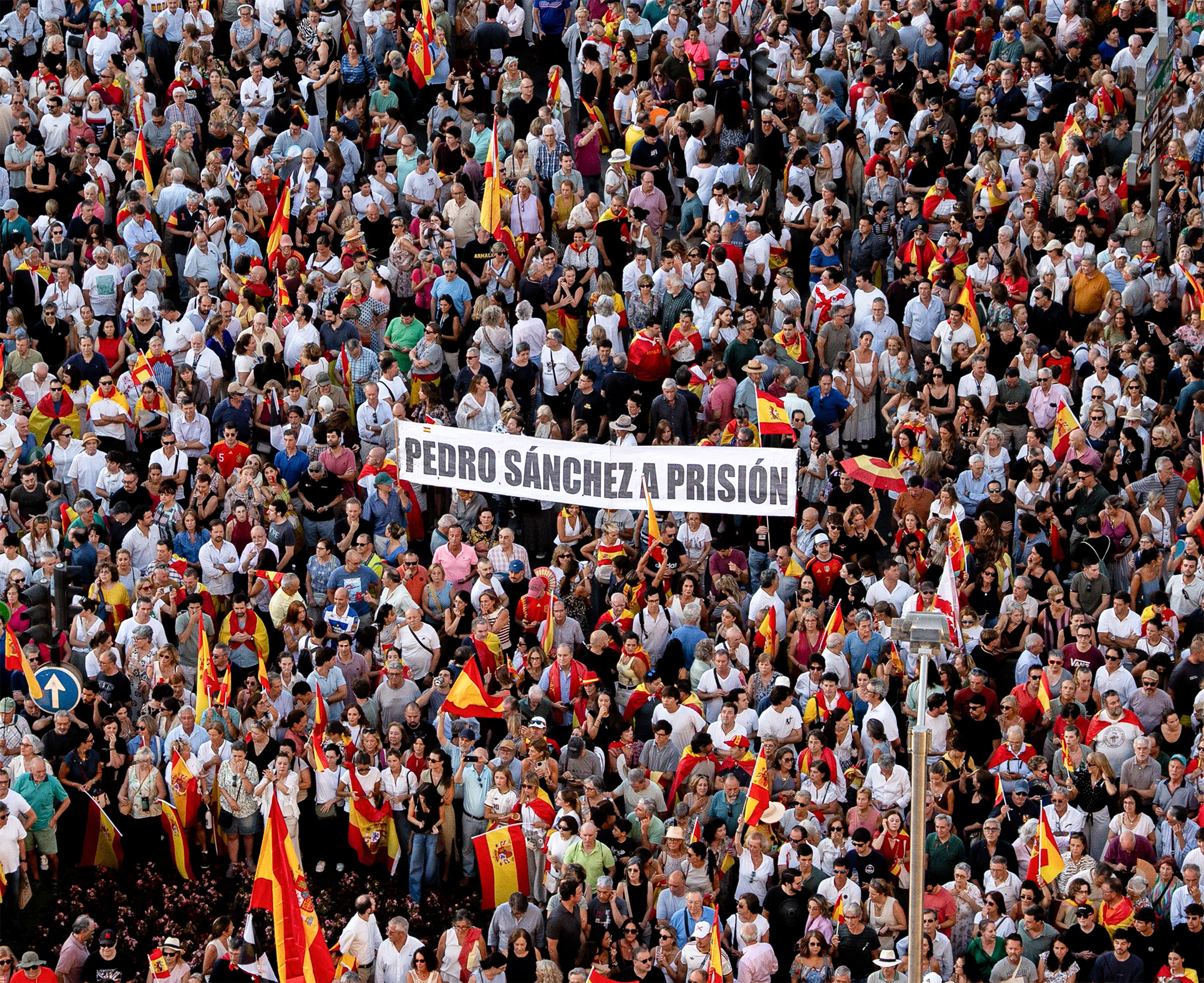
The argument has transcended politics. Last week, mass demonstrations were held calling for Sánchez to resign. The controversy has even reached into sport, with the Andalusian football club Real Betis bringing out a huge Spanish flag onto the pitch while fans chanted that Ceuta was not for sale and must be defended.
That matters because the next Spanish general election is approaching and must be held no later than the end of August 2027. Although Sánchez has successfully assembled several coalitions, he currently relies on the votes of left-wing and regional parties seeking further concessions from Madrid. In the current political climate, holding that alliance together is becoming increasingly difficult.
His regularization of illegal immigrants, offering them a one-year residence permit, has also made his coalition more fragile. The government initially claimed that around 500,000 illegal immigrants would benefit, while think tanks warned that the figure could be closer to 700,000. It is now thought that the true number may be as high as 1.2 million.
The measure was highly controversial and fueled greater anti-immigration sentiment even in traditionally left-wing areas, potentially damaging the electoral prospects of Sánchez’s allies. Without their support, he will be unable to remain in government.
In addition, anti-corruption investigations continue to embroil the PSOE and even Sánchez’s family. Further damaging revelations could emerge before the next election.
Ceuta may well have been the straw that broke the camel’s back in Spain, with the PSOE now facing the prospect of a heavy defeat at the hands of the parties of the right.
Welcome to the comments section of the Štandard daily. Please take note of our guidelines, comments are moderated by us. You can contact the moderators at support@statement.com.
Participate in the discussion
Comments are available to subscribers only. If you'd like to join the discussion, choose a subscription starting at €6.72 per month.
All comments 0
Register
Comments are available to registered users only. If you'd like to join the discussion, register here.