Bond Sell-Off Sends Shockwaves Through Stock Markets
Energy prices and inflation are rising. On top of that, high interest rates on new government debt are adding further strain. This leaves state budgets with less room to maneuver, and both government bonds and stocks are coming under pressure at the same time. A recent bond sell-off has already caused stock prices to fall.
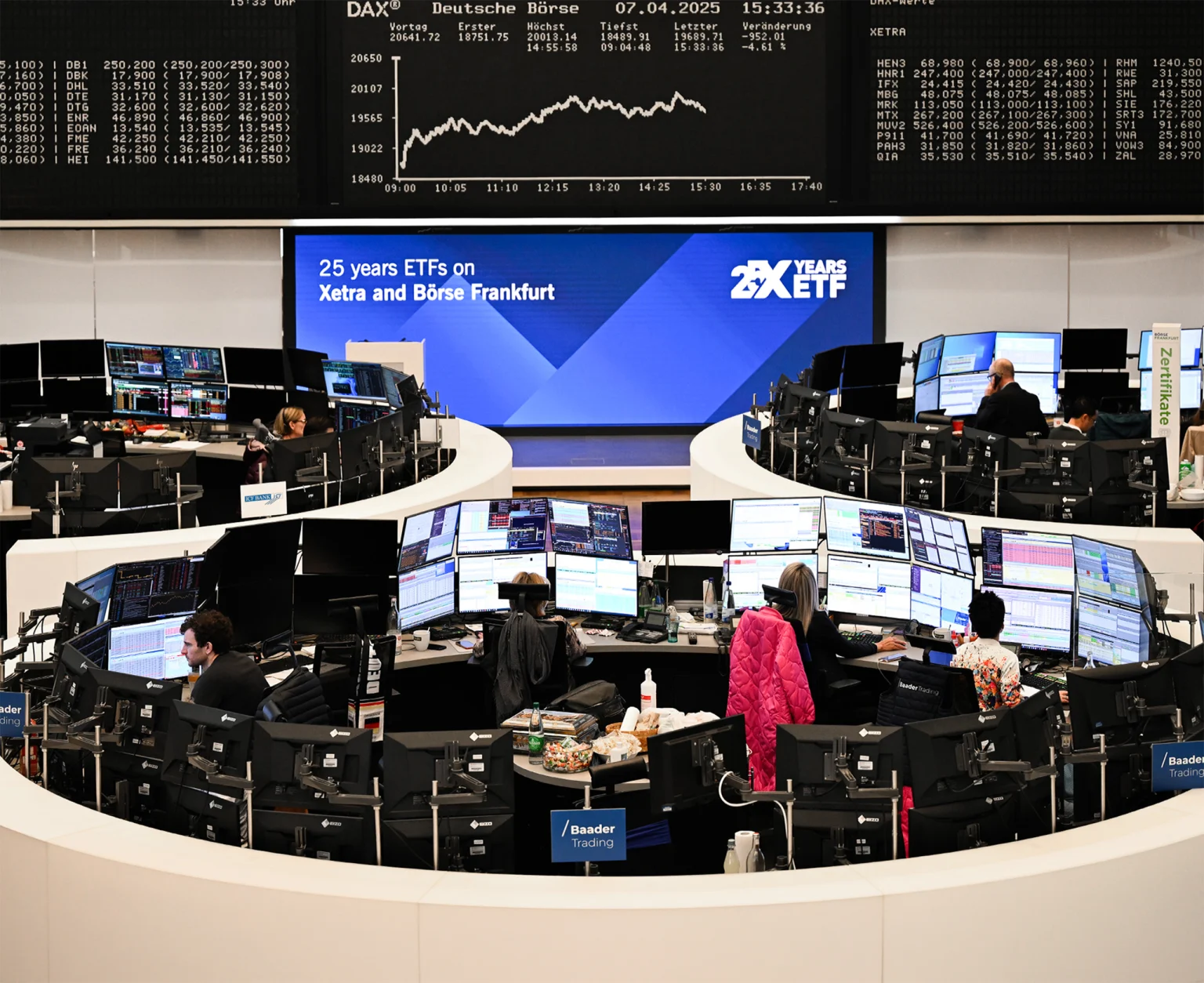
Higher interest rates on government debt are weighing on share prices at the Frankfurt Stock Exchange. Photo: Florian Wiegand/Getty Images
|
Borrowing costs for the world's major industrialized nations have climbed sharply in recent days as institutional investors sell off government bonds, driving prices down and yields up. German 10-year government bonds, known as Bunds, are now yielding more than at any point since 2011. In the United Kingdom, 10-year government bond yields have reached their highest level since 2008, while in Japan they climbed to 3% for the first time since 1996.
Rising energy prices and a fresh bout of inflation are intensifying the pressure, making new borrowing more expensive for governments across the board. In the UK, the rise in interest rates has already eaten into the chancellor's room for maneuver ahead of the upcoming budget by as much as £14bn ($18.9bn).
Germany's Bond Cost Problem
Just a few weeks ago, the main story in the German bond market was weak demand at individual auctions. On 19 August, 10-year Bunds worth €6bn ($6.96bn) were offered, but bids reached only €4.33bn ($5.02bn), covering just 70% of the offered volume. By the end of August, however, demand had picked up noticeably again, with a 30-year Bund auctioned on 26 August covered 3.6 times over.
For a five-year German government note, or Bundesobligation, bids on 1 September totaled €6.7bn ($7.77bn) against an offer of €5.5bn ($6.38bn), though the average yield already stood at 3.09%. Germany's issuance data now points less to a persistent sales problem than to sharply higher financing costs, a pressure that has already spread across the entire international bond market.
Investors have mainly been selling long-dated government bonds. Anyone lending money to a government today for 10 or 30 years now demands significantly higher interest than just a few years ago.
Oil Prices Rise, Stocks Fall
The bond sell-off received a further push from rising energy prices. Brent crude briefly rose above $90 a barrel at the start of the week, while European gas prices also climbed sharply, driven by renewed fighting in the Middle East and fears of further supply disruptions. Eurostat, the EU's statistical office, reported that eurozone inflation reached 3.3% in August, up from 2.9% in July. Energy prices alone were 14.3% higher than a year earlier, compared with 10.3% in July.
This has shifted expectations for central banks too. Markets are once again pricing in higher key interest rates, a burden for bonds already in issue. A bond with a low interest rate becomes less attractive once new bonds offer higher returns, so its price falls and its yield rises accordingly.
This trend has spilled over into equity markets as well. The STOXX 600, a broad European stock index, fell on 1 September to its lowest level in more than a month, while Germany's DAX, which tracks the country's largest listed companies, lost 1.1%. Higher bond yields make corporate financing more expensive, even as investors can once again earn higher returns on comparatively safe government debt. Stocks whose valuations depend heavily on profits expected years down the line are particularly exposed when market interest rates climb.
Rising yields on Japanese government debt reflect a broader global rout in bond markets. Photo: James Matsumoto/SOPA Images/LightRocket via Getty Images
Borrowing Costs Climb Around the World
On 1 September, Germany's 10-year yield reached 3.36%. British gilts, the United Kingdom's government bonds, briefly yielded more than 5.2% on 10-year maturities and nearly 5.9% on 30-year bonds, their highest level since 1998. In the US, the yield on 10-year government debt briefly climbed to nearly 4.8%, while France's long-term yields reached their highest levels since 2008.
The yield on 10-year Japanese government bonds hit 3% for the first time in three decades. At the auction of a new 10-year bond on 1 September, the average yield came in at 2.995%. Two days later, Japan had to offer an average yield of 4.079% on a 30-year bond. Despite these levels, demand at both auctions held up well.
France, too, had no trouble placing €13.5bn ($15.7bn) in long-term government bonds on 3 September, with bids exceeding the amounts allotted by a factor of between 2.28 and 3.10, depending on maturity, and yields ranging from 4.19% to 4.74%. The major economies are thus still finding buyers for their debt, but those buyers are demanding significantly higher interest in return.
Less Room to Maneuver as Interest Bills Climb
How quickly the bond market feeds back into government finances is evident in the UK. The Telegraph put the hole in the upcoming budget caused by higher financing costs at up to £14bn ($18.9bn), leaving the British government with significantly less room to maneuver almost as soon as gilt yields began to rise.
The UK's Office for Budget Responsibility, an independent body overseeing public finance planning, had already been expecting interest payments to climb, projecting growth from around £110bn ($148.8bn) in the 2025/26 fiscal year to £137bn ($185.3bn) in 2030/31. A permanent one-percentage-point rise in interest rates would add around £17bn ($23bn) to annual interest payments by 2030/31.
Germany faces the same mechanism, only with a delay. For 2027, the federal government is planning interest payments of €41.9bn ($48.6bn), rising to €55.2bn ($64.1bn) in 2028, €68.1bn ($79.1bn) in 2029 and around €80.7bn ($93.8bn) in 2030. The German government explicitly attributes this increase to its growing debt level and higher yields on federal securities. Net new borrowing in the regular federal budget, meanwhile, is set to rise from €98bn ($114bn) this year to €167.3bn ($194.4bn) in 2030, on top of which comes borrowing through so-called special funds, or Sondervermögen, legally separate state funds that sit outside the regular federal budget.
The Bill Is Coming, Just Not Yet
The higher interest rates do not affect the existing mountain of debt all at once. Instead, they take hold gradually, as maturing bonds are refinanced at higher rates and the federal government takes on new, and equally more expensive, loans. If yields remain at current levels, low-interest legacy debt will increasingly give way to far costlier new bonds.
After the sharp sell-off, the bond market has calmed somewhat in recent days. Germany's 10-year yield stood at around 3.36% on Friday, while the UK's 10-year yield had earlier eased back to about 5.13%. Levels nonetheless remain elevated, and the next major test for Germany comes on 9 September, when the federal government plans to place another 10-year Bund worth €5.5bn ($6.38bn) on the market.
Welcome to the comments section of the Štandard daily. Please take note of our guidelines, comments are moderated by us. You can contact the moderators at support@statement.com.
Participate in the discussion
Comments are available to subscribers only. If you'd like to join the discussion, choose a subscription starting at €6.72 per month.
All comments 0
Register
Comments are available to registered users only. If you'd like to join the discussion, register here.