Love and Immigration
This is the crux of the problem. Under French law, an OQTF does not in itself constitute an obstacle to marriage. The mayor, as a civil registrar, may suspect fraud and refer the matter to the prosecutor; however, he cannot transform a foreign national’s administrative status into an automatic prohibition on marrying. The Penal Code also provides for up to five years in prison, a fine of €75,000 ($87,100) and a period of ineligibility for elected officials who take measures intended to obstruct the enforcement of the law.
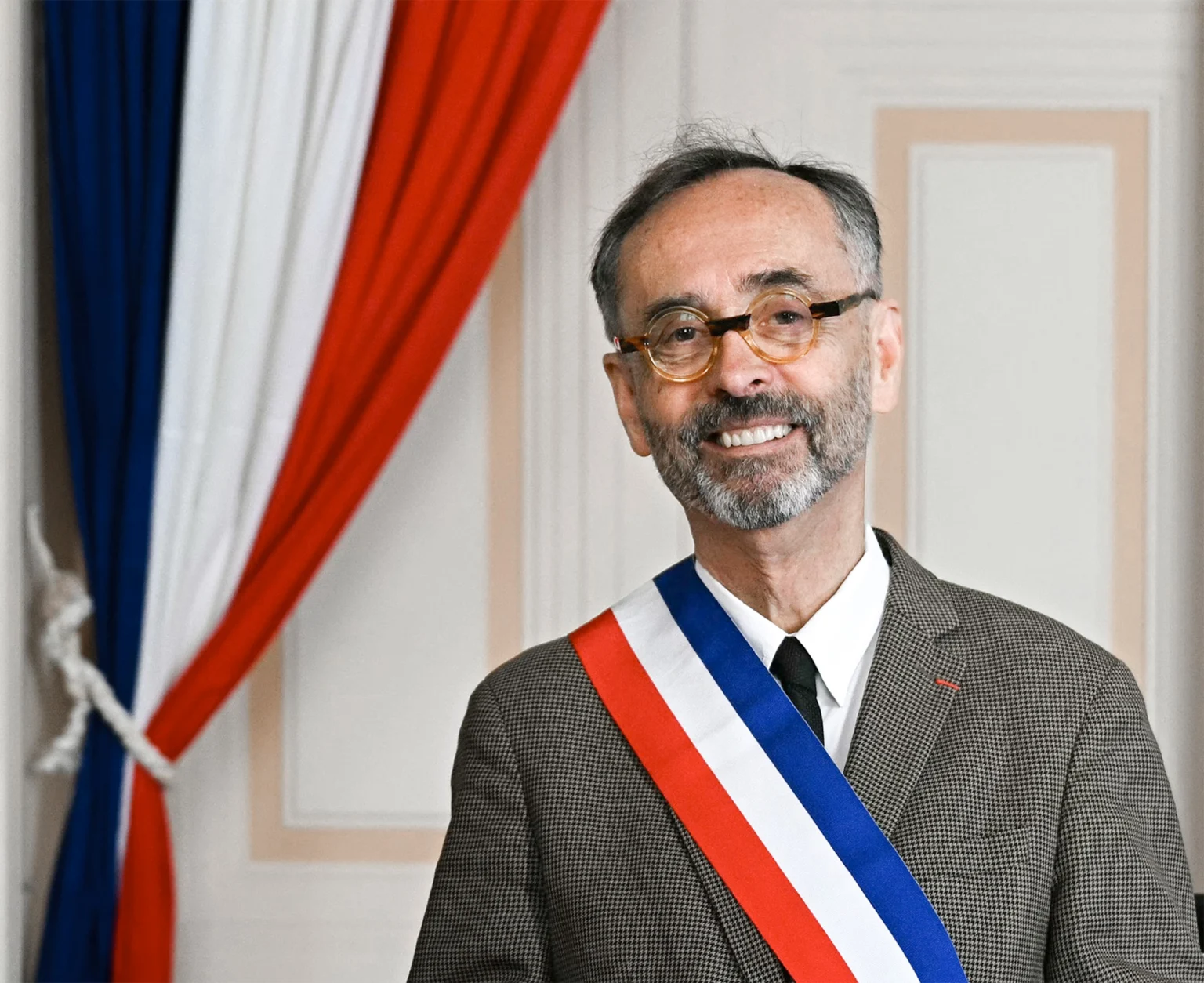
Ménard has never been willing to back down. In February 2025, when summoned as part of a plea-bargain procedure, he rejected the sentence proposed by the prosecutor’s office. He therefore chose to go to trial, accepting that his personal case would become the subject of a political debate.
Ménard is not alone in this. The Béziers case was followed by that of Stéphane Wilmotte, mayor of Hautmont, in the Nord department. In 2023, Wilmotte refused to officiate the marriage of a French woman to an Algerian national who was also subject to a deportation order. The circumstances were particularly sensitive: the groom-to-be was portrayed by the authorities as having ties to a radical movement, and the mosque he attended had been shut down due to incidents involving the glorification of terrorism. Wilmotte had received death threats, and his home had to be placed under police protection. The courts ultimately ruled in his favor in summary proceedings.
Then came the case of Olivier Bourjot, mayor of Chessy, in the Paris region. In 2025, he refused to officiate the marriage of a Finnish woman and an Algerian man who was subject to an OQTF. After the court ordered him to perform the marriage, Bourjot and his deputies submitted their resignations rather than comply. The prefecture initially rejected their resignations. The standoff continued until a new mayor was elected, who finally conducted the wedding on 11 April 2026.
These cases gave national significance to what might otherwise have remained a municipal dispute. Above all, they highlighted a political contradiction: the state requires mayors to enforce the law but does not allow them to treat a removal order as grounds for refusing a marriage when acting in their capacity as civil registrars.
Public Backs a Ban, but No New Law Follows
The issue appears to enjoy significantly broader public support than the parliamentary debate would suggest. In May 2026, a CSA poll for CNews, Europe 1 and Le JDD indicated that 73% of the French public supported banning marriages when one of the prospective spouses is undocumented. The figure reached 83% among supporters of Macron’s governing camp and 80% on the right.
The poll was politically awkward, as Parliament had already had an opportunity to amend the law – but to no avail. A bill put forward by Éric Ciotti’s Union des Droites pour la République (UDR) and adopted by the Senate in February 2025 was intended, among other things, to strengthen the powers of civil registrars and enshrine in the Civil Code that a person residing in the country illegally could not enter into marriage.
The bill was debated in the National Assembly on 25 June 2026. However, the session was adjourned at 11:55 p.m. following a parliamentary filibuster led by the far-left party La France insoumise (LFI). The bill therefore did not come to a vote. The government had a constitutional tool at its disposal to put an end to this filibuster but chose not to use it. Thus, a few months before Ménard’s trial, lawmakers left intact the very situation that brought him before the judges.
And Now, Ménard Wants Macron on the Stand
But Ménard is not the type to let a legal case unfold quietly. On 3 September, appearing on French news channel LCI, he announced that he had asked Emmanuel Macron to testify on his behalf on 30 September. As a media strategy, the move is difficult to fault: in May 2025, the president himself had described Ménard’s situation as “absurd”, stating that “the law is flawed” and lamenting that the constitutional right to marry does not offer the mayor greater protection.
Ménard is therefore essentially asking him to come and repeat before the judges what he said on camera.
It is unlikely that this request is anything other than a spectacular publicity stunt. But that is precisely what makes him so formidable. Ménard is a master communicator who instinctively knows how to turn a legal dispute into a political issue.
The 30 September trial will not only determine whether Ménard has crossed the legal line but will also reveal the extent to which French society is gridlocked. A majority of the public appears to support barring undocumented migrants from marrying, the government has supported the principle of reform and the president himself acknowledges the absurdity of the situation – and yet, the mayor who refused to comply with the existing law is the one who finds himself in the dock.