Did Leipzig Expose Europe's Border Problem?
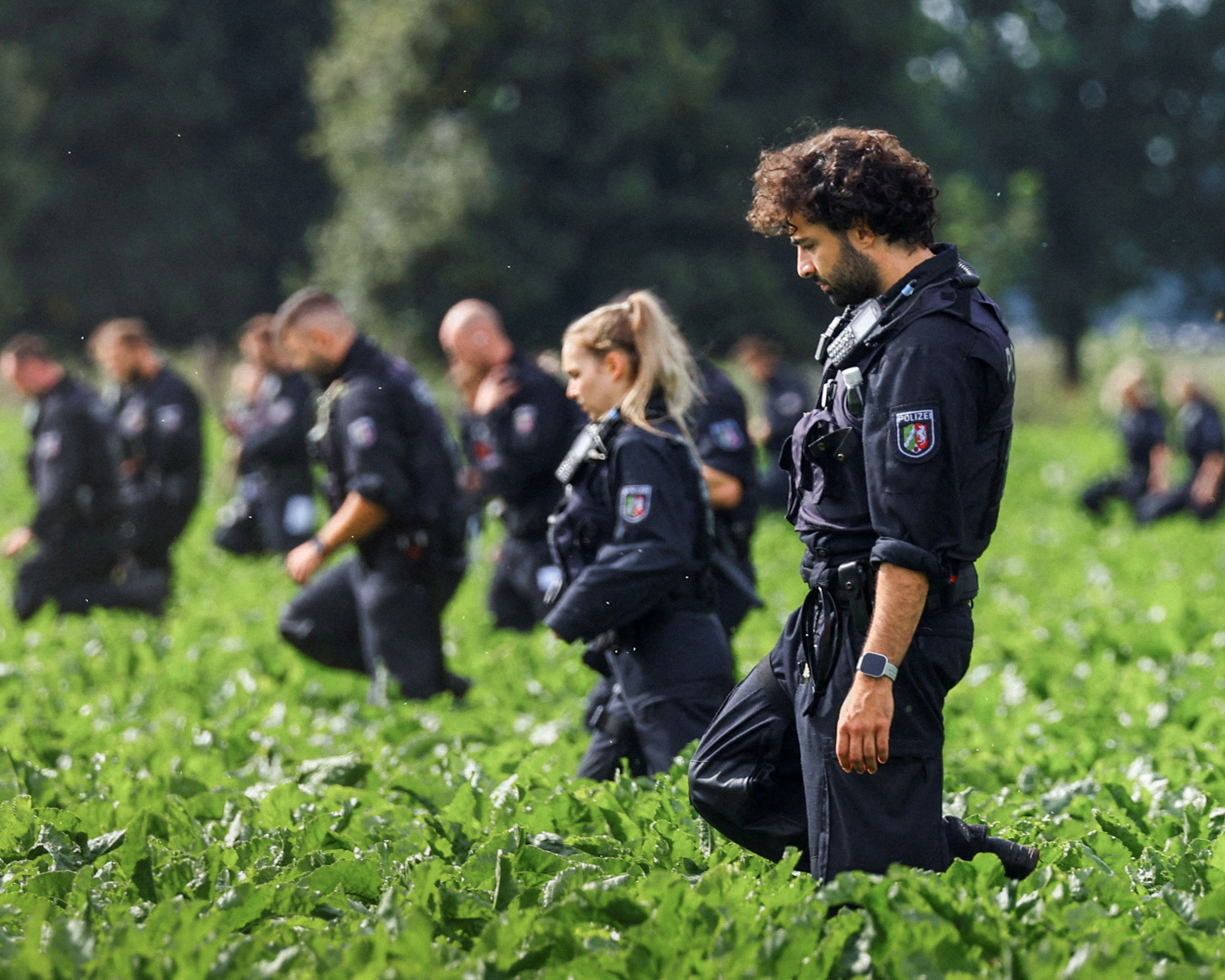
German investigators have reportedly identified two suspects over the attempted attack at Leipzig/Halle airport, where an explosive-laden drone was allegedly meant to target Ukrainian cargo aircraft. One suspect is reportedly a Belarusian national who also holds a Russian passport, and whose DNA was allegedly recovered by investigators.
More significantly for Kallas, German media report that the man entered the Schengen area on a perfectly legal tourist visa, issued by an Italian diplomatic mission in Minsk in April.
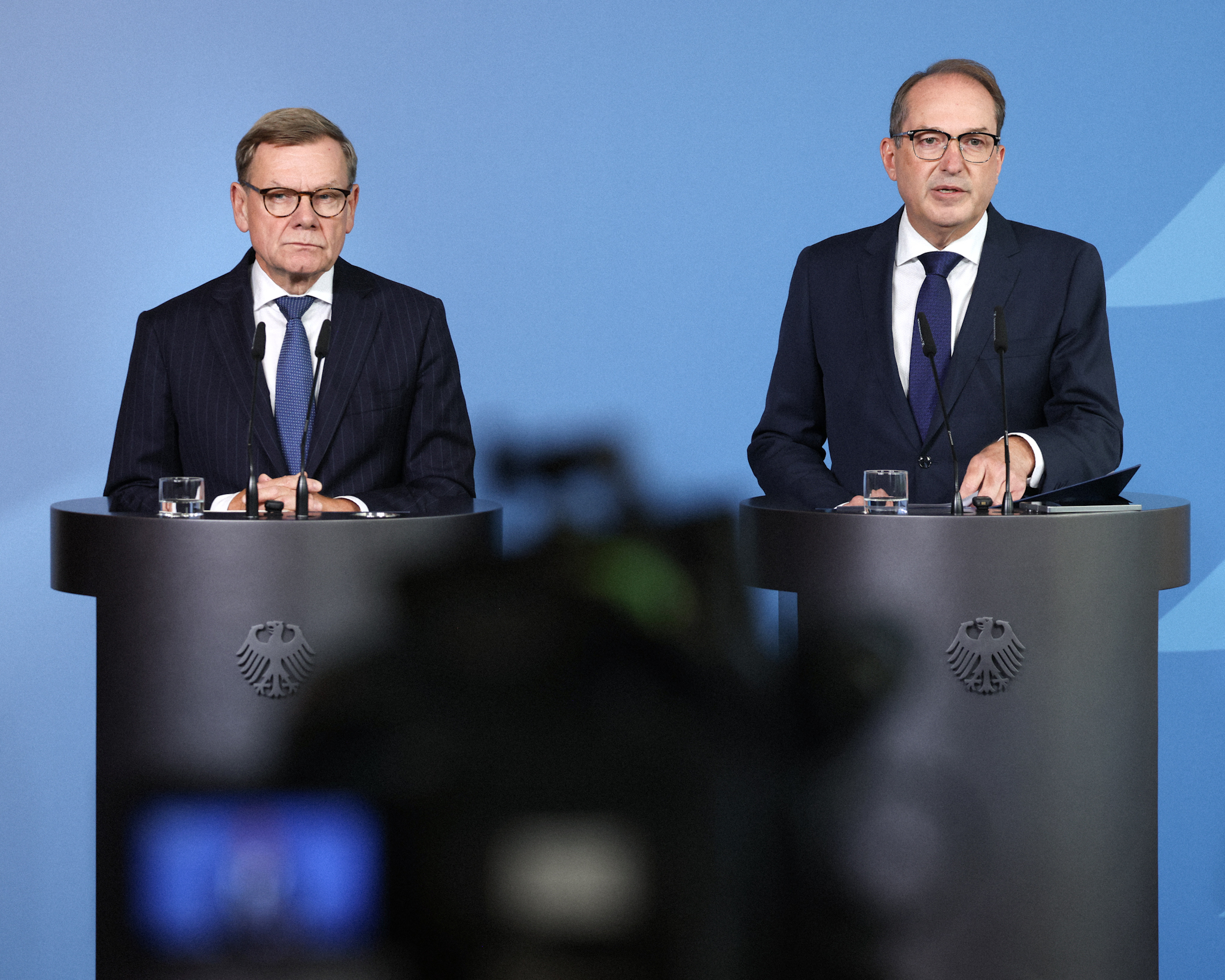
The Italian government says it is investigating how the visa came to be issued. Foreign Minister Antonio Tajani noted that officials normally grant a visa if an applicant meets the requirements and there is no security alert attached to his name.
Which is, of course, precisely the problem Kallas wants to address.
If the allegations are correct, a man suspected of carrying out a Russian-sponsored terrorist attack did not need to sneak across the European border under cover of darkness, or use a fake passport and a stick-on mustache. Europe simply invited him in.
Kallas's Takeaway: Fewer Russians, Fewer Risks
For Kallas, and one suspects for many others besides, the lesson is obvious.
"If it is true", she said of the reports, "it shows very clearly that visas are a tool of these people who are meaning harm to the EU."
That remark recalls the old line that politics is simply reality for slow learners.
All that said, the EU's instinct on Russia is not new, nor have its efforts been entirely ineffective. Since Russia invaded Ukraine in 2022, the bloc has steadily made it harder for Russian citizens to visit Europe. The visa facilitation agreement between Russia and the EU was suspended that same year. European governments were told to subject Russian applicants to greater scrutiny and to "deprioritise" tourism visas.
Last November, the European Commission went further still, effectively barring Russian nationals resident in Russia from receiving multiple-entry visas. Russians wishing to visit Europe must now generally apply for a fresh visa each time, so officials can carry out a new security assessment.
The effect has, in fairness, been substantial. Before the war, EU countries issued about four million Schengen visas to Russian citizens each year. Today, according to the European Commission, that figure stands at roughly 500,000.
The argument for going further has always been both moral and practical.
The Moral Argument Meets the Practical One
The moral case is the one Kallas made in Wicklow: Russia is bombing Ukrainian cities and killing Ukrainian civilians, even as Russian citizens holiday in Paris, Rome or Madrid. Tourism, after all, is not a human right.
The practical case has grown considerably stronger since Leipzig.
Europe has spent the past several years accusing Russia of waging an escalating campaign of sabotage, espionage, cyberattacks and other forms of hybrid warfare on European soil.
If Russian intelligence agencies can simply obtain Schengen tourist visas for people later involved in such operations, it is fair to ask whether issuing half a million Russian visas a year still makes sense.
There is, however, a problem with any scheme to restrict immigration and entry: the European Union is involved.
Brussels Tangles Itself in Red Tape, Again
Where the European Union is involved, however, even the most straightforward-sounding proposal tends to become Sisyphean in its complication.
Consider the seemingly simple proposal to bar Russian soldiers who fought in Ukraine from entering Europe. The European Commission originally proposed exactly that, as part of the EU's 21st sanctions package against Russia earlier this year. Naturally, it did not survive intact.
France and Italy objected, arguing that identifying who qualified would place an enormous administrative burden on European consulates, since officials would have to establish whether each applicant had served in the Russian military, no mean feat in itself.
Then, as always, there was the risk of legal challenge.
The proposal was consequently watered down into a legal basis for refusing visas to Russian soldiers and members of associated paramilitary organizations, but only where they had "directly contributed" to the war against Ukraine through combat operations.
Note the contradiction: France and Italy said it was too difficult to establish whether someone was a Russian soldier at all, yet the revised proposal required officials to go further still and determine where that soldier had served.
Perhaps unsurprisingly, that narrower prohibition has still not entered into force.
The Loopholes Built into Europe's Own Ban
Naturally, there are exemptions.
The prohibition does not apply, the EU says, where entry is required for humanitarian purposes, reasons of national interest or international obligations, though what those might amount to in practice is unclear. Nor does it apply to Russian military defectors or dissidents, as if the Federal Security Service (FSB) was incapable of having its agents pose as either.
So here, in the round, is the European position.
The EU has decided that Russian combat veterans pose a serious enough security threat to be banned from entering Europe.
But before Europe can ban them, it must build an administrative system capable of establishing that each applicant really was a combatant, that he personally took part in combat operations, and that he is not a dissident or defector, or an FSB asset posing as one. It must also confirm that no humanitarian considerations apply, allow national officials to weigh the evidence, and ensure the resulting decision is legally robust enough to survive a challenge.
This is no small undertaking, to put it mildly, for a country that has mobilized hundreds of thousands of men for military service.
Schengen's Weakest Link Problem
The broader restriction on Russian tourists is a different matter altogether, with problems of its own. Start with the fact that Schengen is meant to be a common travel area.
Once someone has legally entered it, internal border controls are largely absent. A Russian tourist granted a visa by Italy does not have to stay in Italy. He can travel on to Germany.
That is precisely what appears to have happened in the Leipzig case, creating an obvious weakest-link problem.
Several countries in eastern and northern Europe have long demanded severe restrictions on Russian tourism. Others, including France, Italy and Greece, have historically been far less enthusiastic.
The point is simple: a restrictive policy in Germany means little if another Schengen country keeps issuing visas. Every Schengen visa is, in effect, a security decision made for the whole bloc.
Can Brussels Solve Its Own Contradiction?
Kallas is therefore battling a fairly fundamental contradiction: the European Union has built a borderless internal travel zone, but the governments that belong to it retain very different appetites for deciding who should be let through its external doors.
There are, arguably, good reasons not to impose a blanket ban on everyone who carries a Russian passport.
Europe presumably has no wish to stop Russian dissidents from escaping Putin. There are Russians with European family members, Russians who live outside Russia, journalists, political opponents and people with genuine humanitarian reasons to travel.
It is here, in the realm of exceptions, that European bureaucracy again comes into its own as a stubborn obstacle to doing anything at all. Simply put, every exception needs a definition. Every definition needs an official to interpret it, and that interpretation must then be agreed across all the Schengen states.
This is what Russia means when it looks at Europe and laughs at its inefficiency.
Kallas, for her part, and perhaps in her naivety, clearly hopes that Leipzig will shift the political calculus.
She said this week that the alleged use of an Italian tourist visa should, if confirmed, persuade those EU governments that have resisted tougher restrictions that this is no longer simply a matter of solidarity with Ukraine. It is now, she says, a matter of European security.
She may succeed. Perhaps Europe now has the political will to sharply restrict Russian travel for the first time since the war began.
But even if it does, the bloc's own relentless appetite for red tape is likely to stymie the effort, yet again.