Driverless cars are moving from experiment to reality, with autonomous transport poised to reshape everything from taxis and freight to the battlefield.
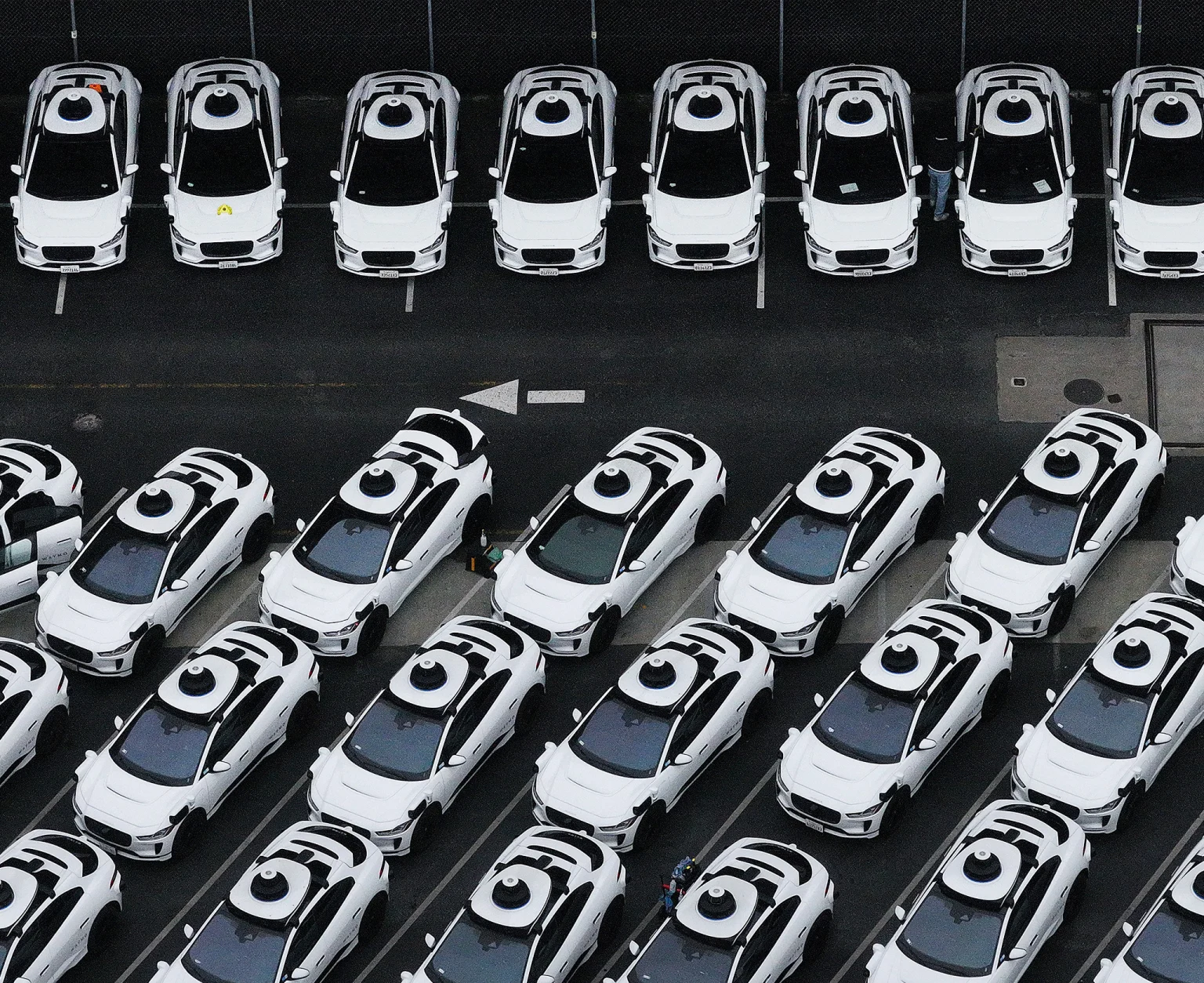
More and more young passengers are using Waymo's autonomous taxis. The technology may soon be adopted in logistics. Photo: Justin Sullivan/Getty Images
|
Autonomous taxi services are now expanding into Europe. On 25 August, Waymo announced that it was bringing its vehicles to the Bavarian capital of Munich, although they will initially operate with drivers behind the wheel. It is another example of how innovations developed in the military sphere can eventually find their way into civilian life.
Bavarian government officials have expressed a willingness to work with the company on the development of autonomous vehicles. Waymo is part of Alphabet, Google’s parent company.
The firm is already testing its cars in London and, since June, has been laying the legal groundwork for expanding into Spain, where Waymo Iberia SL began operations on 9 June, and France, where Waymo France was established on 23 June.
Waymo plans to launch fully autonomous vehicles in Germany in 2027.
Billionaire Elon Musk is considered one of the major pioneers of self-driving cars. However, his Robotaxi project has, over time, become something of a joke, as he has repeatedly pushed back its launch date.
Even Wikipedia has documented Musk’s ambitious predictions and the deadlines that repeatedly came and went. According to the collected statements, the tech entrepreneur was talking about self-driving cars as early as 2013, when he predicted they could arrive “within three years”.
The first autonomous Tesla taxis did not hit the roads in selected neighborhoods of Austin, Texas, until June last year.
Meanwhile, Tesla developed a series of gold-colored vehicles for its autonomous taxi service. The model, named Cybercab, began full-scale operations in Austin in early September.
The name Cybercab echoes its predecessor, the Cybertruck, while cab is a common English term for a taxi. Unlike the older Model Y, which has specifications comparable to those of an SUV, the Cybercab has no steering wheel or pedals and features only front seats for passengers.
Tesla has also announced the Robovan on its official website, a larger passenger vehicle designed to carry multiple passengers and modeled on a minibus.
Waymo, whose name is derived from the phrase “way more”, is Musk’s main competitor and, in many respects, is already ahead. According to company figures, it operates nearly half a million autonomous trips per week in the United States. By the end of March, its vehicles had cumulatively traveled approximately 354 million km.
CNN highlighted the striking disparity between the two companies. Although the figures cover only a single month, Tesla reported just under 612,000 km of test driving in July.
How Safe Are Robotaxis?
According to the available statistics, autonomous vehicles appear to perform well in terms of safety. Waymo’s data to date suggests that its vehicles are significantly safer than human drivers. As of March 2026, the company reported 94% fewer crashes involving serious or fatal injuries and 82% fewer crashes in which an airbag was deployed.
Several driving irregularities were already observed during the first tests in Austin. In some cases, cars veered into oncoming traffic, dropped passengers off in the middle of intersections and exhibited so-called phantom braking.
A particular problem affecting both companies remains the so-called trolley problem. In theory, an autonomous car could find itself in a situation in which it must choose between endangering pedestrians outside the vehicle and endangering its own passenger. In an earlier survey, 76% of respondents said they considered it more ethical for a vehicle to sacrifice its passenger rather than 10 pedestrians. However, those same respondents were subsequently less willing to buy such a car.
According to critics, the trolley problem is an inadequate tool for describing the moral dilemmas surrounding autonomous vehicles. Even when presented with its self-driving version, respondents tended to answer that the car should first and foremost brake.
From Military to Civilian Use and Vice Versa
The widespread use of aerial drones, small remotely controlled aircraft, became prominent during the US war in Afghanistan. Although the modern form of unmanned aircraft dates to the 1980s and was developed by Israeli engineer Abraham Karem, the MQ-1 Predator became widely known during that conflict.
During the civil war in Syria, terrorists from the self-proclaimed Islamic State used inexpensive commercial drones to carry explosives. Today, drones are also being used in the United States to deliver civilian goods, including through Amazon Prime Air.
https://www.youtube.com/watch?v=QjdKpdFIOBA
In the near future, autonomous technologies are also expected to gain a foothold in freight and rail transport. In Texas, the first commercial autonomous freight routes have already begun to appear this year, although they still require a supervising driver.
Progress in this field is also being made in the defense sector. The Pentagon has awarded Rheinmetall’s US subsidiary a contract to develop and manufacture an autonomous military vehicle, as transporting supplies in combat conditions poses a high risk. Autonomous drone swarms are also being developed, allowing a single software system to control multiple drones.
If these rapidly evolving technologies fully penetrate the civilian sector and are effectively deployed in train or truck navigation systems, they could massively reduce labor costs for logistics companies. Automated passenger transport, in turn, could fundamentally transform the services market, including urban and suburban public transportation.
The appeal of such technology is already visible in changing consumer habits. For many younger people, services that minimize human interaction and offer a seamless, contactless experience are increasingly attractive. Autonomous taxis fit naturally into that trend.
But their potential impact extends far beyond convenience. From taxis and public transportation to freight, rail and military logistics, autonomous systems are moving steadily into areas once dependent on human drivers. If that transition continues, the question may soon be less whether autonomous vehicles become commonplace than how quickly societies adapt to them.
Welcome to the comments section of the Štandard daily. Please take note of our guidelines, comments are moderated by us. You can contact the moderators at support@statement.com.
Participate in the discussion
Comments are available to subscribers only. If you'd like to join the discussion, choose a subscription starting at €6.72 per month.
All comments 0
Register
Comments are available to registered users only. If you'd like to join the discussion, register here.