Old Wounds Reopened
Mladic died on 27 August. Earlier in the year, he had requested release on health grounds, while Serbian officials pressed The Hague to allow him to spend his final days in Serbia. Justice Minister Nenad Vujic said Belgrade had sent four letters in the week before his death.
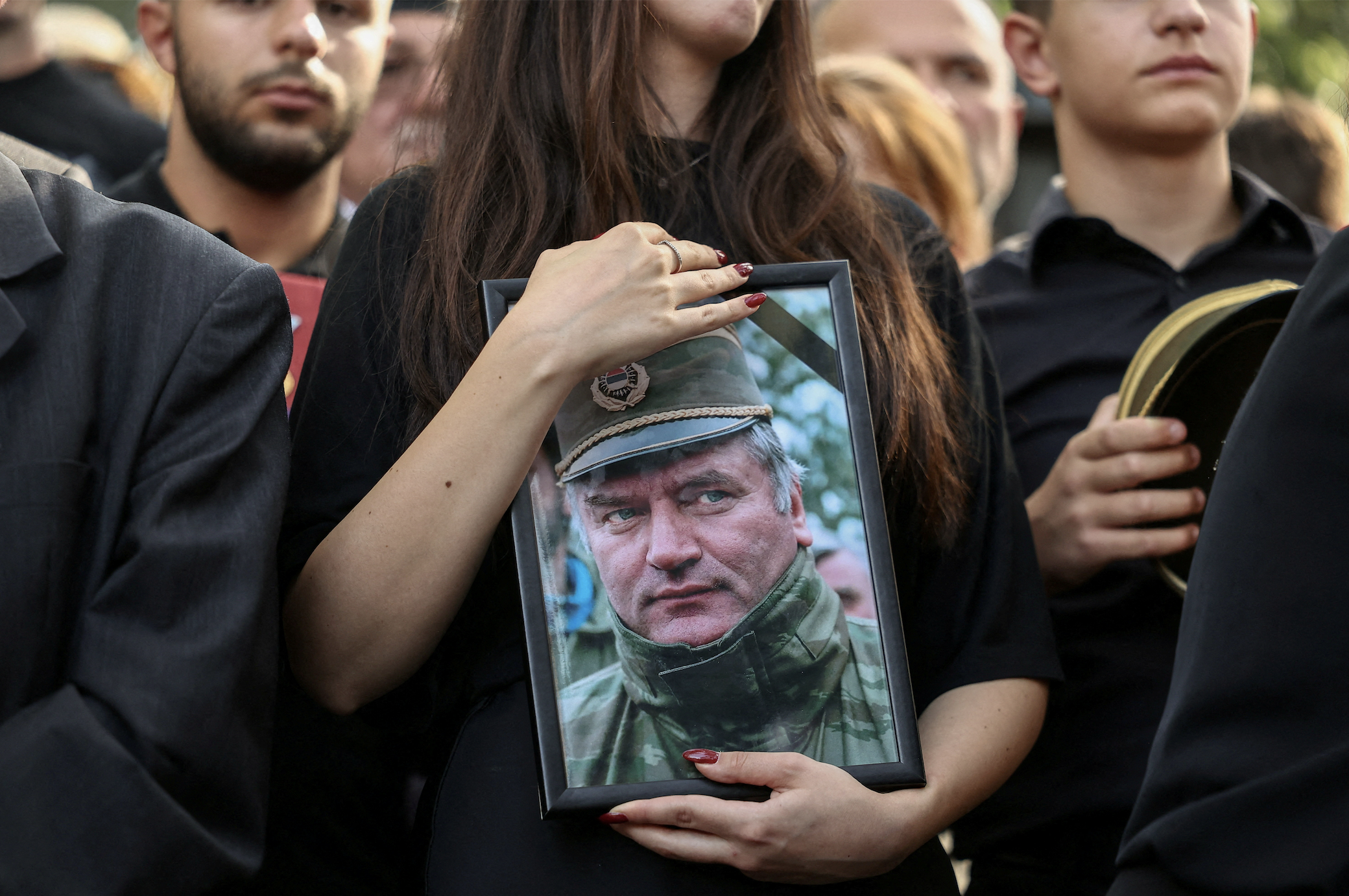
His death immediately revived the divisions surrounding his legacy. Dodik described Mladic’s death in UN custody as “murder”, while Serbian President Aleksandar Vucic accused the tribunal of refusing to let him spend his final days in Serbia.
In Novi Sad, capital of the autonomous province of Vojvodina, nationalist activists informally created a Ratko Mladic Boulevard.
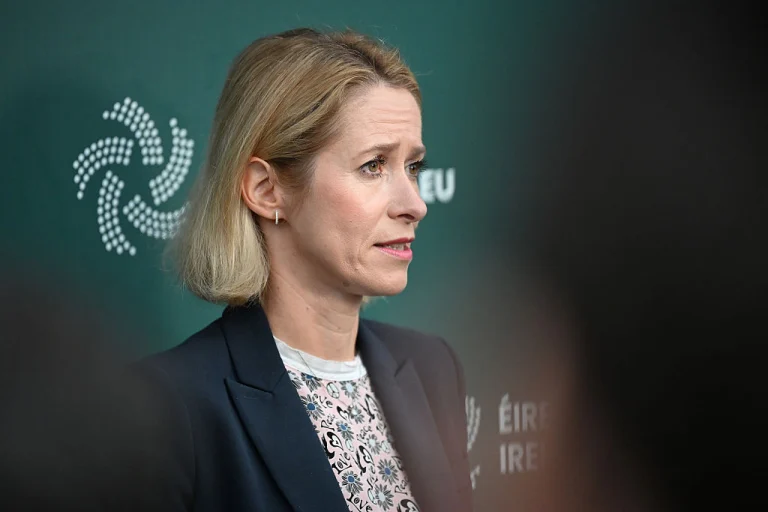
Mladic’s funeral in Belgrade on 7 September drew thousands of mourners and included military honors. EU Enlargement Commissioner Marta Kos had already canceled a planned visit to Serbia amid criticism of the public glorification surrounding his death.
More Than Commerce
Against that backdrop, the Israeli visit carried more weight than an ordinary trade mission. Amichai Chikli, Israel’s Minister for Diaspora Affairs and Combating Antisemitism, attended the ceremony establishing the chamber and returned repeatedly to the history shared by the two peoples.
“We remember our shared history of World War II and Jasenovac as the site of the most horrific executions during the Holocaust”, Chikli said, referring to the Ustase-run concentration camp on the banks of the Sava River, where more than 83,000 individually identified victims – including Serbs, Jews, Roma and others – were murdered.
Chikli said he was pleased to be back in Banja Luka and to be meeting Milorad Dodik, the former president of Republika Srpska and current leader of the Alliance of Independent Social Democrats (SNSD), for the third time. “It is a great honor for me to be with you today”, he added.
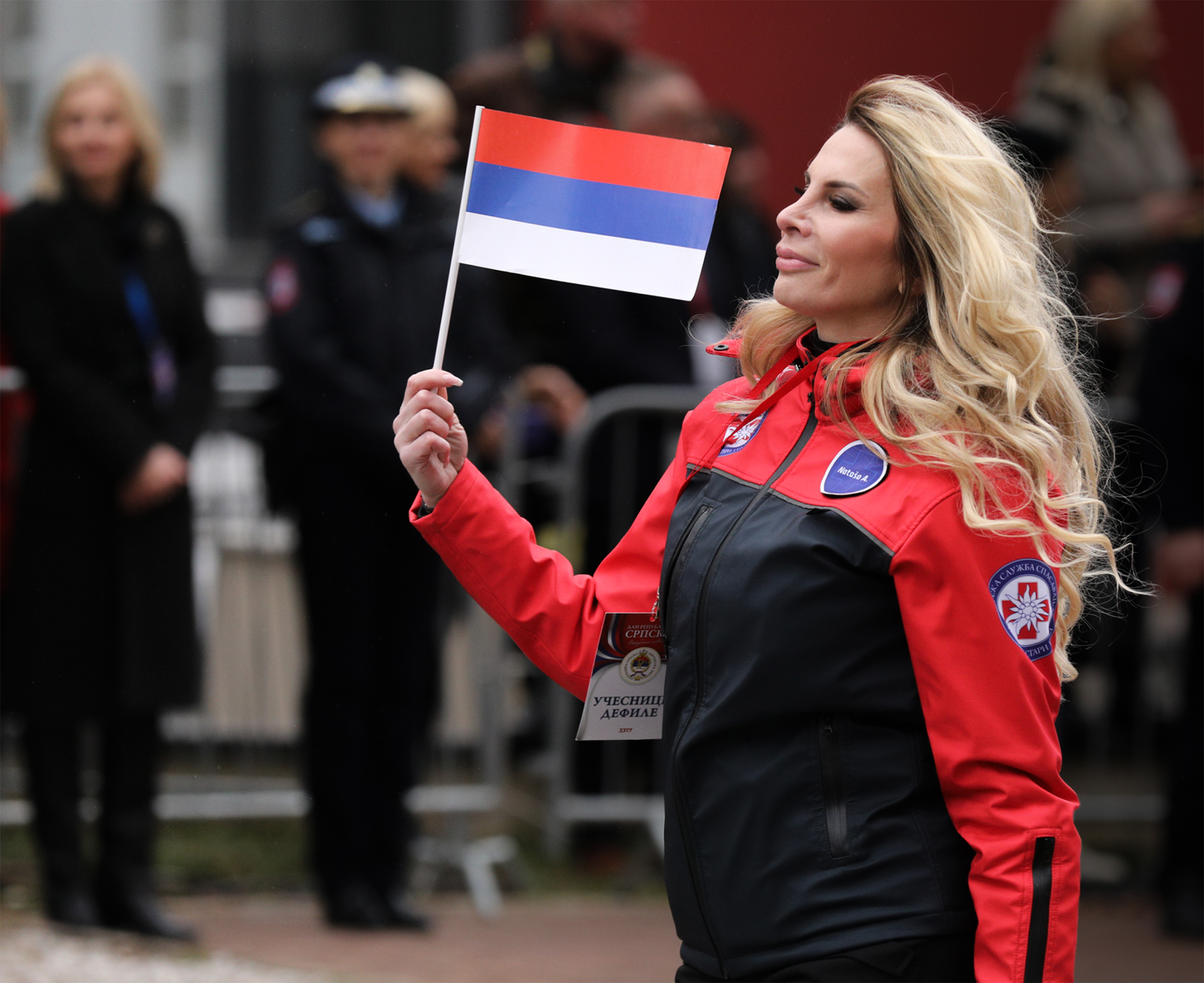
Republika Srpska President Sinisa Karan awarded Chikli the Order of the Flag of Republika Srpska with a Golden Wreath. Israel’s ambassador to Bosnia and Herzegovina, Galit Peleg, received the same decoration with a Silver Wreath for her role in establishing the chamber.
Although Peleg represents Israel throughout Bosnia and Herzegovina, she remarked that in Banja Luka, “I always feel at home”. She described the chamber as a symbol of lasting relations between Israelis and Serbs.
Israeli President Isaac Herzog also welcomed the new institution, describing it as a “driving force” for strengthening Israel’s relations with Republika Srpska and neighboring countries.
Karan likewise invoked the persecution of Serbs and Jews during the Second World War, while Chikli looked to the future. He described Dodik and the Republika Srpska leadership as friends of Israel and the Jewish people and argued that political friendship should now be translated into practical cooperation.
The political sensitivity of those ties had already surfaced during Zeljka Cvijanovic’s visit to Israel on 22 June. Cvijanovic, the Serb member of Bosnia and Herzegovina’s tripartite Presidency, met Israeli Prime Minister Benjamin Netanyahu and other senior officials. Photographs from the visit showed the flag of Republika Srpska while Bosnia and Herzegovina’s state flag was absent, prompting Sarajevo to lodge a diplomatic protest.
For Sarajevo, the symbolism was difficult to miss. Cvijanovic was visiting as a member of Bosnia and Herzegovina’s Presidency, while Republika Srpska is one of the country’s two constituent entities rather than a sovereign state.
The contacts have continued. On 8 September, Dodik met Herzog in Jerusalem during a memorial service for former Israeli president Shimon Peres. Dodik subsequently described Republika Srpska as a “reliable partner” of Israel.
The Dayton Order Under Pressure
All this comes as Bosnia’s post-war constitutional settlement is once again being questioned.
The idea of reorganizing Bosnia along stronger ethnic lines is hardly new. In 1992, before the war had fully engulfed the country, the Carrington-Cutileiro plan envisaged an independent Bosnia and Herzegovina made up of three constituent units largely defined along national lines. The proposal nevertheless retained Bosnia and Herzegovina as a single independent state rather than dividing it into three sovereign countries.
The debate has also drawn comparisons with proposals by Israeli academic Mordechai Kedar for a series of locally based Palestinian emirates. His model envisages highly autonomous communities built around existing clan structures. Developed for the Palestinian territories, it has nevertheless fed a broader debate over whether deeply divided societies can be organized around smaller, more homogeneous political units.
Bosnian Croat leader Dragan Covic has meanwhile continued to press for constitutional changes intended to strengthen Croat political representation. At the same time, the international architecture created to oversee the Dayton settlement is itself being reconsidered.
Christian Schmidt, the international community’s High Representative for Bosnia and Herzegovina, resigned in May and later said heavy US pressure had played a decisive role in his departure.
Washington has made clear that it wants the Office of the High Representative (OHR) to assume a more limited role. US Deputy Ambassador to the UN Tammy Bruce said the institution “was never intended to be a permanent institution” and argued that Schmidt’s successor should have substantially narrower responsibilities.
The shift sits alongside continued US support for Bosnia and Herzegovina’s independence, sovereignty and territorial integrity. Washington is pushing for less international supervision without abandoning the territorial framework established at Dayton.
Russia has gone further, calling for the immediate closure of the OHR. China has likewise argued that the office and its extensive powers were designed as temporary measures and should not become permanent, while continuing to affirm Bosnia and Herzegovina’s sovereignty, independence and territorial integrity.
More radical ideas have also found advocates in the United States. An opinion piece published in the Washington Examiner on 20 August openly called on President Donald Trump to recognize an independent Republika Srpska.
The proposal remains far removed from official US policy, but its appearance in an American conservative publication shows how arguments once largely confined to Balkan nationalist politics are finding a wider audience.
Israel’s growing relationship with Banja Luka has attracted attention elsewhere as well. Iranian state-run broadcaster Press TV reported on the chamber’s establishment, noting that it was “not yet clear what geopolitical goals” Israel was pursuing through its relations with the Bosnian Serb leadership.
The “Israel of the Balkans”
The affinity is clearly mutual. In February, Dodik said: “It is said – and we certainly feel this way too – that we in the Republika Srpska are like the ‘Israel of the Balkans’”, after receiving the Jabotinsky Award.
Dodik has also repeatedly aligned himself with Israeli positions on Palestinian statehood. In July 2025, after France announced plans to recognize a Palestinian state and Britain was considering a similar move, he argued that “a state that does not actually exist cannot be legally recognized”.
His remarks came amid a broader European shift on Palestinian recognition. Spain and Ireland had recognized Palestine the previous year, while Malta had announced plans to follow. France’s announcement brought the question back to the forefront when Dodik made his comments.
Middle Eastern media have also taken notice of Israel’s expanding role in the region. Middle East Eye presented the Banja Luka chamber as part of a broader expansion of Israeli influence in the Balkans, while Al Jazeera highlighted Dodik’s support for Israel and opposition to Palestinian statehood.
Although Dodik and Vucic are frequently described as pro-Russian politicians, both have also cultivated close relations with Israel. Serbia in particular maintains substantial diplomatic, economic and defense cooperation with the country.
Israel’s Balkan diplomacy extends well beyond its relations with Serbian and Bosnian Serb leaders. It has expanded political, economic and security cooperation across the Western Balkans, including with Albania, Kosovo and North Macedonia. A recent regional analysis nevertheless described Serbia as Israel’s most important partner in the region.
What stands out in Republika Srpska is the increasingly institutional nature of the relationship. The new chamber, repeated ministerial contacts, official decorations and high-level meetings have given political friendship a more formal structure.
That matters in Bosnia, where flags, foreign patrons and competing claims to sovereignty still carry enormous political weight. As the post-Dayton order comes under pressure from several directions, Israel’s closer relationship with Banja Luka adds another element to an already delicate balance.