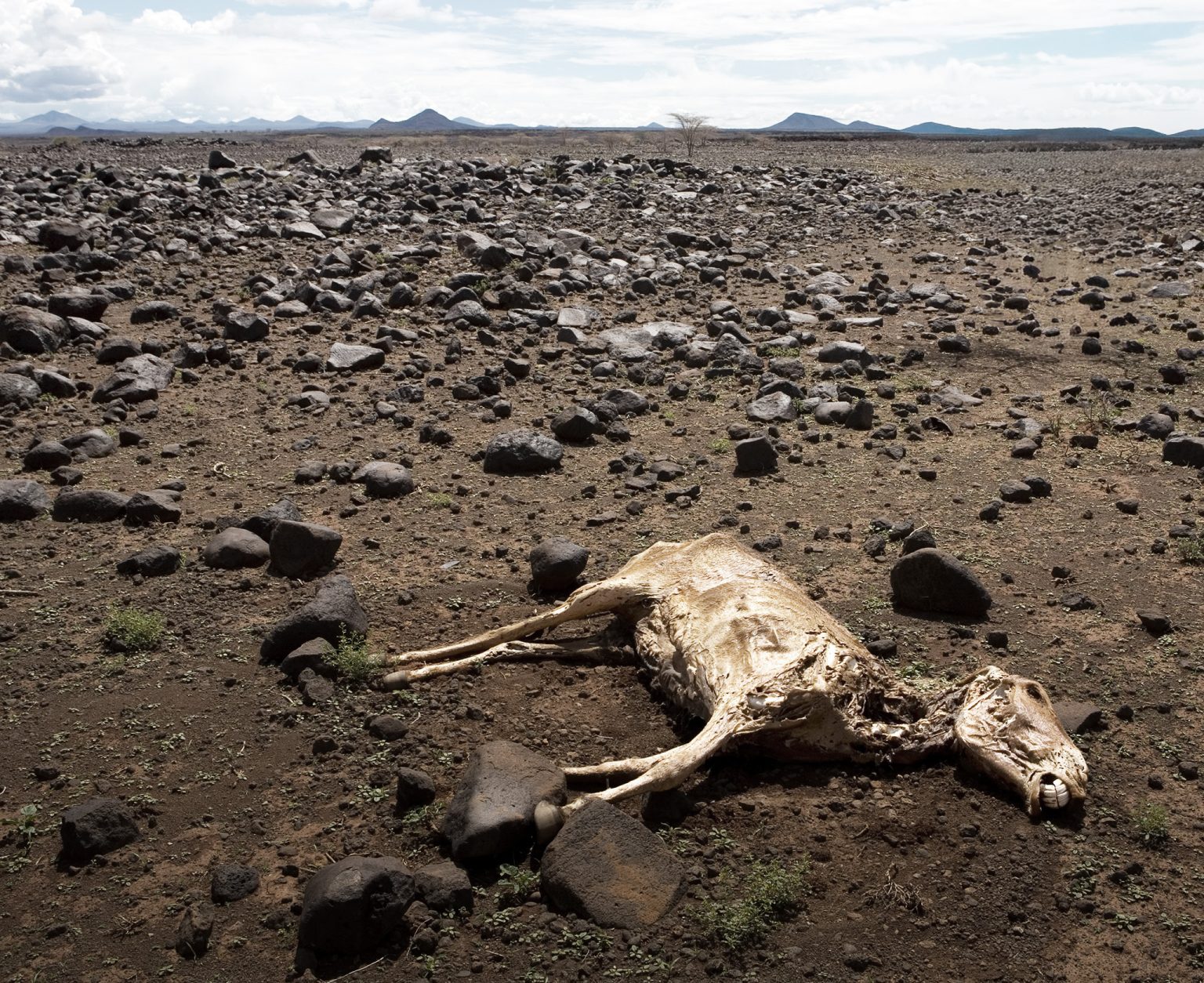
Only about 2.5% is freshwater, most of it locked in glaciers, ice caps or underground formations. Freshwater is also not automatically drinking water: it may be polluted, inaccessible or otherwise unsuitable for human consumption.
The world therefore faces an apparent paradox. Water is not disappearing from the planet, yet usable supplies can still become dangerously scarce.
A World Living Beyond Its Means
In January 2026, the United Nations University Institute for Water, Environment and Health published a report titled Global Water Bankruptcy. Its conclusion is blunt: “the familiar terms ‘water stressed’ and ‘water crisis’ fail to reflect today’s reality in many places”.
The report describes a combination of chronic groundwater depletion, excessive allocation, soil degradation, deforestation, pollution and global warming. In many regions, societies are taking more from rivers, reservoirs and aquifers than natural processes can replace.
The authors express the problem in financial terms. Many societies have not only spent their annual income of renewable water from rivers, soils and snow cover, but have also begun consuming their long-term savings in aquifers, glaciers and wetlands.
Water stress describes severe but potentially reversible pressure, while a water crisis is an acute shock from which a society may recover. Water bankruptcy, by contrast, is a persistent condition in which overuse and environmental damage have produced “irreversible losses of natural water capital”.
The consequences include compacted aquifers, sinking land, disappearing lakes and wetlands, salinized farmland and lost biodiversity. Even if rainfall eventually returns, some water systems can no longer recover to their previous condition.
A 2025 update from the Food and Agriculture Organization of the United Nations found that renewable freshwater availability per person had fallen by 7% over the previous decade. Northern Africa and Western Asia remain among the most constrained regions.
Climate change is adding further pressure. A 2025 study in Nature Communications examined the emergence of unprecedented “Day Zero” droughts, in which prolonged rainfall deficits, reduced river flows and rising demand combine to bring reservoirs close to exhaustion.
The findings underline an important point: scarcity is rarely caused by one factor alone. Drought does not necessarily produce a water crisis if demand remains manageable, while excessive consumption can create shortages even without an exceptional drought.
The Cost of Mismanagement
On human timescales, Earth’s total stock of water is effectively stable. Water continually moves between the oceans, atmosphere and land.
The real question is whether clean water is available in the right place, in sufficient quantities and at an affordable cost. Climate change is altering rainfall, evaporation and river flows, while over-extraction, pollution, land degradation and poor governance are intensifying the pressure.
Iran offers one of the starkest examples.
Scientists have warned since at least 2008 that unchecked groundwater pumping for cities and agriculture was rapidly draining the country’s aquifers. As groundwater was withdrawn, sediments within some aquifers compacted, causing the land above them to sink and permanently reducing their storage capacity.
A study published in Science Advances found land subsidence across approximately 56,000 square kilometers in Iran. Around 3,000 sq km were subsiding by more than 10 cm a year, with rates exceeding 35 cm in some areas of the central plateau.
Iran’s crisis is not simply the result of low rainfall. Climate change has aggravated the pressure, but decades of excessive pumping, inefficient agriculture and poor water policy have left the country increasingly vulnerable.
Once an aquifer has been severely compacted, renewed rainfall cannot simply restore it. Water may return, but much of the underground space that once held it has been permanently lost.
Morocco Turns to the Sea
Morocco offers a more hopeful, though still mixed, example.
Abundant winter rainfall prompted the government to declare an end to a seven-year drought in January 2026. Precipitation was 95% higher than a year earlier and 17% above the seasonal average, while the country’s reservoirs rose to 46% of capacity.
Rain ended the immediate drought. Planning may determine whether Morocco is better prepared for the next one.
The preceding dry years had accelerated the kingdom’s investment in desalination. Water Minister Nizar Baraka told Reuters in December 2025 that Morocco intended to obtain 60% of its drinking water from treated seawater by 2030, up from 25%.
The country plans to produce 1.7 billion cubic meters of desalinated water annually by the end of the decade. The additional supply is intended to provide more reliable drinking water to coastal cities while preserving reservoir water for inland regions and agriculture.
“All new desalination plants will be powered by renewable energy”, Baraka said at the World Water Congress in Marrakesh. Rain brought immediate relief, but desalination is intended to make Morocco less vulnerable when the next drought comes.
The Limits of Desalination
Reverse osmosis has made this expansion possible. The process uses pressure to force seawater through a semipermeable membrane, separating it from dissolved salts and producing treated water alongside a concentrated stream of brine.
For dry coastal countries, desalination can provide supplies that do not depend directly on rainfall. It has already become indispensable across much of the Middle East and is becoming increasingly important in North Africa and southern Europe.
But desalination is not a universal cure.
Plants are expensive to build and operate, require considerable amounts of energy and produce brine that must be disposed of carefully. Transporting the water inland can add substantially to costs.
Desalination also cannot restore a compacted aquifer, resurrect a vanished wetland or reverse the extinction of a species. Nor does it eliminate the need to modernize irrigation, repair leaking pipes or discourage wasteful consumption.
New supplies can even postpone necessary reforms if governments use them as an excuse to avoid confronting unsustainable demand.
Technology works best when it complements responsible management rather than replacing it.
The Ultimate Resource
The tension between natural limits and human ingenuity is hardly new.
In 1980, economist Julian Simon made a famous wager with biologist Paul Ehrlich, whose 1968 book The Population Bomb had predicted that population growth would soon outstrip available resources and push societies toward collapse.
Simon believed scarcity did not merely produce deprivation. It also created incentives to discover new deposits, develop substitutes, recycle materials and use them more efficiently.
Ehrlich selected five metals – chromium, copper, nickel, tin and tungsten – with a theoretical total value of $1,000. If their inflation-adjusted prices were higher after ten years, Ehrlich would win. If they were lower, Simon would win.
By 1990, all five had become cheaper. The value of the basket had fallen by $576, which Ehrlich paid to Simon.
The wager was a striking victory, but it did not settle the broader debate. Hannah Ritchie of Our World in Data later examined the five metals across different decades since 1900 and found that Simon and Ehrlich would each have won roughly half of the hypothetical ten-year bets.
Over the longer term, however, the prices of the five metals have remained surprisingly stable despite enormous increases in production. That brings Ritchie closer to Simon’s view that human innovation can prevent growing demand from producing permanent resource scarcity.
The same principle applies to water, but only up to a point.
Seawater was once of little use to large cities. Today, reverse-osmosis plants provide drinking water to millions of people. Wastewater can be treated and reused, modern irrigation can produce more food with less water and sensors can detect leaks that previously went unnoticed.
Human ingenuity can change what counts as an accessible resource. It cannot make every loss reversible.
The real danger is not that the planet’s water will vanish, but that societies will squander or damage the supplies they can use. Technology can create new options and turn seawater into drinking water. It cannot replace restraint, maintenance or competent government.
The task is to develop new supplies without encouraging waste, protect natural reservoirs before they are permanently damaged and build infrastructure capable of withstanding future droughts.
Human ingenuity remains an extraordinary resource. It is most valuable when combined with the judgment to recognize what technology can solve – and what it cannot.