A Catholic guide to Christian–Muslim dialogue in Germany
The German bishops have published a handbook intended to support dialogue with Muslims. The new brochure offers foundational insight into Islam and Christian–Muslim engagement and does not shy away from contentious questions.
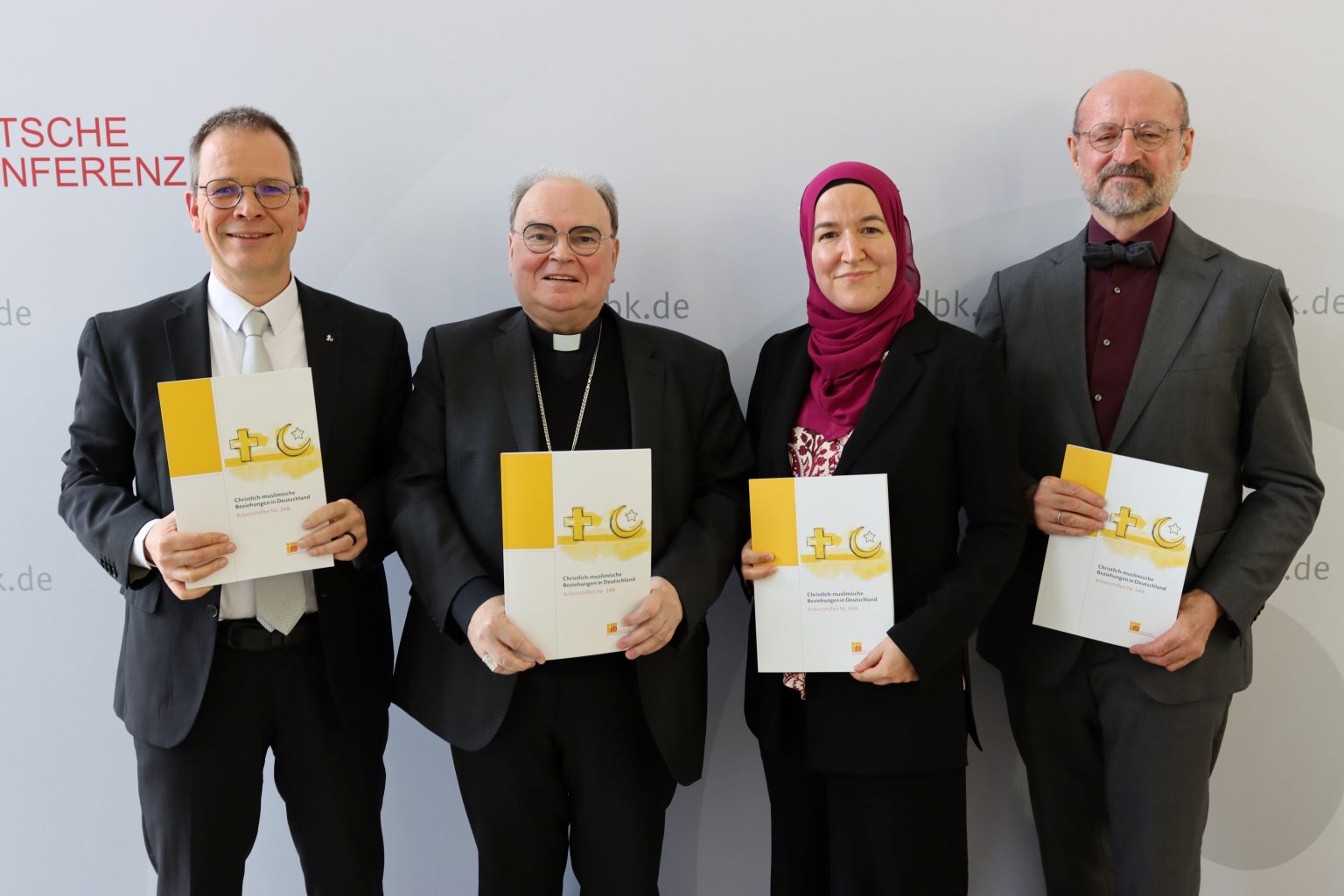
Press conference on ‘Dialogue between Christians and Muslims – Continuity and Change’. Photo: Marko Orlovic/Deutsche Bischofskonferenz
|
Würzburg. Dialogue between religions is rarely straightforward. Different faiths and cultures encounter one another, while each tradition is itself far from uniform. Christianity exists in Catholic and Protestant forms, Islam is divided principally into Sunni and Shia traditions, and within both Christianity and Islam there are further distinctions. Local customs add another layer. Islam as practised in Bosnia differs from that in Turkey, and Turkish traditions again from those shaped in Arab societies. Islam has no central magisterium and no overarching hierarchy. Individual legal scholars may articulate and defend their own interpretations.
The Catholic Church in Germany takes the phenomenon of Islam seriously. For that reason, the German bishops devoted an entire study day to the subject of Christians and Islam during their plenary assembly, currently meeting in Würzburg.
It is Islam – in its political forms or, in extreme cases, through Islamist terrorism – that generates negative headlines worldwide. The majority of Muslims who live peacefully alongside people of other faiths, including Christians, attract little attention or else fall under unfair suspicion because they are perceived as outsiders. Muslims who have immigrated to predominantly Christian countries come into focus when tensions arise with the liberal culture of Western societies. In many instances such disputes are less religious than cultural and can only indirectly be traced to matters of faith.
In Germany, 47 per cent of the population now declares no religious affiliation. Catholics, at 23.7 per cent, form the largest Christian denomination, followed by Protestants at 21 per cent. Islam, with roughly 4 to 5 per cent, is the second-largest religion in the country.
For the Catholic Church, the Second Vatican Council set out a clear mandate to seek dialogue with Muslims. That mandate derives from the conciliar declaration Nostra aetate: ‘The Church regards with esteem also the Muslims, who adore the one God, living and subsisting in Himself, merciful and all-powerful, the Creator of heaven and earth, who has spoken to men’ (NA 3). The Catholic Church in Germany repeatedly takes up that task by publishing guidelines for interreligious dialogue. The newly released text bears the title ‘Christian–Muslim Relations in Germany’.
As the foreword recalls, as early as 1773 the Würzburg Synod ‘advocated openness and sensitivity’ towards the ‘believers of Islam’. The German Bishops’ Conference presented the new document at a press conference today.
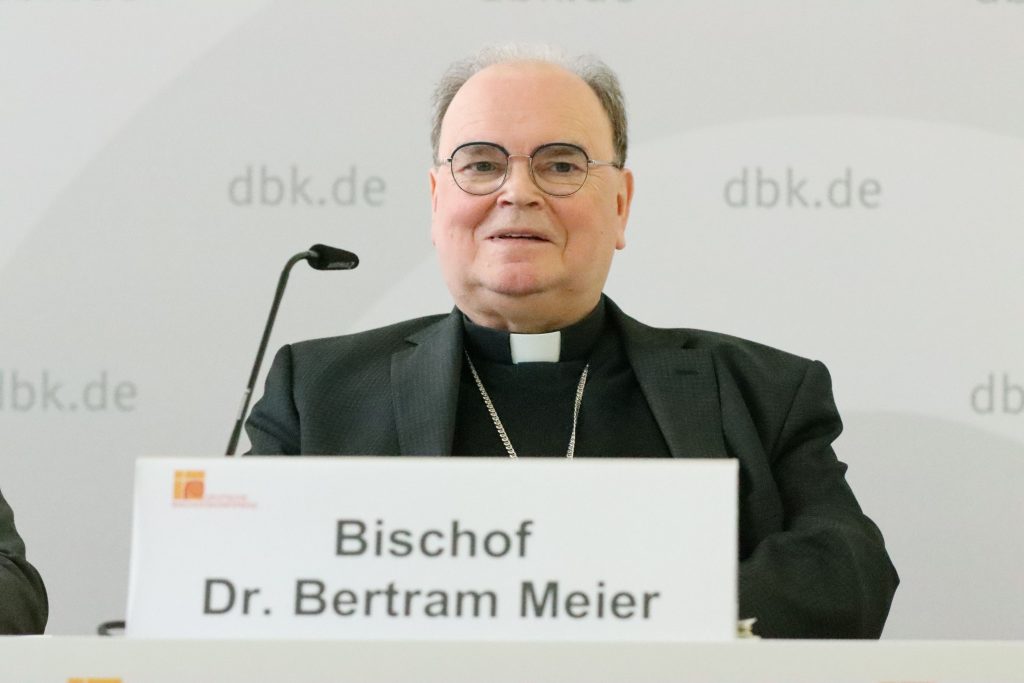
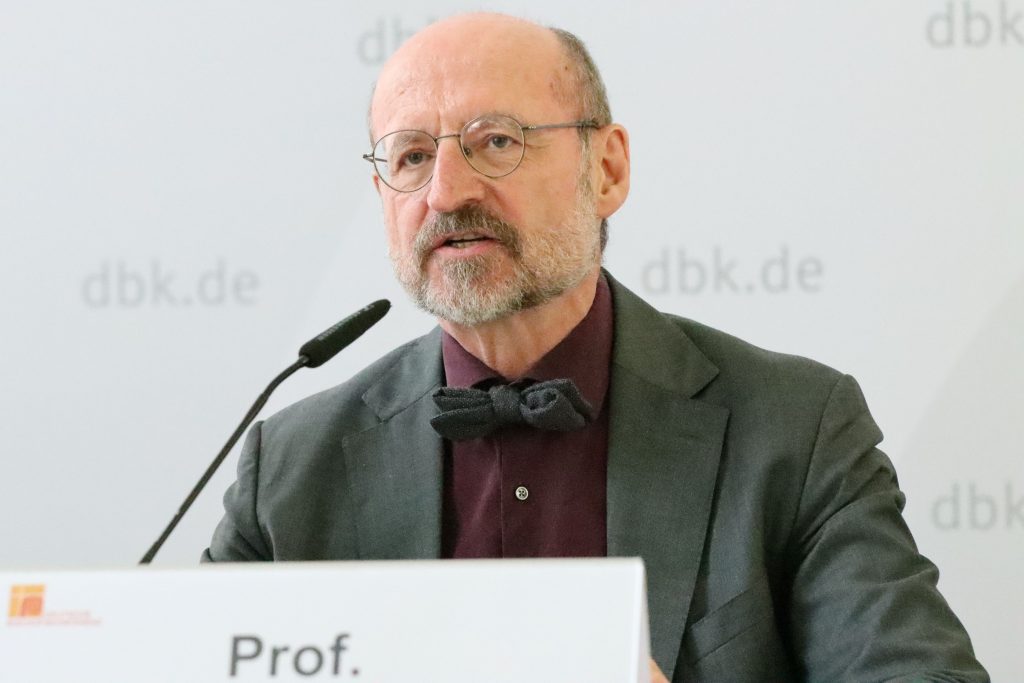
Over recent decades, a broad diversity of Muslim life has developed in Germany, said Bishop Bertram Meier of Augsburg, who chairs the Commission for the Universal Church and the Subcommission for Interreligious Dialogue within the German Bishops’ Conference. ‘For a long time, people with Turkish roots formed the large majority of Muslims in Germany’, he noted, ‘but in recent years migration from the Near and Middle East has contributed to further pluralisation.’ Diversity is evident not only in theological traditions and cultural backgrounds, but also in lived religiosity. The spectrum ranges, as he put it, from a pronounced orientation towards Islamic norms shaping daily life to looser connections with religious heritage.
Bishop Bertram Meier of Augsburg, Chairman of the Commission for the Universal Church and Chairman of the Subcommission for Interreligious Dialogue of the German Bishops’ Conference. Photo: Marko Orlovic/Deutsche Bischofskonferenz
Blurred statistics
The bishop pointed to a noteworthy issue: individuals who do not themselves identify as Muslim are nevertheless categorised as such in German statistics because of their origin. The frequently cited figure of around 5.5 million Muslims in Germany is therefore only an approximation. Precise data are lacking. Even the census conducted by the Federal Statistical Office does not record exact numbers of Muslims living in the country.
As an example of newly developed forms of dialogue, he referred to the establishment of Islamic theology at German universities. In recent years several faculties and institutes have introduced degree programmes in Islamic theology. Graduates are intended to work in education and pastoral care. Some federal states have established Islamic religious instruction in public schools, while others are considering similar steps. Critics of the university programmes argue, however, that they may not be recognised by all Muslims. Given that Islam has no binding teaching authority, devising a universally accepted curriculum is inherently difficult. The bishop did not address that concern directly.
Academic engagement may nevertheless open new avenues of dialogue. Drawing on numerous examples, he outlined where and how interreligious exchange can succeed. He also emphasised the potential role of Christians as bridge-builders between Jews and Muslims. In his view, the strength of the German constitution lies in its capacity to accommodate the concerns of non-Christian religious communities.
A complex religion
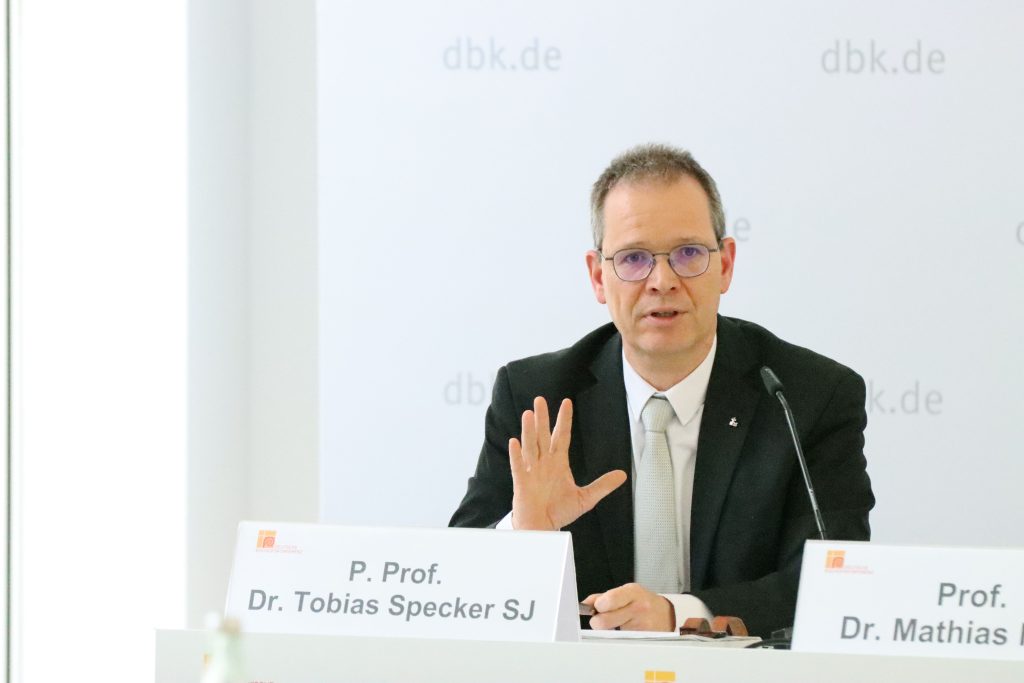
Tobias Specker SJ, Professor of Catholic Theology in Relation to Islam at the Sankt Georgen Graduate School of Philosophy and Theology in Frankfurt am Main, warned against a superficial contempt for Islam that reduces the diversity and complexity of its 1,400-year history to isolated Qur’anic verses and equates the religion as a whole with violence and terrorism. At the same time, he rejected any naïve appropriation. Specker, who contributed to the publication and delivered a lecture at the bishops’ study day, stressed: ‘The document does not simply list similarities and differences. Its guiding category is relationship.’
Tobias Specker SJ, Professor of Catholic Theology in Relation to Islam at the Sankt Georgen Graduate School of Philosophy and Theology in Frankfurt am Main. Photo: Marko Orlovic/Deutsche Bischofskonferenz
He introduced three considerations. First, the Church should approach Islam as a religious phenomenon. Secondly, spiritual discernment is required. Thirdly, attention must be paid to Islam’s place within German society.
Mathias Rohe, Professor of Civil Law, Private International Law and Comparative Law at Friedrich-Alexander-Universität Erlangen–Nürnberg, observed that to speak of Islam in Germany is above all to speak of people living here in all their diversity. Over generations, communities have undergone significant change. Perception, he suggested, shifted markedly after the Islamist attacks of 11 September 2001: ‘Foreigners, Turks etc. became Muslims.’ Social challenges linked to migration were suddenly interpreted in religious terms. The phrase ‘Islamisation of Muslims’ gained currency.
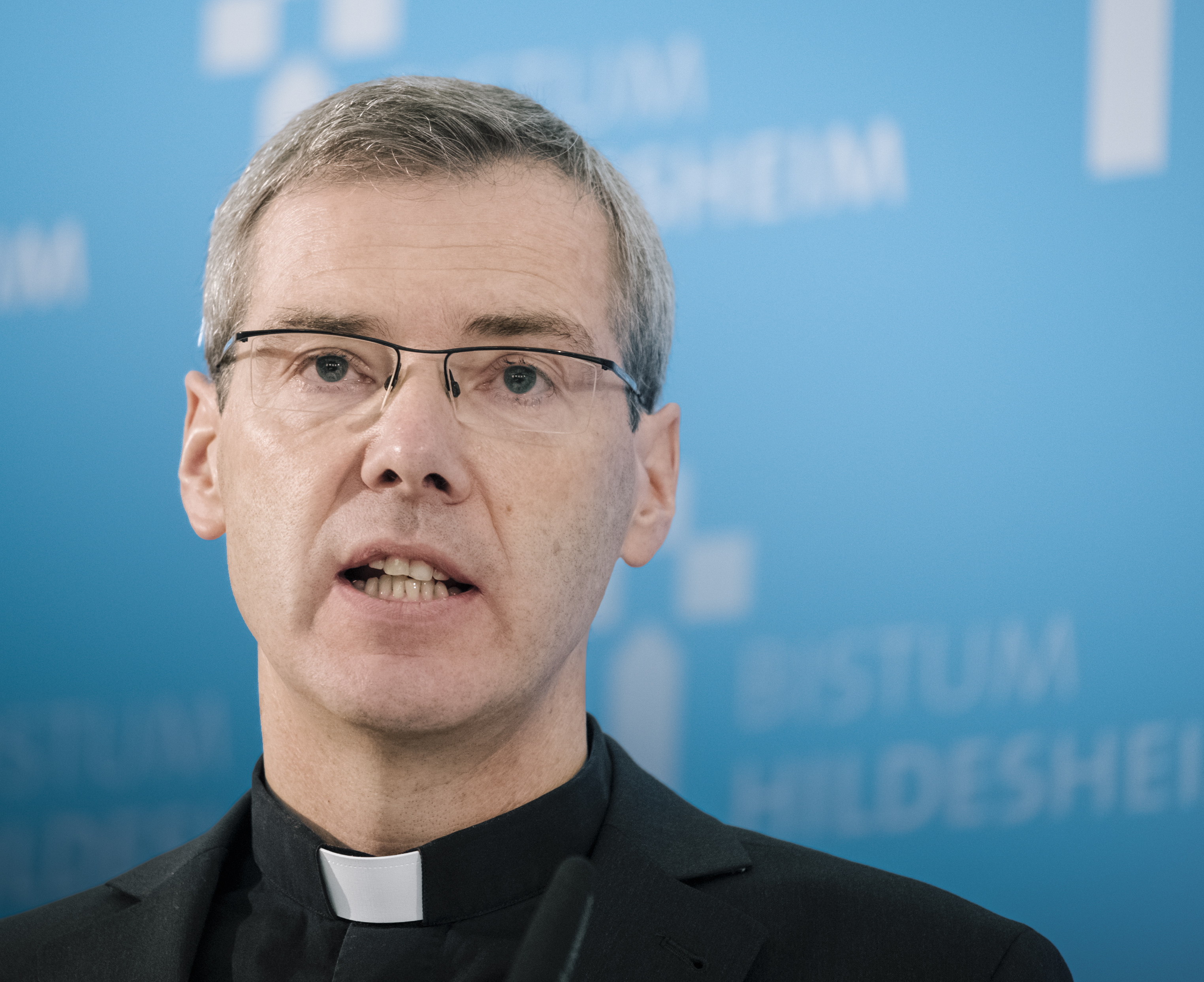
Mathias Rohe, Professor of Civil Law, Private International Law and Comparative Law at Friedrich-Alexander-Universität Erlangen–Nürnberg. Photo: Marko Orlovic/Deutsche Bischofskonferenz
Rohe addressed the risks candidly: ‘Actually existing Islamist extremism grounded in religion is undoubtedly a threat to society as a whole. The problems do not begin only with violence: political or social claims to domination based on premises incompatible with the rule of law are also dangerous.’ Combating such phenomena requires the cooperation of all who are willing, including members of Muslim communities. Sound expertise is essential for any serious critique of Islam, he added, noting that such knowledge is not always evident among some high-profile critics.
Dialogue as relationship
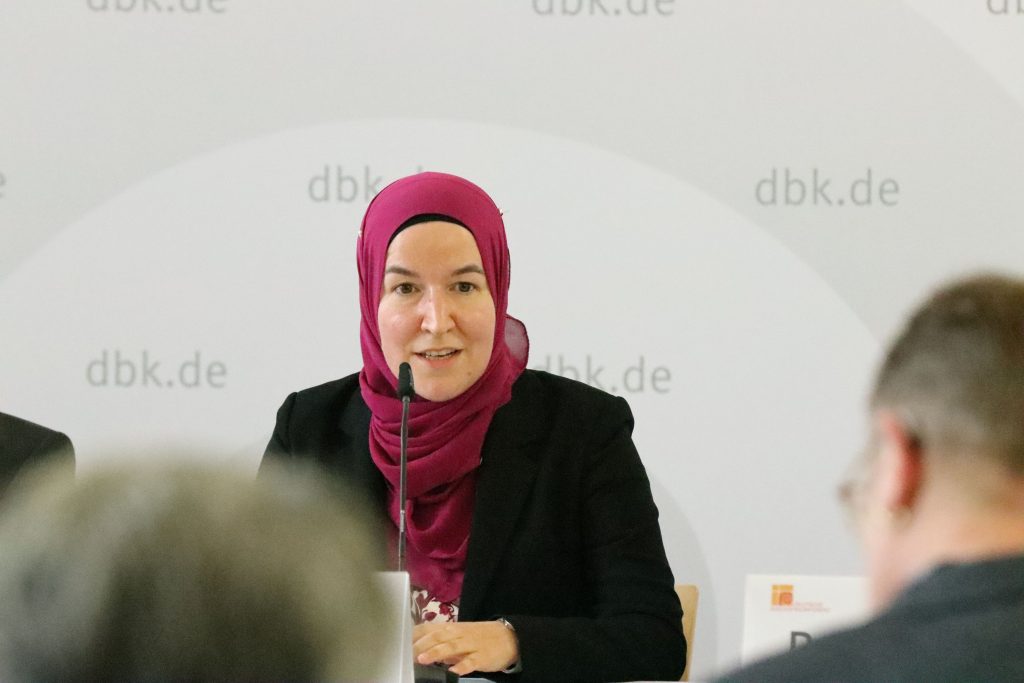
Dunya Elemenler, chair of the Christian–Islamic Society, also commented on the publication. The political scientist, who works in interreligious dialogue, described such engagement as an ongoing process. ‘People of different religions meet in order to learn from one another.’ The bishops’ document likens interreligious dialogue to the work of building relationships. As in any relationship, patience, commitment and trust are required. Only through openness, respect and attentive listening can a genuine bond emerge.
Dunya Elemenler, Project Manager at the Social Service for Muslim Women and Chair of the Christian–Islamic Society. Photo: Marko Orlovic/Deutsche Bischofskonferenz
Elemenler presented the activities of the society and reported on a project providing Muslim emergency pastoral support to complement existing ecumenical chaplaincy services. The initiative offers training for volunteers. Interreligious dialogue reveals its true strength, she said, where words give way to common action.
The 180-page publication offers extensive information on Islam and on possibilities for Christian–Muslim coexistence. Controversial issues, including female genital mutilation, are not omitted. The theological assessments advanced in the document will doubtless prompt debate. Its legal, particularly human-rights, analysis, however, gives little cause for objection. In other respects, certain evaluations invite criticism. The equation of the Muslim call to prayer with Christian church bells is, for example, unconvincing. The brochure’s comprehensive overview of many aspects of Islam is a strength. Yet it remains advisable to consult additional, more critical accounts as well.
Welcome to the comments section of the Štandard daily. Please take note of our guidelines, comments are moderated by us. You can contact the moderators at support@statement.com.
Participate in the discussion
Comments are available to subscribers only. If you'd like to join the discussion, choose a subscription starting at €6.72 per month.
All comments 0
Register
Comments are available to registered users only. If you'd like to join the discussion, register here.