A decade after Islamist terrorists murdered Father Jacques Hamel at the altar, France still refuses to name the ideology behind the crime, preferring reconciliation rituals to truth.
Ten years ago Father Jacques Hamel was murdered by two Islamist terrorists while celebrating daily Mass at his small parish in Saint-Étienne-du-Rouvray, Normandy. A decade later, no lessons seem to have been learned from this tragedy, and no one seems willing to name the ideology behind the perpetrators’ actions.
A Martyr at the Altar
A former altar boy who entered the minor seminary at the age of 14, Jacques Hamel had served in the military in Algeria before being ordained a priest in 1958. He celebrated the 50th anniversary of his ordination in 2008.
On 26 July 2016, at 9:43 a.m., while he was celebrating morning Mass, two Islamist terrorists armed with knives stormed into the village church in Saint-Étienne-du-Rouvray. They first attacked Father Hamel, who was presiding over the service before five parishioners – three nuns and a retired couple. They forced the priest to his knees, then assaulted him.
After the police were alerted, the Rouen Search and Intervention Brigade surrounded the church and shot and killed the two jihadist terrorists as they left the building, using two nuns they had taken hostage as human shields. Father Hamel was found dead with 18 knife wounds to the throat, while one parishioner had suffered serious throat injuries.
Historian Jean-François Colosimo points out that this is the first time a priest has been killed in France while celebrating Mass since the persecutions of the Vendée Wars during the French Revolution. It was also the first murder carried out by the Islamic State in a European church.
The Vatican news agency Fides notes that Father Hamel was the only Catholic priest murdered in Europe in 2016, out of a total of 28 Catholic missionaries killed worldwide that year. These facts and figures underscore the extraordinary nature of his death.
On 2 October 2016, during the Mass of Reparation marking the reopening of the church in Saint-Étienne-du-Rouvray, the Archbishop of Rouen, Monsignor Dominique Lebrun, announced the opening of the beatification process for Father Hamel by special dispensation from the Pope, which waived the usual five-year waiting period after death. Similar exceptions were made in the cases of Mother Teresa and John Paul II.
The Fantasy of Peaceful Coexistence
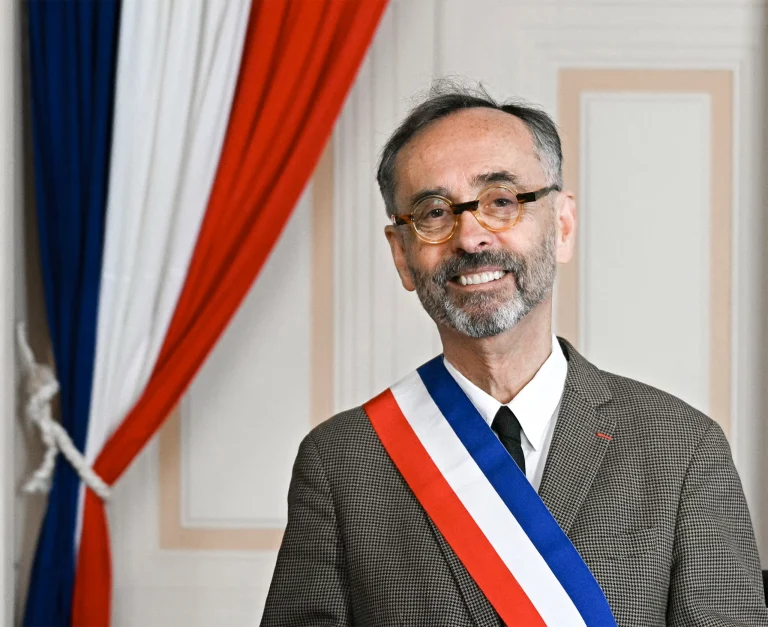
Ten years after the events, the town’s Communist mayor organized festivities intended to celebrate not the memory of the martyred priest but the fantasy of peaceful coexistence that had helped create the conditions for his death.
Regional television aired a report on the event that sparked consternation among many on social media. The footage shows a colorful, swaying crowd – with a fair share of veiled women in the mix – attending performances organized by local associations, all at the taxpayers' expense. The message? “We’re all different, but we’re all together. We see many colors, many backgrounds.” We learn that what defines the identity of Saint-Étienne-du-Rouvray is “being together”. The reporter marvels at this “joyful afternoon”.
To avoid dampening the mood, we will not dwell too much on the death of Father Hamel, who suffered 18 fatal knife wounds to the throat – that would make a bad impression. We must, of course, respect the equality of grief for the sake of balance. “It’s sad on both sides – a mother who loses her child, someone who loses a loved one”, explains a local resident, no doubt referring to the fact that the two terrorists were shot dead. She is convinced: “It can happen to anyone.”
We have learned that the murder was committed by two “radicalized” young men, but we will never know what caused their radicalization. The word Islam is not even mentioned.
Father Hamel’s sister, who was in the church at the time of the crime, has become friends with the mother of the priest’s killer. All of this would be touching if it were a genuine story of forgiveness, but the moral pressure of republican doctrine sees things differently. To hear the journalists tell it, the terrorist’s mother may be the primary victim.
The town has managed to “move on”; “we must keep moving forward” – simply wonderful. Too bad for the poor priest. The Communist city hall collected messages from residents about their memories of that terrible day in July 2016, but the official line had been set in advance: we must draw a “positive” message from it, one of “solidarity and fraternity”. The danger lies in “division” and “fragmentation”.
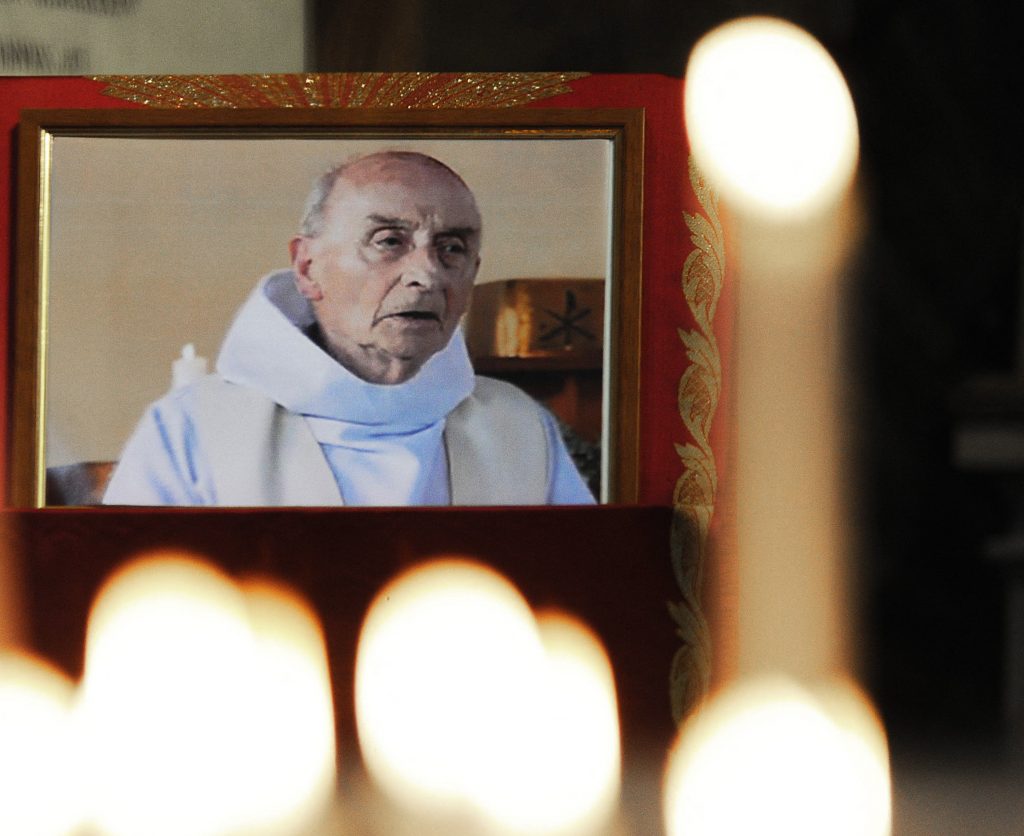
A photograph of Father Jacques Hamel inside the Church of San Luigi dei Francesi in central Rome. Photo: Marco Zeppetella/AFP/Profimedia
The Lessons Never Learned
The France 3 Normandie report is, unfortunately, quite emblematic of how Father Hamel’s assassination was – and still is – perceived by the media and the political class. Even before the assassination, willful blindness was the order of the day. In 2018 it was reported in the press that the Intelligence Directorate of the Paris Police Prefecture had prior knowledge of a message from one of the terrorists announcing an attack on a church and mentioning Saint-Étienne-du-Rouvray, yet failed to take the necessary action.
François Hollande, who was president of the Republic at the time of the events, issued a hollow statement glorifying the Republic: “Attacking a church, killing a priest – that is desecrating the Republic, which guarantees freedom of conscience”, he explained at the time.
Today, he envisions a return to the political stage for the 2027 presidential election and pontificates with the same kind of empty rhetoric: “The terrorists sought to frighten us. The exact opposite happened. Father Hamel took on, for all citizens, an eminently political dimension: that of uniting the nation in the face of barbarism.” Once again, the word Islam is not mentioned.
Last Saturday in Berlin, an Islamist attack sowed terror at the Berlin Pride parade. One of the speakers expressed dismay that the attack was not carried out by a white Christian "person". In Saint-Étienne-du-Rouvray, the victim was a white Christian man – a priest, the archetypal victim, offering his life as a sacrifice after the example of Christ, in whose person he celebrated Mass.
Father Hamel’s last words were “Vade retro, Satanas”. An unequivocal statement. At least he had understood, as he breathed his last, that his death was neither a random accident nor collateral damage born of the fantasy of peaceful coexistence.
Welcome to the comments section of the Štandard daily. Please take note of our guidelines, comments are moderated by us. You can contact the moderators at support@statement.com.
Participate in the discussion
Comments are available to subscribers only. If you'd like to join the discussion, choose a subscription starting at €6.72 per month.
All comments 0
Register
Comments are available to registered users only. If you'd like to join the discussion, register here.