Republicans Clash over Rising Burrito Prices and Trump Economy
Trump promised to bring down prices for ordinary Americans, but persistent cost-of-living pressures are raising questions about whether his tariffs and foreign policy are making matters worse.
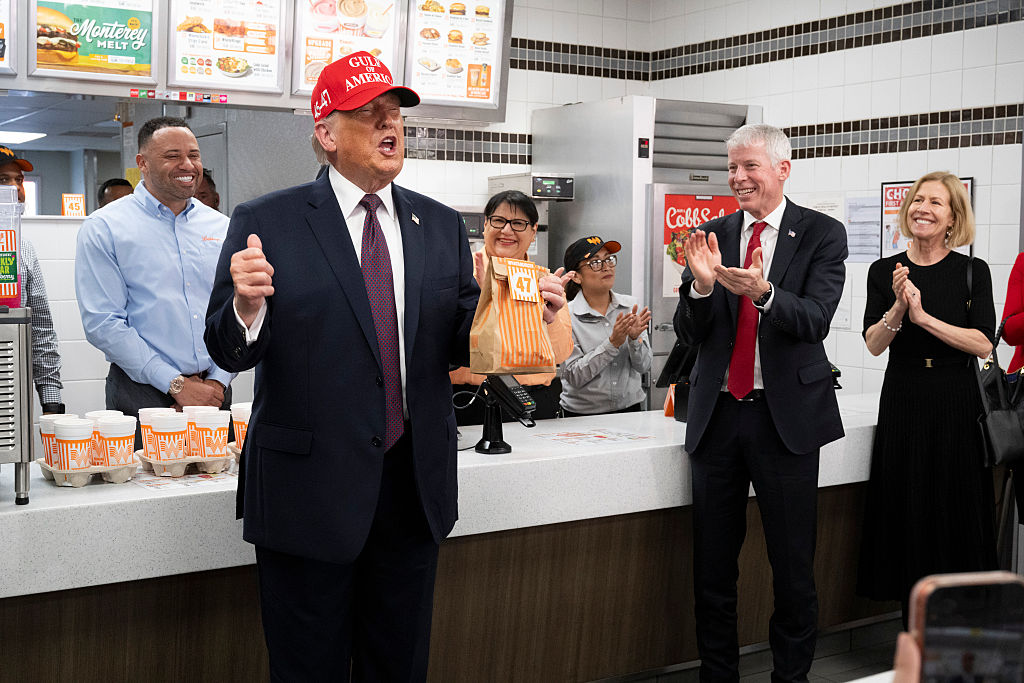
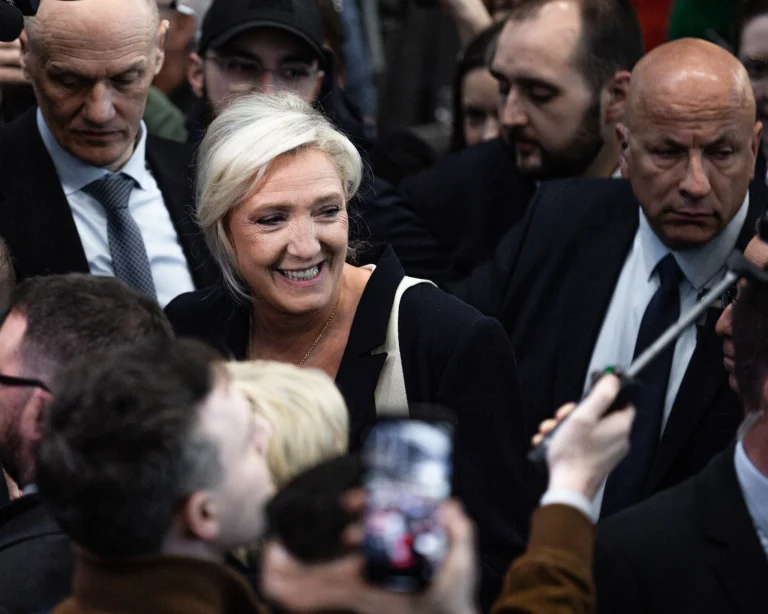
The price of a fast-food staple has led to fractious debate over Trump's handling of the economy. Photo: Roberto Schmidt/Getty Images
|
An online war of words over the rising cost of burritos in America has highlighted divisions within Republican circles about the policies of Donald Trump and their negative effects on the economy.
President Trump was elected on a platform aimed primarily at tackling inflation and improving affordability, after prices spiraled under the Biden administration and the average Joe began to feel the squeeze.
Instead of fixing it, critics of the Republican government, from within conservative movements and on the left, argue that a fixation on hawkish foreign policy – including tariff wars and real wars – has piled the pressure on American citizens, increasing inflation and driving up the price of gas and burritos.
Rather than owning and defending these policies, the burrito war saw prominent conservative voices seek to discredit claims about a rising cost of living, a tactic described by Daily Wire commentator Matt Walsh as “political suicide”.
It began with an innocuous-seeming post on X from a member of the conservative advocacy group Turning Point USA about the spike in the price of the Tex-Mex delicacy. In parts of the United States, he noted, the cost is as high as $15–$20 per burrito, leaving many students priced out of a staple of their diet and the general public feeling that prices are simply too high.
But immediately, leading conservative figures jumped in with hot takes ranging from claims that no one is entitled to eat a burrito and should just eat ramen to assertions that $20 burritos are fake news.
It was not a case of minor figures making fringe arguments. These posts came from the likes of Ben Shapiro and Washington Post columnist Marc Thiessen, whose reputations are well-established and who command a significant following.
Rather than engaging with a fact of life causing concern to a majority of Americans, they sought to dismiss those concerns or deflect attention.
On the flip side, some conservative commentators, including Matt Walsh, did respond critically to claims denying that the economy is performing badly. In a long post on X, he argued that Republicans who ignored the cost of living crisis or tried to argue it away were committing “political suicide”.
His comments did not go down well, with many commenters suggesting his post was a thinly concealed call for capitulation in the US war with Iran.
The X post that launched the Republican burrito wars.
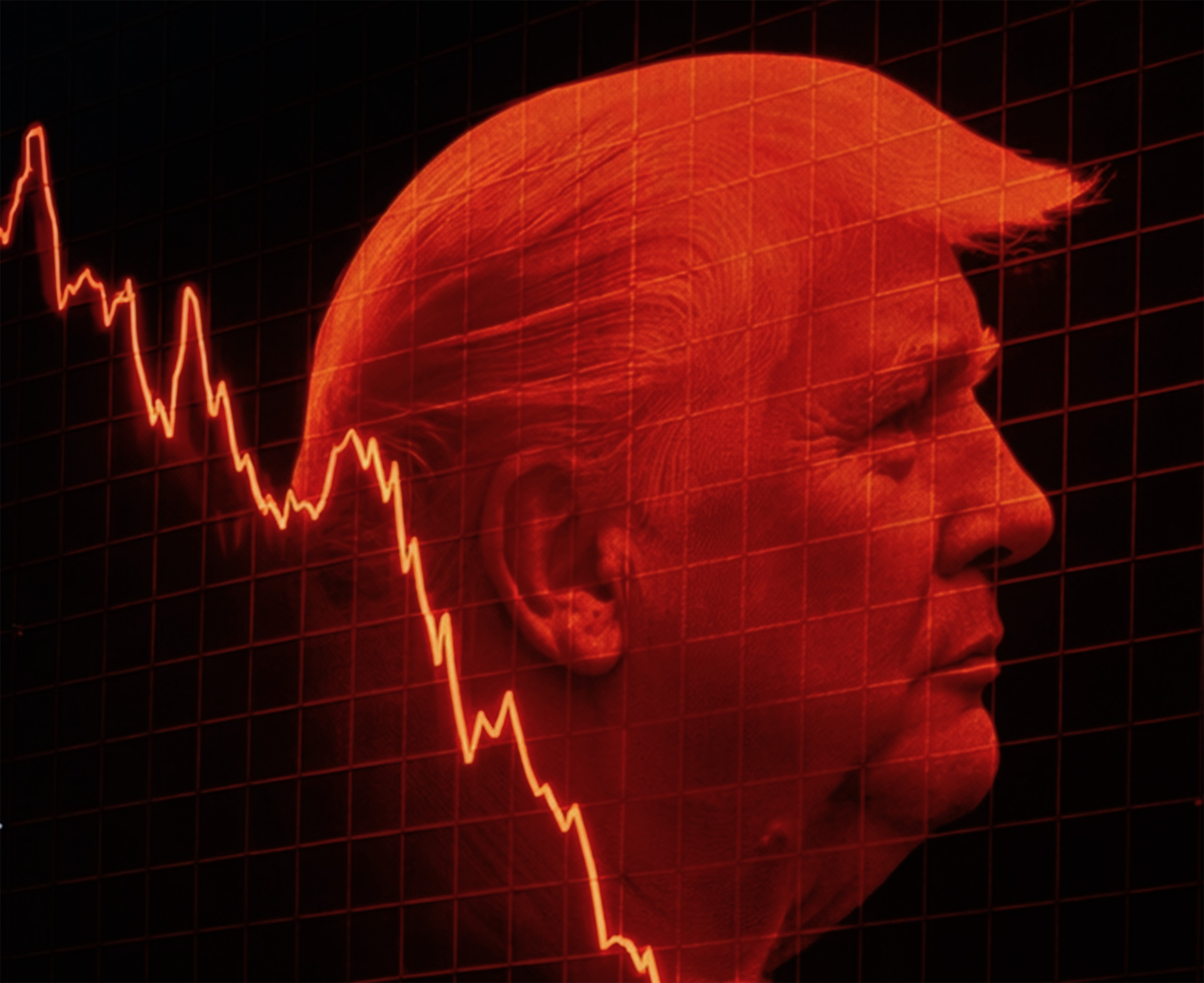
The Failing Trumpian Economy
Yet it is next to impossible to make the case that Trump is handling the economy well. While even critical voices such as Walsh maintained that it was a case of inheriting a bad situation from Joe Biden, other conservatives highlighted that key economic metrics have worsened since Trump came to power.
The annual inflation rate hit 4.2% in May, more than one percentage point higher than when Trump took office, before dropping back slightly to 3.5% in June. Meanwhile the price of gasoline is up almost $1 a gallon (about $0.26 a liter) over the past year, putting pressure on the car-dependent nation.
Americans' own reported feelings about the state of the economy also reflect poorly on the Trump administration. Almost 80% of US adults believe the economy is not doing well, according to one CNN poll, and even Fox News, typically pro-Trump, found in its polling that three-quarters rate the economy negatively, with 41% calling it poor.
The Republicans have squandered a significant amount of political goodwill on the issue. A poll from Reuters/Ipsos found that, at the start of Trump's second term, a larger share of voters believed the Republicans' plans to improve the economy were better than the Democrats'.
A year and a half into his second term, it is neck and neck, with Reuters/Ipsos finding that 32% believe the Republicans have a better plan, while 31% favor the Democrats.
Matt Walsh on X hits back at conservatives denying that the cost-of-living crisis is real.
Ideology Trumps Reality
The responses to Walsh's post tended to highlight an, as it were, ideological divide between the various conservative voices – those strongly in favor of the war in Iran and those opposed to it.
The more hawkish, pro-war elements were the most strident in claiming either that the cost-of-living burrito crisis was fake news or that it indicated a sense of entitlement to think you had a right to eat burritos.
Meanwhile, voices critical of the conflict with Iran – or at least of how it has been handled – were more open about the obvious economic difficulties facing many Americans.
Even here, however, as in the case of Walsh, there was a continued refusal to confront many critics' view that these difficulties are down to Trump's policy decisions, particularly the war and his approach to tariffs.
Instead of admitting that these policies have involved financial hardship and arguing that the cost is still worth it for the long-term benefits, Republicans are burying their heads in the sand in a manner mirroring that of the previous Democratic administration.
Republicans argued Biden's approach – big government spending, effective open borders and labor regulation – ramped up inflation, but few prominent supporters and Democratic commentators were willing to address the issue and ask hard questions.
However, Trump is now in power, the economy is still faring badly and it is the turn of Republican commentators and officials to demonstrate ideological blindness in the face of criticism.
Trump's handling of the economy is harming his reputation among voters who were once part of his key base.
Echo Chambers
Perhaps this is reflective of the attitudes of the parties' voters. As the polls suggest, despite the obvious shortcomings of both Democrats and Republicans in tackling a challenging economic picture, significant portions of their respective bases still believe the parties are doing a good job.
Either that is because they are simply unaffected by the various crises, which seems unlikely given how pervasive they are, or because they now exist in an echo chamber in which self-criticism is rarely voiced and group loyalty is preferred.
Trump's tariffs are an interesting case in point. Republicans were once the party of free trade and efforts to exert government control over the market – including through tariffs – were taboo.
Now, Democrats who are favorable to democratic socialism are the political grouping in America most likely to oppose barriers on free international trade, while staunch Republicans show the greatest support for imposing levies and taxes.
In both cases, it is hard to see how their positions gel with a consistent political or economic worldview. It looks more like reflexive groupthink – for or against Trump's policies – than rational analysis.
While other policy goals, such as defeating Iran or promoting American businesses, may justify costly burritos in the short term in pursuit of long-term gains, they do not justify willful blindness to economic realities. Yet this is the path both Democrats and Republicans seem committed to.
“It's the economy, stupid” was a catchphrase coined by James Carville, adviser to Bill Clinton during his first presidential campaign in 1992. It became a political truism that governments and politicians forget at their peril.
However, as the actions of first Biden and now Trump suggest, it appears no longer to be advice heeded by America's political leaders, to the detriment of their citizens.
Welcome to the comments section of the Štandard daily. Please take note of our guidelines, comments are moderated by us. You can contact the moderators at support@statement.com.
Participate in the discussion
Comments are available to subscribers only. If you'd like to join the discussion, choose a subscription starting at €6.72 per month.
All comments 0
Register
Comments are available to registered users only. If you'd like to join the discussion, register here.