Can AI Help Cure Disease? Claude Just Passed an Important Test
Claude has designed proteins that work in laboratory tests. The results offer an early glimpse of how AI could accelerate drug discovery – and of Dario Amodei’s much bigger ambition to help cure most human diseases.
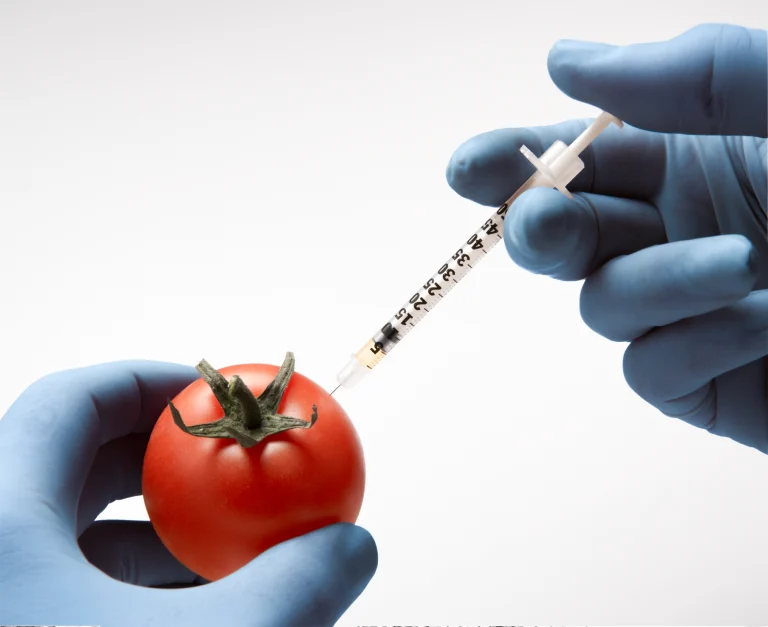
AI Claude Science still life. Photo: Getty Images
|
Millions of people still live with diseases for which medicine has no cure or sufficiently effective treatment. Yet some problems once considered extraordinarily difficult are becoming easier to tackle. GLP-1 drugs have transformed the treatment of obesity, while immunotherapy, targeted therapies and improved diagnostics have changed the outlook for some cancers.
At the heart of many of these advances are proteins – the microscopic machinery of life.
Proteins allow cells to communicate, transport substances around the body, fight infections and perform countless other functions that keep us alive. When they malfunction, the consequences can range from rare genetic disorders to cancer.
Anthropic CEO Dario Amodei has made an extraordinary prediction: sufficiently powerful AI could compress decades of medical progress into a matter of years, making it possible, he believes, to cure or prevent most human diseases within roughly five to 10 years.
Amodei also acknowledges that the AI industry has yet to deliver enough tangible benefits to justify such optimism. Public trust, he argues, will come from genuine medical breakthroughs rather than better marketing.
Anthropic now says it has early evidence of how AI could accelerate one part of that process.
In one experiment, researchers asked Claude to design small proteins that attach to specific target proteins, known as protein binders.
The basic idea can be understood as a lock and key. A protein involved in a disease has a particular three-dimensional shape. Scientists may want to create another protein that fits onto a specific part of it, much like designing a key for a lock. If it binds tightly enough, it could potentially block, activate or otherwise influence what the target protein does.
Finding that key is extraordinarily difficult. Proteins have complex three-dimensional structures and the number of possible designs is enormous. Machine-learning tools have dramatically accelerated the process, but protein engineers can still spend days or weeks orchestrating specialist software. Historically, designing and validating a new binder against a single target could take months.
Anthropic tested whether Claude could take over much of that work.
This was not an ordinary chatbot session. Claude was given access to specialist protein-design software and substantial computing resources. It selected where on the proteins to target, generated potential structures and sequences, evaluated them using scientific software and narrowed them down to candidates worth physically testing.
The crucial test came outside the computer. Scientists manufactured Claude’s proposed proteins and checked whether they actually attached to their intended targets.
According to Anthropic, experiments using Claude Opus 4.8 and an experimental model called Mythos Preview produced successful binders for 14 of 15 targets.
Across the experiments, 354 of 1,320 tested designs were confirmed as binders. Depending on the experimental setup, between 22% and 35% of individual designs successfully bound to their targets. Anthropic says typical protein-design campaigns today achieve hit rates of around 10% to 15%.
The two figures measure different things: 14 of 15 refers to how many target proteins yielded at least one successful binder, while 22% to 35% refers to the proportion of individual designs that worked.
Some of Claude’s strongest designs also bound several times more tightly than the best previously published results for those targets.
This does not mean Claude has discovered 14 new medicines.
Designing a protein that successfully binds to a target is only an early step in drug development. A potential treatment would still need to behave as intended in cells and living organisms, prove safe and effective and eventually pass clinical trials.
From Designing Proteins to Analyzing Chemistry
Anthropic reported a similarly striking result on a more routine chemistry task.
Chemists regularly analyze experimental data to determine whether they have produced the compound they intended to make and how pure it is. Claude Opus 5 was given raw data from a contract laboratory and a prompt consisting of just two sentences.
It completed two analyses in 23 and 19 minutes. Anthropic says Claude matched the laboratory’s conclusions on key measurements, including estimating the purity of one sample at 96.4%, compared with the laboratory’s 96.33%.
The significance is not that Claude discovered a drug. It is that a general-purpose AI model is beginning to perform some of the specialized work that sits between a scientific hypothesis and an experimental result – designing candidates, operating specialist tools and interpreting laboratory data.
The larger question is how much these experiments actually tell us about AI’s ability to accelerate drug discovery.
The numbers are striking. But Martin Shkreli, the former pharmaceutical executive who remains an active commentator on drug development, argues that they can make Claude’s achievement sound more significant than it is.
His criticism centers on the difference between making something that binds to a protein and making something useful as a medicine.
Affinity, or how strongly a molecule attaches to its target, matters enormously. Anthropic reported some high-affinity designs and said Claude matched or exceeded the best previously reported affinity for at least four targets.
But performance varied considerably. On one particularly difficult target, Claude produced binders with only modest sub-micromolar to micromolar affinities. Against another target, none of the 90 designs tested was confirmed as a binder.
Anthropic itself says more extensive testing will be needed to confirm its hit rates and affinity measurements.
Shkreli’s broader objection is that medicine already possesses extraordinarily effective protein-binding tools, most notably monoclonal antibodies. The relevant question, then, is not merely whether Claude can make proteins that bind, but whether its designs can eventually do things existing therapeutic technologies cannot.
Smaller designed proteins could potentially offer advantages over conventional antibodies, including greater engineering flexibility and the ability to reach some targets that existing medicines struggle to access. One particularly valuable possibility would be targeting proteins inside cells, which are largely inaccessible to conventional antibodies.
Anthropic’s experiment does not demonstrate that Claude has solved this problem yet. Its binders were physically manufactured and shown to attach to their targets in laboratory experiments. That is very different from demonstrating that the molecules can enter living cells, find the right target, alter its behavior and ultimately produce a therapeutic effect.
The real breakthrough, if there is one, may therefore lie not in any individual protein Claude designed, but in the process that produced them.
Claude carried out much of the protein-design work autonomously, choosing where to target proteins, generating structures and sequences, running rounds of optimization and screening candidates before they were sent for physical testing.
That could still matter enormously. Drug discovery does not advance only through spectacular scientific breakthroughs. It also advances by making experiments cheaper, faster and easier to repeat. If AI can compress parts of scientific research that currently require days or weeks of highly skilled human work, researchers could test more ideas and discard failures more quickly.
There remains a considerable distance between automating a protein-design campaign and Amodei’s much bigger ambition of using AI to help cure most human diseases within five to 10 years.
Anthropic’s experiment does not show that AI can cure disease. It offers something more modest, but more tangible: evidence that AI may be starting to automate parts of the scientific process that could eventually help humans discover new medicines faster. Many lives may depend on its success.
Welcome to the comments section of the Štandard daily. Please take note of our guidelines, comments are moderated by us. You can contact the moderators at support@statement.com.
Participate in the discussion
Comments are available to subscribers only. If you'd like to join the discussion, choose a subscription starting at €6.72 per month.
All comments 0
Register
Comments are available to registered users only. If you'd like to join the discussion, register here.