One feature of this climate is the belief that parties which do not themselves embrace political extremism but nevertheless command broad support must be excluded from political life.
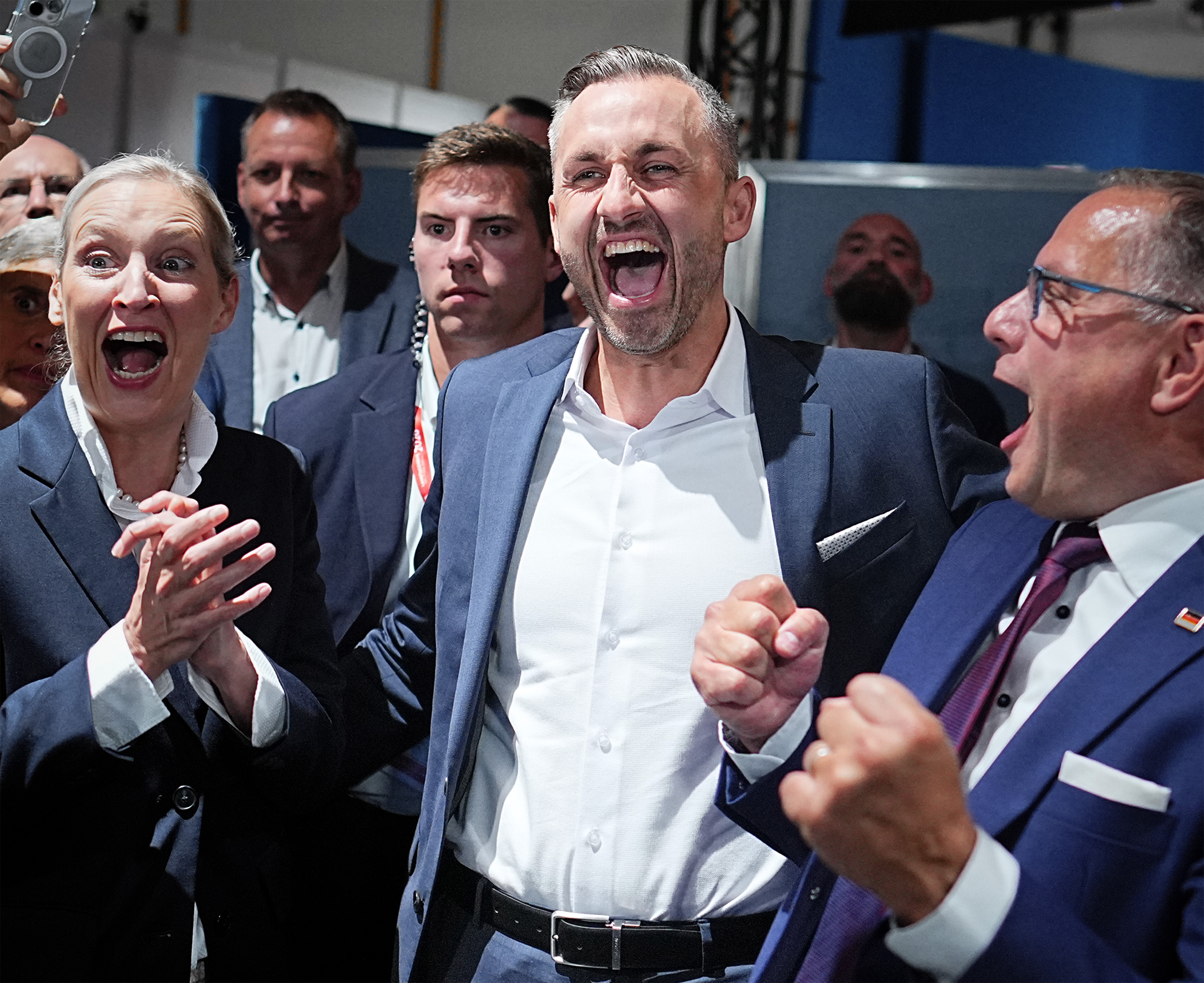
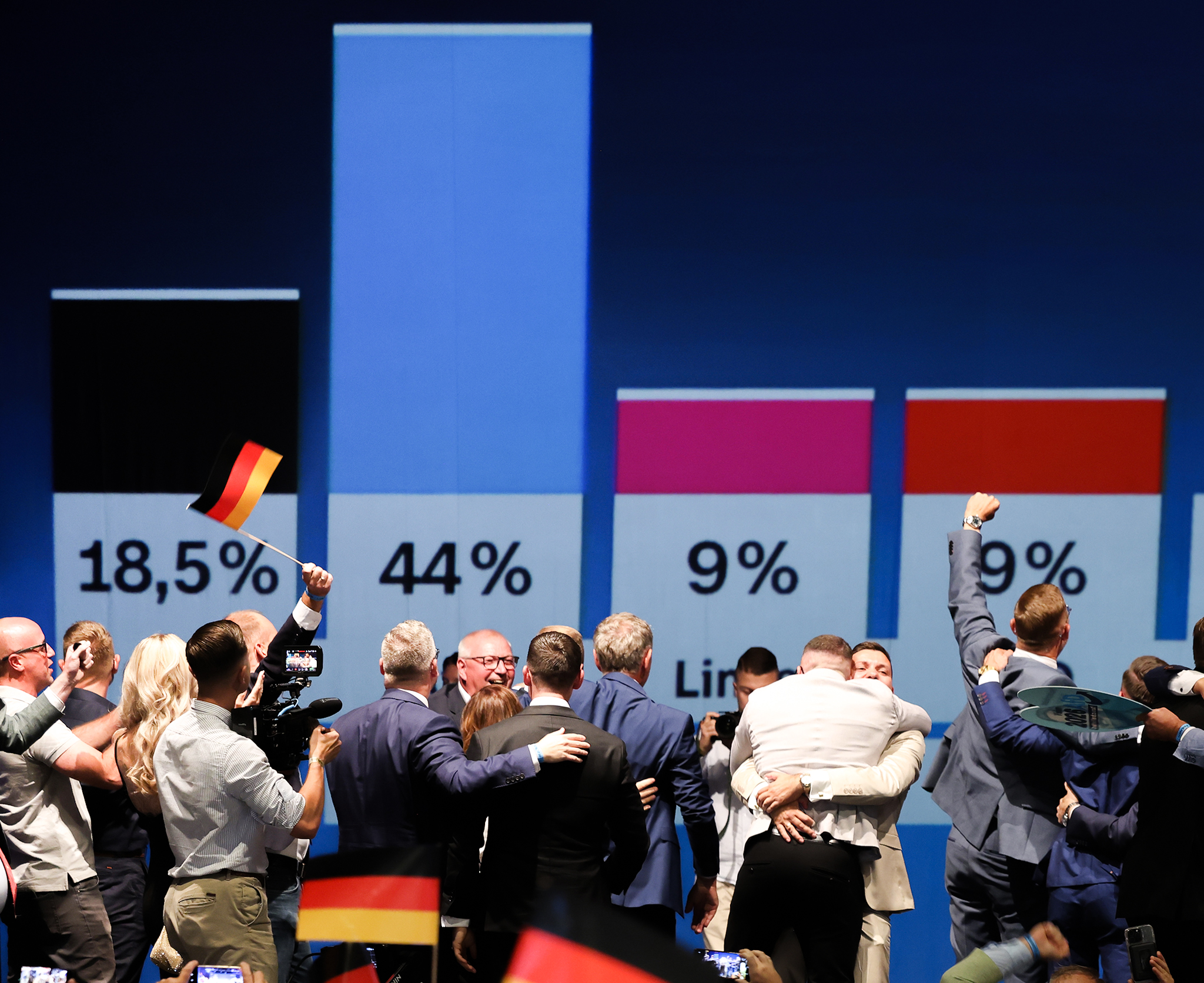
It apparently does not matter that the AfD won nearly 44% of the vote in the state election. Such a result is impossible anywhere in Europe – least of all in Germany – without substantial support from the mainstream middle class.
If you portray such a party as anti-democratic, as standing outside the legitimate political order or even as fascist, you inevitably cast its voters in the same light, thereby implying that nearly half the population should be excluded from the political process.
Although the AfD will not take power immediately, having fallen short of a majority in the state parliament, debate has already resurfaced in Germany over how to restrict its access to power should it ever come within reach of the federal chancellorship.
An AfD-led state government would also have a voice in the Bundesrat, giving the party influence over federal legislation and other matters requiring the upper chamber’s approval.
Nothing to the Right of the Union
For many years, the CDU/CSU, Germany’s supposed state party, has been guided by the dictum of former Bavarian leader Franz Josef Strauß, according to which no legitimate party should be allowed to emerge to the right of the Union: “We, the CSU and the CDU, must fill this space and this political arena.”
Angela Merkel, a pragmatic technocrat of power, gave this principle her own interpretation. Convinced that no challenge from the right could threaten her, she abandoned the issues that had once been central to her party.
Instead, through a strategy of asymmetric demobilization, she reached out to voters on the left on issues such as nuclear power, migration and LGBTQ+ rights. Standing astride the political center – with her weight on her left foot and her right barely touching the ground – Merkel managed to hold on to power for a full 16 years.
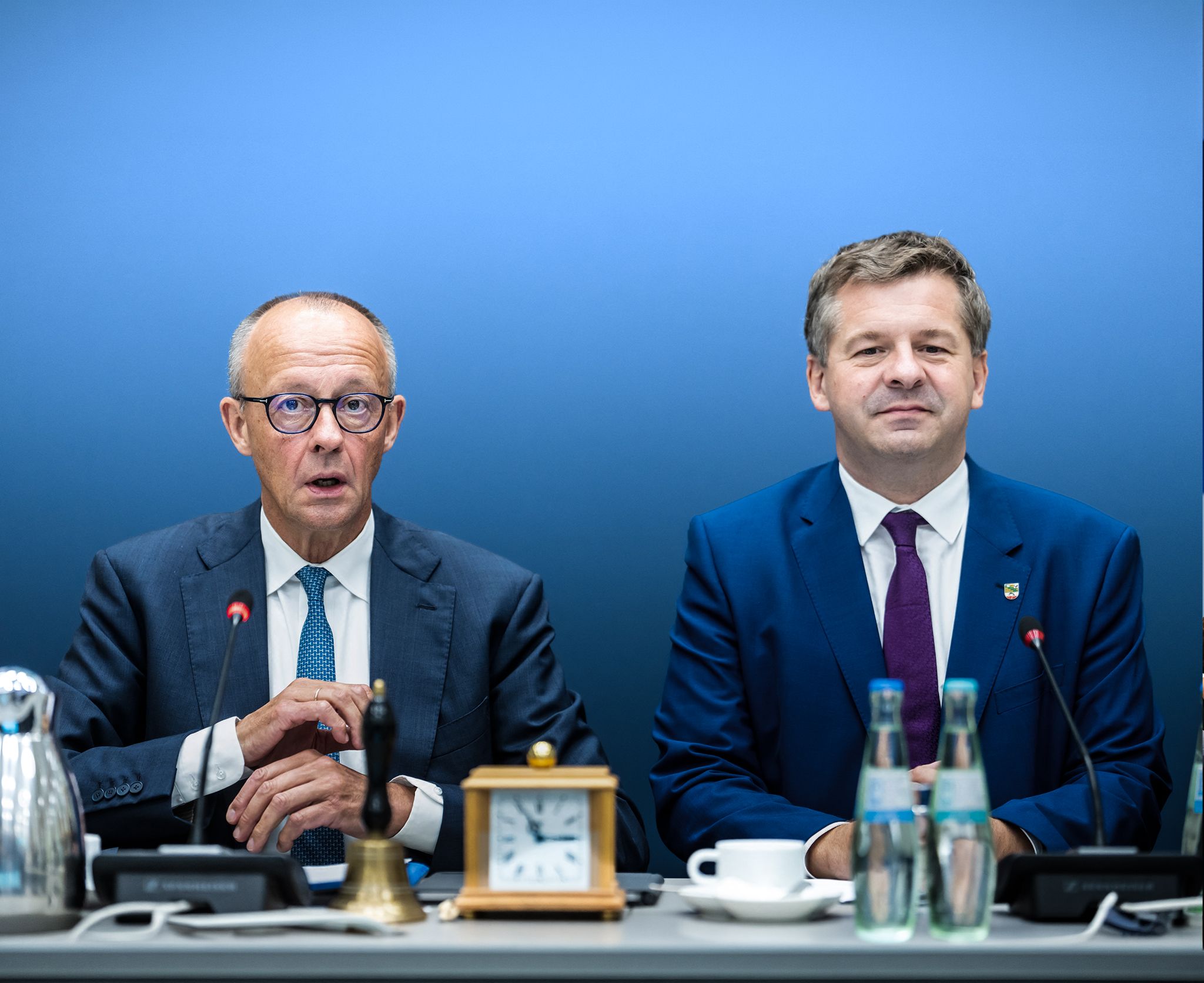
Her fiercest critic at the time was Friedrich Merz, whom she had pushed to the political sidelines two decades earlier in an internal party struggle. Following her failures, particularly on migration, Merz returned and eventually reached the country’s most powerful office – an outcome he could well regard as an act of historic retribution. On the crucial issue of migration, he had previously been on the right side.
Yet the great irony is that the consequences of his party’s past mistakes are now falling squarely on his shoulders.
Not that he himself bears no responsibility. Before returning to frontline politics, Merz served as chairman of the supervisory board of BlackRock Asset Management Deutschland, a post he left in 2020. Merz also helped push through a major loosening of Germany’s debt brake, exempting defense and certain security spending above 1% of GDP from the borrowing limits – a major departure from a principle long regarded as sacrosanct in Germany.
By Strauß’s own measure, a genuine alternative has not only emerged to the right of the Union but in some regions now commands more than twice the support of the CDU/CSU. Nationwide, the CDU/CSU is polling at around 23%, while the AfD stands at 28%.
Who Is Undermining Democracy?
Kallas’s wake-up call has clear implications for today’s elites.
Democracy, we are told, must be actively defended. In practice, that apparently means preventing free discussion of the most important issues of the day. Anyone who expresses skepticism toward the prevailing ideology on climate, war or energy is cast as an extremist and ostracized from respectable society.
In such a distorted climate, the result is predictable. Normal opinions are pushed to the margins, while positions branded extreme gradually become normalized.
In this moralistic atmosphere, the election in Saxony-Anhalt has been branded a “black day for democracy”, leaving its critics shaken, shocked and horrified. But how will they cope in a Europe where such dark days recur with increasing regularity?
France may be next. Marine Le Pen, long labeled an extremist, is now likely to win the next presidential election after years spent distancing herself from her father’s more radical legacy and effectively recasting herself as a centrist politician. She is comfortably ahead in the polls not only in the first round but in the second as well.
In Romania, the first round of the presidential election was annulled after a candidate deemed undesirable by Berlin and Brussels came first. The decision followed declassified intelligence reports alleging coordinated online manipulation, campaign-finance violations and foreign interference in his favor.
So far, such a serious move to dismantle democracy in the name of democracy has been confined to Europe’s periphery.
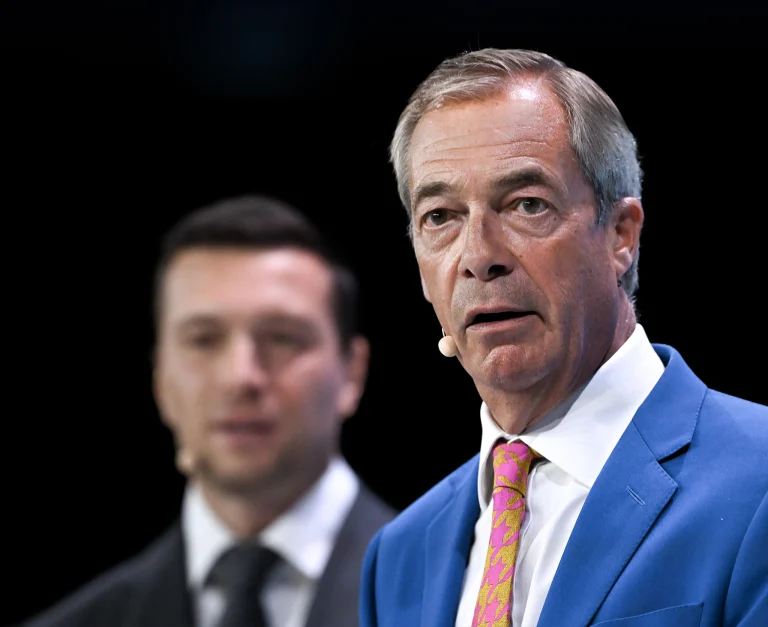
In the case of the AfD, however, there are growing suggestions that, if the party continues to win, the same principle of controlled democracy – borrowed from Russia – could eventually be applied in Germany. In Britain, meanwhile, Nigel Farage – another bogeyman keeping Europe’s self-appointed guardians of political orthodoxy awake at night – is preparing for victory.
How the Mainstream Feeds the Fringe
The response to this ominous development has been a series of attempts to prevent large sections of the population across Europe from taking part in free political competition.
If democracy’s self-appointed defenders were truly awake, they would think and act differently. A glance in the mirror might help.
After all, for decades they have supported extremist policies on mass illegal migration, climate and energy, the dismantling of European industry and the LGBTQ+ and minority agenda. They have also promoted a vast program that damages the health of children undergoing gender transition.
In short, a form of radicalism unlike anything we have seen since the fall of the two totalitarian regimes has taken root in mainstream politics, analysis and the media.
The assumptions underpinning this worldview cannot be challenged openly without risking being placed on lists of enemies of society and cast out of respectable circles.
Opponents who dare to challenge these ideas are dealt with using methods familiar from authoritarian regimes: intelligence services, blacklists of internal enemies and the like.
There is a deeper problem still. According to polls, the AfD is Germany’s strongest party, with support approaching 30% nationwide and a good chance of winning the next Bundestag election.
The implication of much of this rhetoric, amplified by some mainstream media outlets, is that one-third of German voters are fascists – or, at the very least, people prepared to support fascism. Yet AfD voters simply have nowhere else to turn if they want to rid themselves of a ruling elite that has been dragging Germany toward the abyss for decades while maintaining only the appearance of political opposition.
Occasional changes of government do nothing to alter the underlying course of German policy on issues such as migration or the effort to bring Europe into a war with Russia.
Who else can German voters turn to if they want a return to normality on the defining issues that have shaped German and European politics for decades – and to regain the freedom to oppose a pernicious political ideology openly?
Of course, if we were in the AfD’s shoes, we would all prefer to see more decent people making reasonable arguments. But those people were driven out of European political debate long ago, while even the more moderate among them have long since learned to toe the line.
Anyone who cares how the media portray them would hardly dare to challenge the ideological orthodoxy, because doing so would amount to blasphemy – an insult to Europe’s ideological deities.
Issues neglected by the establishment were naturally taken up by the political fringe. There is no easier way to build broad political support.
The AfD rose to prominence primarily because Germany’s other parties and mainstream media paved the way for it not merely to the right of the Union but into the political center itself. From the perspective of its voters, its anti-immigration stance makes it a de facto centrist party.
Its powerless, self-proclaimed democratic opponents can do little more than issue warnings and insist that they “must not let up” in the struggle. In doing so, they will continue to wage a massive, systematic campaign on the AfD’s behalf.
The Temptation to Ban the AfD
There are also growing calls in Germany to ban the AfD. For now, it is at least under scrutiny from the security services and the Federal Office for the Protection of the Constitution (BfV).
It has thus become normal in Germany for a legitimate political party – one that enjoys the highest level of voter support and is, in its own way, the country’s only meaningful political opposition – to be monitored by the intelligence services.
A few decades ago, this would have seemed absurd; media outlets across the country would have sounded the alarm over a threat to democracy. Today, it is treated as a duty, and anyone who refuses to applaud is cast as an ally of fascism.
Meanwhile, support for the AfD continues to grow, and such measures tend to fuel its rise rather than hinder it.
But if a party that opposes many of the most deeply entrenched delusions among democrats is branded fascist, what message does that send to younger generations who know little about past totalitarian regimes?
Is the lesson that fascism is actually a good thing when the term is applied to opponents of today’s most entrenched authoritarian orthodoxies? Is this really the message these champions of democracy are so determined to promote?