Tougher Migration Policies Needed to End "Evil" People Smuggling
Former Australian Prime Minister Tony Abbott, a leading architect of the country’s tough border policies now being considered in Europe, has said governments must act decisively to “stamp out” people smuggling.
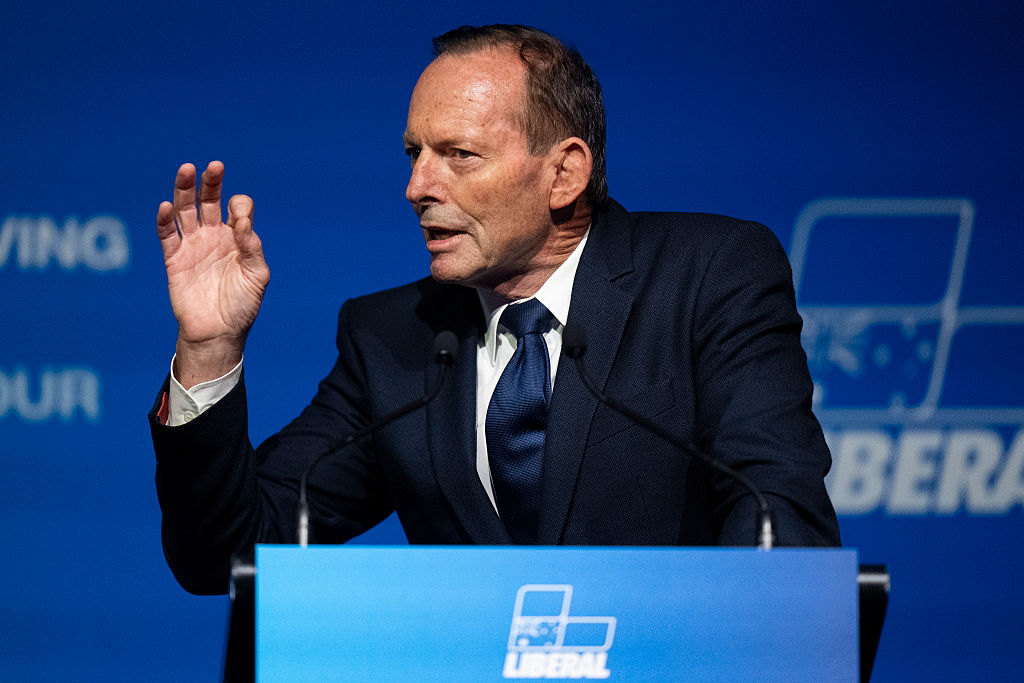
Tony Abbott argues that offshore processing and boat turnbacks can prevent deaths at sea. Photo: Asanka Ratnayake/Getty Images
|
As Europe debates how it can tackle the crisis of illegal immigration, former Australian Prime Minister Tony Abbott has argued that tougher border policies are the “humanitarian thing” to do to end the death and exploitation of migrants by criminal gangs. He urged political leaders to take “direct action” to tackle the “peaceful invasion” of migrants arriving on European shores by boat, saying it is necessary to end the “evil” people-smuggling trade.
Abbott’s words should carry weight with European politicians, as elements of border immigration policies carried out by his government are now being considered as possible solutions to the continent’s difficulties – offshore processing and return hubs.
The conservative politician drew international attention for his government’s response to illegal maritime immigration and people-smuggling networks targeting Australia.
During his time as prime minister from 2013 to 2015, Abbott continued and expanded offshore detention, restored temporary protection visas and reinstated boat turnbacks under Operation Sovereign Borders.
These policies proved highly effective in stopping illegal arrivals by sea, although they met with criticism from rights groups and the Catholic Church due to issues such as indefinite detention. Abbott is himself a practicing Catholic who has frequently spoken out about the role of Christianity in public life and the moral responsibilities of elected leaders.
In an interview with the National Catholic Register, Abbott was asked how countries that want to follow Australia's example of strong action on illegal immigration can draw up ethical and effective policies.
In response, Abbott did not claim that his policies were perfect, but argued that, as a statesman, you sometimes have to “choose the least bad option”.
He likened the situation to a time of war when “dire and difficult things need to happen” to attain victory, going on to describe the thousands of migrants entering Britain via the English Channel as being “akin to a peaceful invasion”.
The issue is not limited to Britain, with many countries along the Mediterranean facing the same problem, as Europe struggles to cope with the influx of migrants from the developing world.
Former Australian Prime Minister Tony Abbott addresses the ARC conference earlier this year on the need for the West to reject narratives of perpetual shame.
People Smuggling
However, as some national governments propose solutions such as return hubs and more effective deportation approaches, rights and faith groups have criticized these approaches as failing to respect the dignity and rights of migrants.
But for Abbott, tough border policies are the “genuinely humanitarian thing” when faced with the “evil” people-smuggling trade, which is responsible for “much exploitation and many deaths”. He called on governments to take “direct action” to stamp it out.
This desire to end the illegal practice was one of the aims he returned to frequently during his time as prime minister to defend his controversial policies such as offshore processing and boat turnbacks.
Abbott’s framing turned the debate on its head by presenting policies that critics say threaten human rights as ultimately the solution to ending a great deal of exploitation and death at the hands of criminal gangs.
Return Hubs
Now that the new returns regulations have paved the way for national governments to pursue policies such as return hubs, Abbott’s own approach is gaining ground.
The Netherlands has said it is working with Greece, Austria, Germany and Denmark to establish joint return and transit hubs in third countries for failed asylum seekers and other migrants with no legal right to remain in the EU.
Meanwhile, Italy has sought to establish centers in Albania both for offshore asylum processing and to hold people awaiting repatriation, while the United Kingdom previously attempted a different offshore arrangement with Rwanda.
Although rights bodies and faith groups continue to criticize European plans for return hubs, Abbott warned that leaders should not be misled by a combination of “rich-country guilt”, a “misguided” sense of compassion and “cultural Marxism”.
Innovative Solutions
While Abbott’s policies are increasingly being adopted by European governments, there are signs that his argument regarding disrupting smuggling networks is also having some influence.
According to Europol, the EU’s law-enforcement agency, more than 90% of migrants used what it calls “facilitation services” to enter Europe, with most of these being run by criminal gangs.
In March of this year, Europol launched the European Centre Against Migrant Smuggling (ECAMS) to “step up” the EU’s fight against migrant smuggling networks.
More recently, an open letter signed by 19 EU member states said it is “paramount” that the EU keeps “challenging the status quo, where human traffickers make a fortune and migration is instrumentalised”.
The letter, which was sent in June 2026 as part of the debate surrounding the implementation of the Migration Pact, urged the bloc to pursue “innovative solutions” that would “break” the business models of migrant smugglers. It linked such a move with the overall aim of curbing “irregular migration”.
However, it remains to be seen just how far European leaders are willing to embrace Abbott’s tough language on people-smuggling and what effect doing so will have on public perception of new immigration policies.
Welcome to the comments section of the Štandard daily. Please take note of our guidelines, comments are moderated by us. You can contact the moderators at support@statement.com.
Participate in the discussion
Comments are available to subscribers only. If you'd like to join the discussion, choose a subscription starting at €6.72 per month.
All comments 0
Register
Comments are available to registered users only. If you'd like to join the discussion, register here.