France’s Infant Mortality Crisis Has an Immigration Dimension
An official report reveals an uncomfortable link between infant mortality and the growing share of births to foreign-born mothers in France.
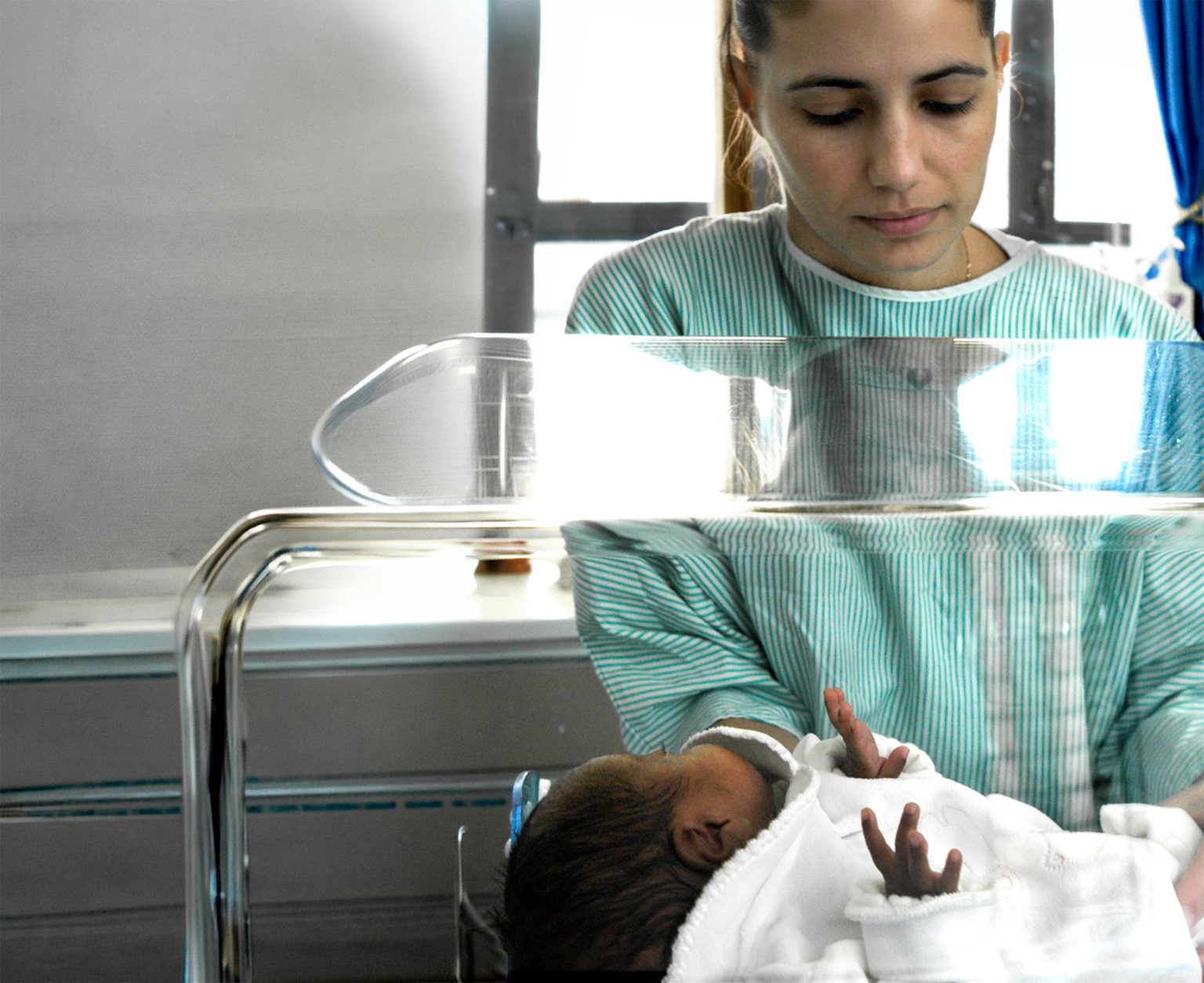
France has fallen sharply in European rankings for infant health. Photo: BSIP/Universal Images Group via Getty Images
|
A report prepared by the General Inspectorate of Social Affairs (IGAS) and released by the Ministry of Health after several months of deliberate silence reveals that France is plummeting in international rankings for infant mortality. While it once prided itself on being one of the top-performing countries in child health, it has fallen from third place in Europe to 20th or 23rd place, depending on the indicator.
France’s Decline in Infant Health
The infant mortality rate is a highly revealing indicator of a society’s level of development. When it rises, it is generally a sign of deterioration in public services and the healthcare system. This could explain why the Ministry of Health was initially reluctant to release this report, which highlights growing shortcomings in the care of infants during their first year of life. Before birth, there is inadequate monitoring of potentially high-risk pregnancies, and afterward, shortcomings in neonatal care.
The publication of the official figures caused quite a stir in the French press, which has already been reporting for several years on dramatic declines in France’s performance across a range of areas: a collapse in academic standards, per capita GDP below the European Union average and a rise in the number of people living below the poverty line, among others.
The Immigration Factor
But a closer look at the IGAS report reveals another reality: the rise in infant mortality recorded in France is, in fact, a direct consequence of immigration. The increase in the proportion of pregnant women of foreign origin among women giving birth in France accounts for more than one-third of the rise in infant mortality over the past 15 years or so.
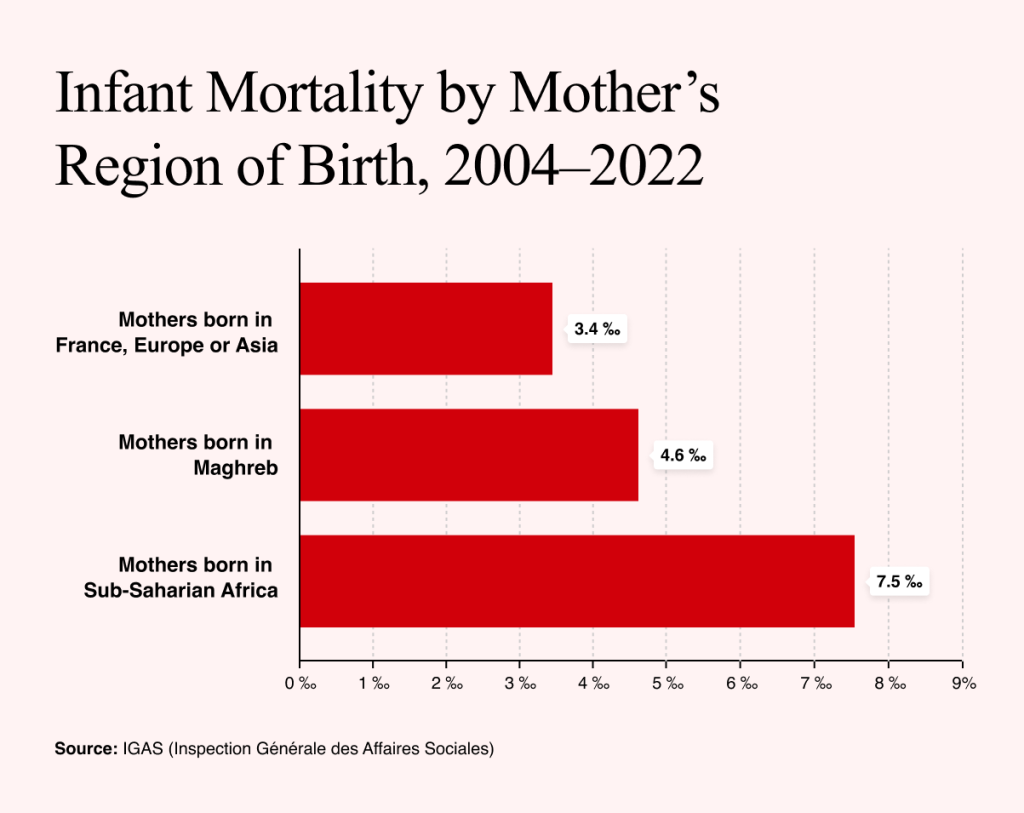
Immigrant women face an increased risk of maternal death or severe maternal morbidity, and their children experience more complications. According to the report, “from 2004 to 2022, the average infant mortality rate remained stable (around 3.4‰) for mothers born in France, in another European country or in Asia. In contrast, it reached 4.6‰ for mothers born in the Maghreb and 7.5‰ for those born in another African country”.
A mothers’ country of origin has a direct influence on prenatal care. Mothers from sub-Saharan Africa have an “inadequate” rate of prenatal care, the report notes. Another, more cryptic passage points to “barriers to primary care access and suboptimal care” for immigrant populations, suggesting that the healthcare system needs to be adapted to their needs.
The report does not provide further details, but one might think of recurring cases of women receiving inadequate care that have been reported in the press and parliamentary proceedings because their Muslim husbands oppose gynecological care – or simply medical care provided by a male doctor – for religious reasons.
Source: IGAS (Inspection Générale des Affaires Sociales)
The French healthcare system is thus negatively affected, statistically speaking, by the influx of immigrant mothers receiving care in its facilities. The report’s conclusion is unequivocal: “The rise in the infant mortality rate among mothers born abroad is therefore 100% responsible for the total increase of nearly 0.2 percentage points between 2010–2014 and 2015–2022.”
According to the National Institute of Statistics (INSEE), the proportion of children born to mothers of foreign origin increased significantly between 2010 and 2024, rising “from 18.25% to 26.05%, an increase of 7.8 percentage points”.
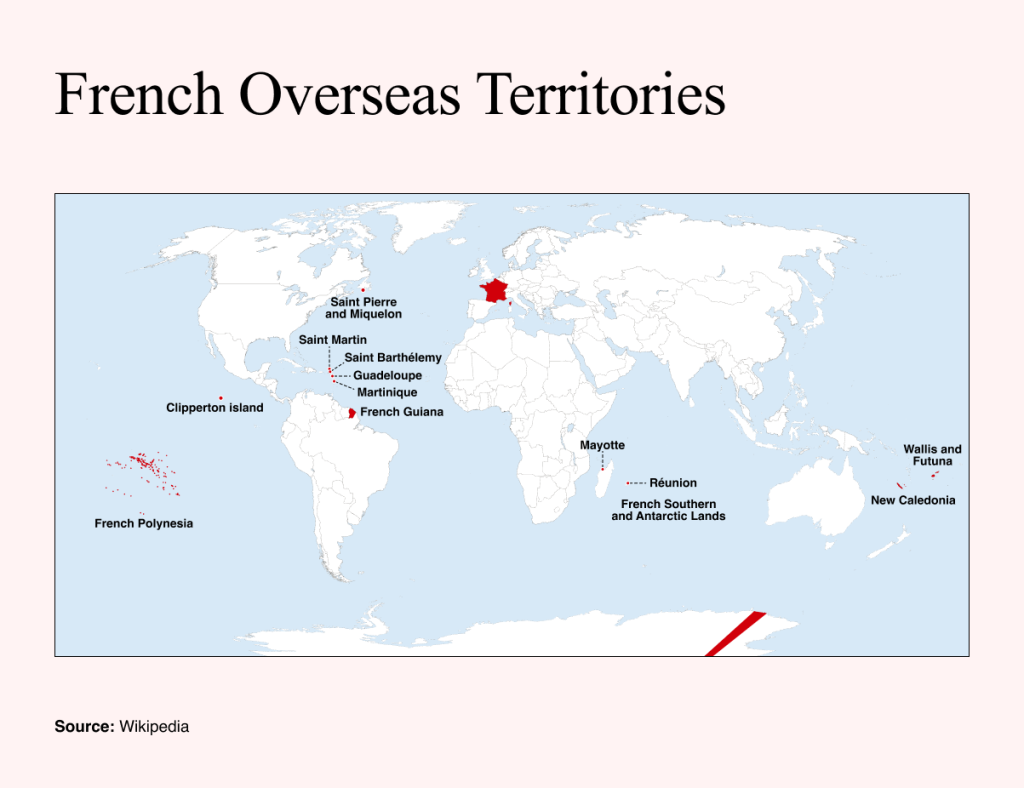
These figures should be viewed in the context of the specific territories involved. Metropolitan France is affected, but not to the same extent as the overseas territories, which are home to large immigrant populations.
Mayotte: France’s Infant Mortality Blind Spot
The case of Mayotte, in the Comoros archipelago in the Indian Ocean, is particularly emblematic: the infant mortality rate there is twice the national average. Newborns are also frequently hospitalized. This is linked to a well-known phenomenon that has been documented for years: pregnant women from the neighboring Comoros come to Mayotte to give birth in order to take advantage of France’s jus soli law, under which children born in France can acquire French citizenship regardless of their parents’ nationality.
The maternity ward in Mamoudzou, the capital of Mayotte, records the highest number of births in France. Some women arrive there close to full term without having received any prenatal care. There are also hundreds of unregistered births in fields or by roadsides, which firefighters try to handle as best they can.
For years, the French right has been calling for changes to Mayotte's citizenship laws, which the center and the left have resisted for ideological reasons, fearing that reforms introduced in Mayotte could lead to sweeping changes in French law. Mayotte’s birthright citizenship rules were partially reformed in 2018. Since then, for a child to be born a French citizen, one of its parents must have been living in Mayotte for at least three months without interruption. This provision has somewhat slowed the influx of pregnant women but remains insufficient to control the flow, especially when it comes to births occurring outside official channels.
Source: Wikipedia
The situation in French Guiana, a French territory in South America bordering Brazil, is similar to that of Mayotte. Infant mortality is also very high there, though for somewhat different reasons. Inadequate monitoring of pregnancies is largely due to a lack of medical care and limited access to it: the jungle covers 96% of the territory.
Another Taboo Broken
The conclusions to be drawn from the publication of this report are therefore manifold. On the one hand, the French can take some comfort in the fact that the healthcare system is not yet as dilapidated as one might think. On the other hand, they must realize that in the medical field, as elsewhere, immigration has clear consequences for public services and society more broadly.
A few months ago, education experts dared for the first time to break the taboo by revealing that immigration does indeed have a negative impact on academic performance. This time, healthcare is affected. Which sector will be next to require this much-needed wake-up call?
Welcome to the comments section of the Štandard daily. Please take note of our guidelines, comments are moderated by us. You can contact the moderators at support@statement.com.
Participate in the discussion
Comments are available to subscribers only. If you'd like to join the discussion, choose a subscription starting at €6.72 per month.
All comments 0
Register
Comments are available to registered users only. If you'd like to join the discussion, register here.