Christians Sue over Assisted-Suicide Participation
Christian institutions across the United States are increasingly caught between their faith and the law, as states enact bioethical legislation that conflicts with Catholic teaching. Even indirect involvement is often forbidden for Catholics, and gender regulations can put such institutions in an equally difficult position.
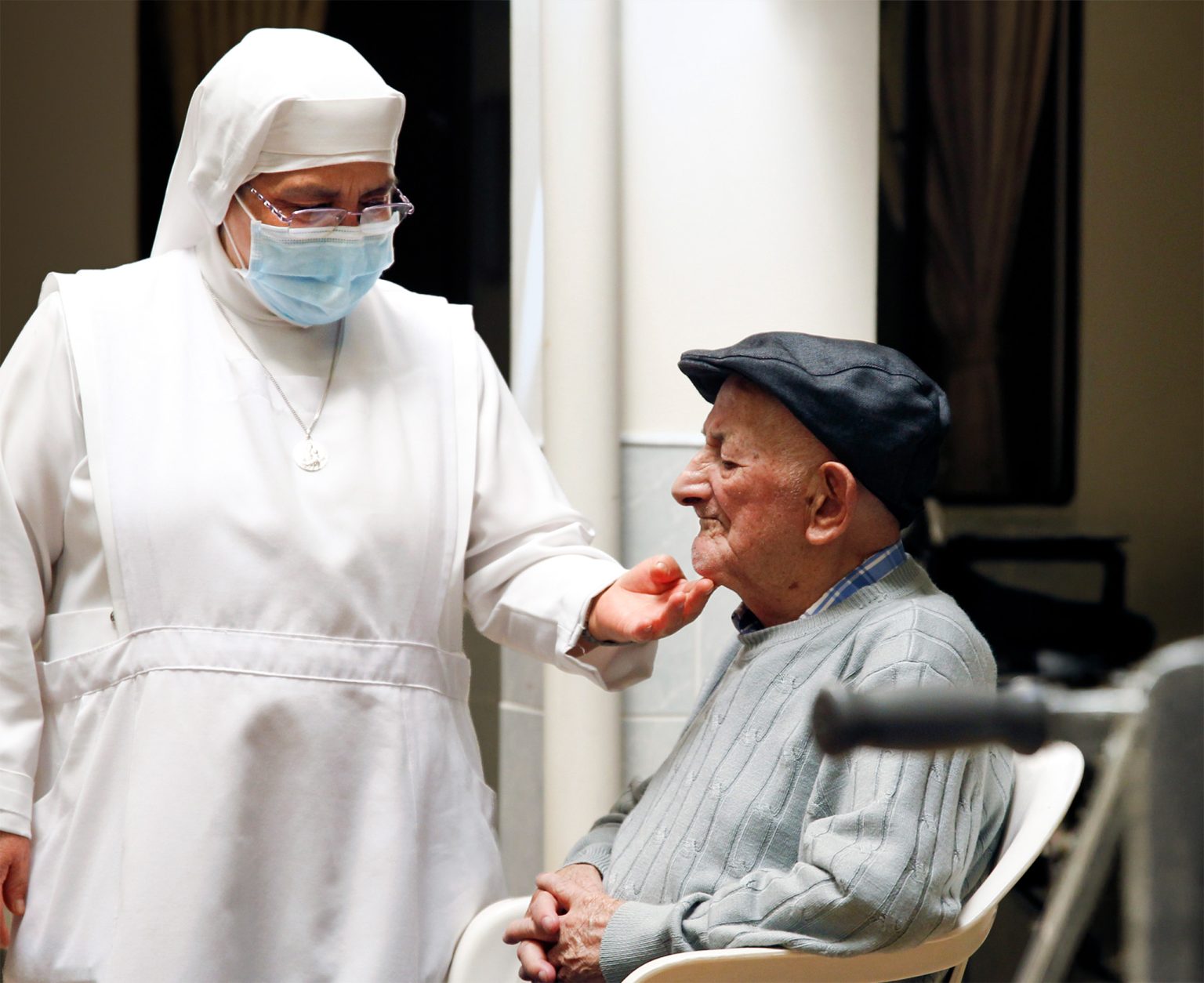
Catholic nursing homes say new assisted-dying laws leave no room for their religious convictions Photo: Fredy Builes/Getty Images
|
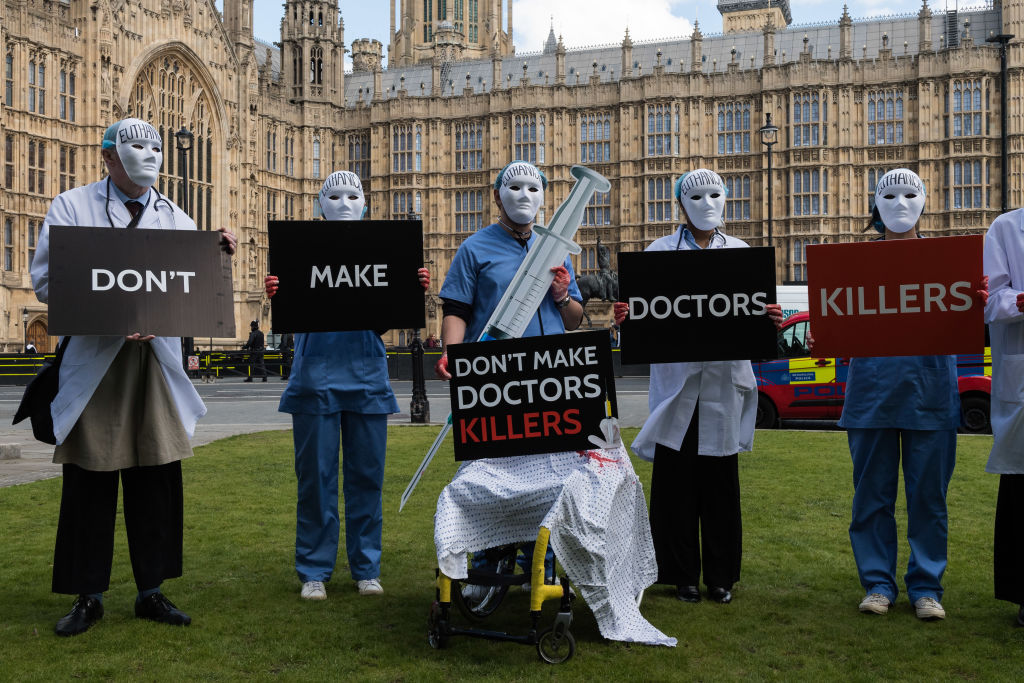
A Catholic bishop, four doctors and a Lutheran nursing home have filed suit in the US state of Illinois against a new assisted-suicide law. Their objection goes beyond being required to prescribe lethal medications themselves. The plaintiffs argue that their religious freedom and freedom of conscience are also violated by rules requiring them to refer patients to willing doctors, provide information and comply with state documentation requirements for death certificates.
Similar proceedings are underway in New York, where several Catholic religious orders and healthcare institutions are suing over the state's new assisted-dying law. The Dominican Sisters of Hawthorne are also pursuing a separate lawsuit against state requirements on the treatment of transgender residents in their nursing home.
Race to Halt the Law
The lawsuit in Illinois was filed on 11 August in the US District Court for the Northern District of Illinois. Its plaintiffs include Bishop Thomas J. Paprocki of Springfield, four Catholic physicians and the Lutheran Care Center in Altamont. They are seeking to block parts of the End-of-Life Options for Terminally Ill Patients Act before it takes effect on 12 September. Under the new law, physicians may prescribe medication to adult patients with a terminal illness and a prognosis of no more than six months to live, which the patients can then use to end their own lives.
Two doctors must confirm that the medical requirements are met, and if there is any doubt about a patient's decision-making capacity, an additional psychological evaluation is required. The legislature explicitly describes assistance with suicide as part of end-of-life medical care. Yet the plaintiffs want to ensure that the state cannot involve doctors, nurses and religious institutions in the process if they object to assisted suicide on religious and ethical grounds. Under the law, a doctor who declines to participate must forward the patient's medical records to another provider.
Pope Leo XIV has encouraged Catholics not to be drawn into such practices. In his New Year's address to diplomats, the Holy Father said: "Conscientious objection is not rebellion, but an act of fidelity to oneself." Bishop Paprocki has an additional stake in the case: as head of his diocese, he is responsible for ensuring that its Catholic healthcare institutions comply with the Church's ethical guidelines.
Those guidelines rule out participation in suicide and euthanasia. The four plaintiff physicians similarly say they can neither perform assisted suicide themselves nor facilitate it through referrals or other assistance. Under the law, informing a patient of these limits can itself be classified as "misinformation" that obstructs access to assisted suicide, or as impermissible influence. The plaintiffs fear this could ultimately expose doctors and institutions to sanctions simply for warning patients against assisted suicide on medical or religious grounds.
Forced to Lie
If a patient dies after taking the prescribed lethal substances, the death is not to be legally classified as suicide. Instead, the underlying terminal illness is listed as the cause of death, since the law explicitly states that no act carried out under its provisions shall be considered suicide, assisted suicide, euthanasia or homicide. A bill already introduced in the Illinois legislature in May shows just how fiercely contested these points remain politically: it seeks to remove both the referral requirement and the special provisions concerning death certificates. So far, however, the bill remains stalled in the House Rules Committee.
A nearly parallel legal dispute is underway in New York, where several Catholic religious orders, nursing homes, the Diocese of Rockville Centre and the Catholic healthcare system Catholic Health filed suit against the state's assisted-dying law on 17 July. The plaintiffs include the Carmelite Sisters for the Aged and Infirm, the Dominican Sisters of Hawthorne, the Missionary Sisters of St. Benedict and facilities of the Little Sisters of the Poor. Named as defendants are New York Attorney General Letitia James and representatives of the state health authorities.
New York's Medical Aid in Dying law, in effect since 5 August, permits terminally ill, mentally competent adults with a prognosis of no more than six months to live to be prescribed a lethal medication. The law also contains exemptions for doctors and institutions that do not wish to participate directly in assisted suicide.
The plaintiffs argue these exemptions do not go far enough, contending that they could still be required to inform patients about the option of assisted suicide, counsel them on it, conduct medical evaluations, forward records or refer them to other providers. As doctors, religious orders and church institutions, they are seeking the ability to remove themselves entirely from a process they reject on religious grounds.
Sisters Challenge Gender Rules
A second case in New York shows that the conflict between state-defined patient rights and the religious identity of Catholic institutions extends beyond assisted dying. The Dominican Sisters of Hawthorne have run the Rosary Hill Home, a nursing home for indigent, terminally ill cancer patients, for more than a century. In April, the order sued over the state's regulations for long-term care facilities.
Under New York's rules, so-called transgender residents must be housed not according to their sex but according to their self-identified "gender identity", and staff are required to use residents' preferred names and pronouns.
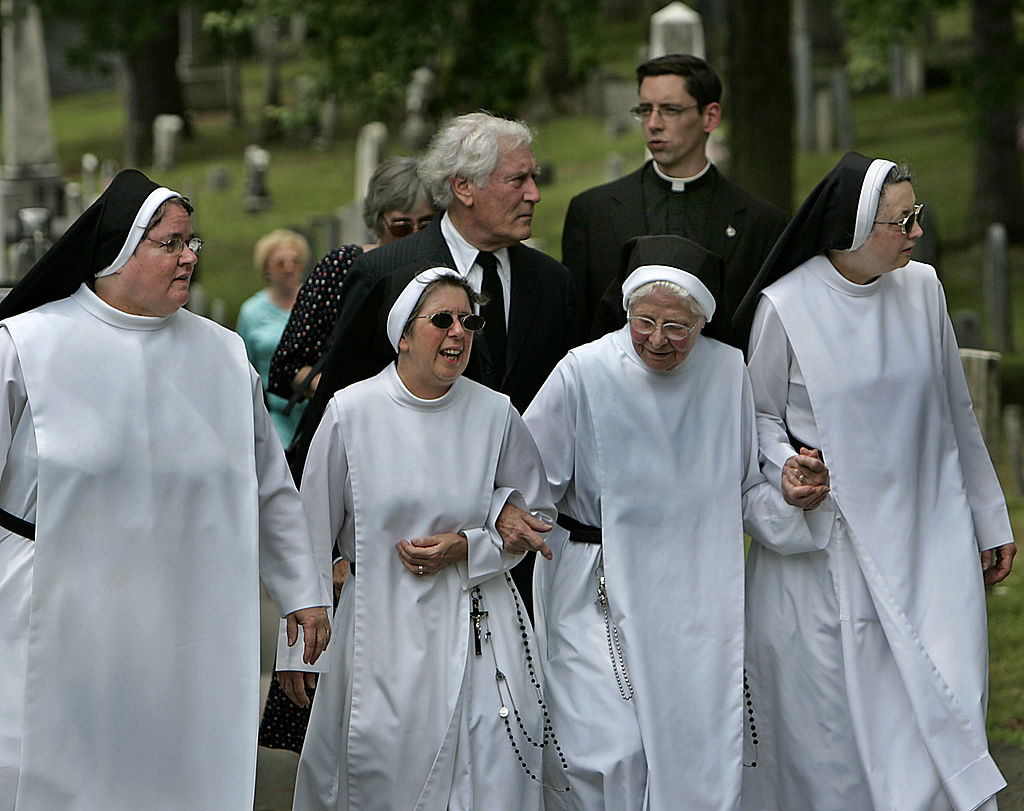
The Dominican Sisters of Hawthorne, pictured here at a funeral, are campaigning in New York against euthanasia and gender ideology in New York. Photo: David L. Ryan/The Boston Globe via Getty Images
Separation by Biological Sex
The Dominican Sisters currently house residents separately according to biological sex. They say they want to admit and treat every patient with dignity, but that their Catholic faith does not allow them to define a person's sex in any way other than by biology. Having applied to New York health authorities for a religious exemption and reportedly received no adequate response, the sisters turned to a federal court on 6 April. They gained significant support when the US Department of Justice intervened on their side in June.
The Department argues, among other things, that New York is violating the Constitution's equal protection guarantee: the law provides exemptions from certain requirements on medical or psychological grounds, it says, but grants Catholic institutions no comparable protection for religious convictions.
Awaiting the Verdicts
A decision on the merits is still pending in all of these proceedings. The case in Illinois is especially urgent: the state's assisted-dying law is set to take effect on 12 September 2026, yet the plaintiffs, who are seeking a federal court order to block parts of the law beforehand, only filed their lawsuit on 11 August.
In New York, the assisted-dying law has already been in effect since 5 August. The case brought by the Carmelite Sisters and the other Catholic plaintiffs was opened on 17 July, and an initial case management conference is set for 15 October 2026, according to the currently published court schedule. There is likewise no ruling yet in the case brought by the Dominican Sisters of Hawthorne against the transgender regulations, which has been before the federal court for the Southern District of New York since 6 April.
Welcome to the comments section of the Štandard daily. Please take note of our guidelines, comments are moderated by us. You can contact the moderators at support@statement.com.
Participate in the discussion
Comments are available to subscribers only. If you'd like to join the discussion, choose a subscription starting at €6.72 per month.
All comments 0
Register
Comments are available to registered users only. If you'd like to join the discussion, register here.