Most of the follow-up involved clerical errors, such as missing information, or details classified as "non-critical" but still subject to reporting, the health ministry said. A spokesperson stressed that serious deviations are uncommon, accounting for just 0.2% of MAiD cases reported since 2018.
A Pattern of Negligence
However, Achtman told Canadian Catholic News, which acquired the internal report under a freedom of information request, that the impact of errors goes beyond gaps in paperwork. They represent the "negligence" with which people were "dismissively treated" during their period of "greatest vulnerability", she argued.
A total of 17,304 people have died by MAiD in British Columbia since 2018. The province leads Canada in the percentage of deaths under the euthanasia law and has the third-highest proportion of deaths by MAiD overall.
Canada legalized euthanasia a decade ago, and the law and its implementation have since faced grave criticism.
Most recently, a 17 June report from a federal parliamentary committee on MAiD heard "disturbing stories of questionable conduct" by providers, including a "cavalier" attitude toward end-of-life care. The report also found scant evidence that regulatory bodies provide adequate safeguards or have "seriously pursued" allegations of misconduct by MAiD providers.
The committee also recommended that the Liberal government indefinitely pause its planned rollout of MAiD to those whose sole underlying condition is mental illness. Unless Parliament intervenes, however, people with a mental disorder as their only qualifying condition will become eligible to apply for MAiD on 17 March 2027.
A New Push to Lower the Age to 12
Canada is not the only region considering expanding its euthanasia laws. Earlier this month, lawyers in Tasmania, Australia, called for the state to allow 12-year-olds to access voluntary assisted dying (VAD) with parental consent.
In a submission on the state's review of its euthanasia laws, Community Legal Centres Tasmania (CLCT) said such a move would put Tasmania on par with the Netherlands, Belgium and Colombia, where euthanasia is available to 12-year-olds.
A spokesperson for the legal association argued that there is "no reason" why children as young as 12 should not be able to make decisions about their terminal condition, provided that they have a "reasonable understanding" of their best interests.
CLCT also called for 16- to 17-year-olds to be allowed to use VAD after parental consultation but not their consent, stating that this is in line with medical practice in areas such as the right to refuse treatment.
Euthanasia is legal across Australia in all regions except the Northern Territory. However, it is up to each state to determine the exact scope of the VAD.
Slippery Slope
The continued expansion of euthanasia laws suggests that the slippery-slope fears long voiced by pro-life advocates have proved justified.
Despite this fact, a number of countries in Europe continue to press ahead with plans to introduce assisted suicide or assisted dying legislation. The French Parliament recently voted in favor of a bill that would legalize the practice, even though it had been rejected three times in the Senate.
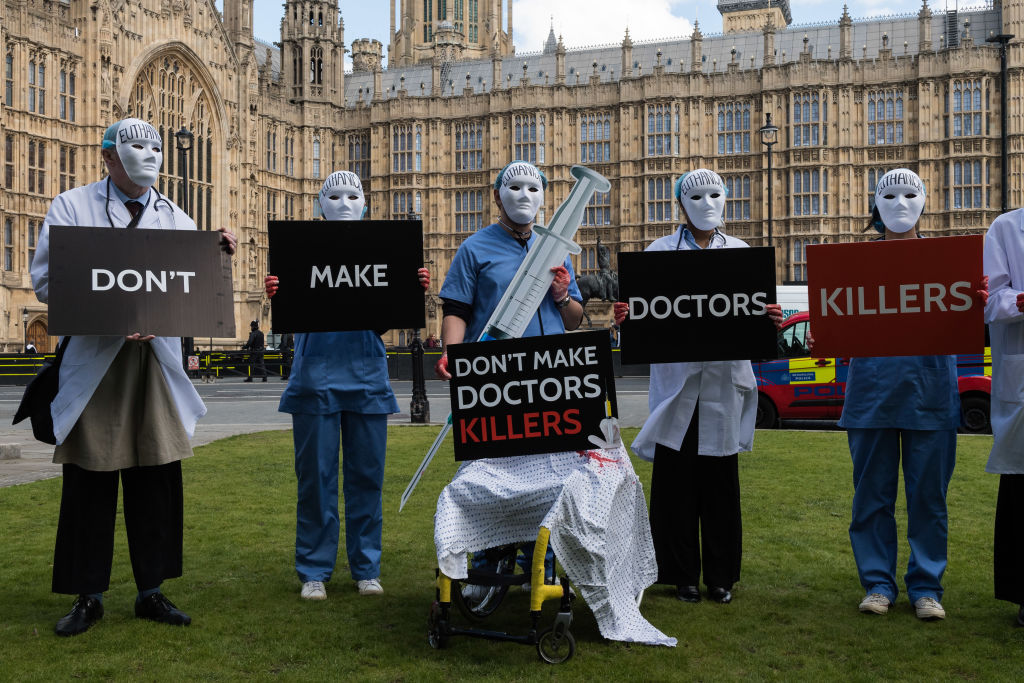
In the United Kingdom, a Labour bill that seeks to legalize euthanasia is also set to be brought before Parliament for the second time in September, after failing to pass through the House of Lords earlier this year.
As these instances demonstrate, proponents of assisted dying and assisted suicide legislation refuse to take no for an answer, putting at risk the most vulnerable at life's end, including children and those with mental illness.