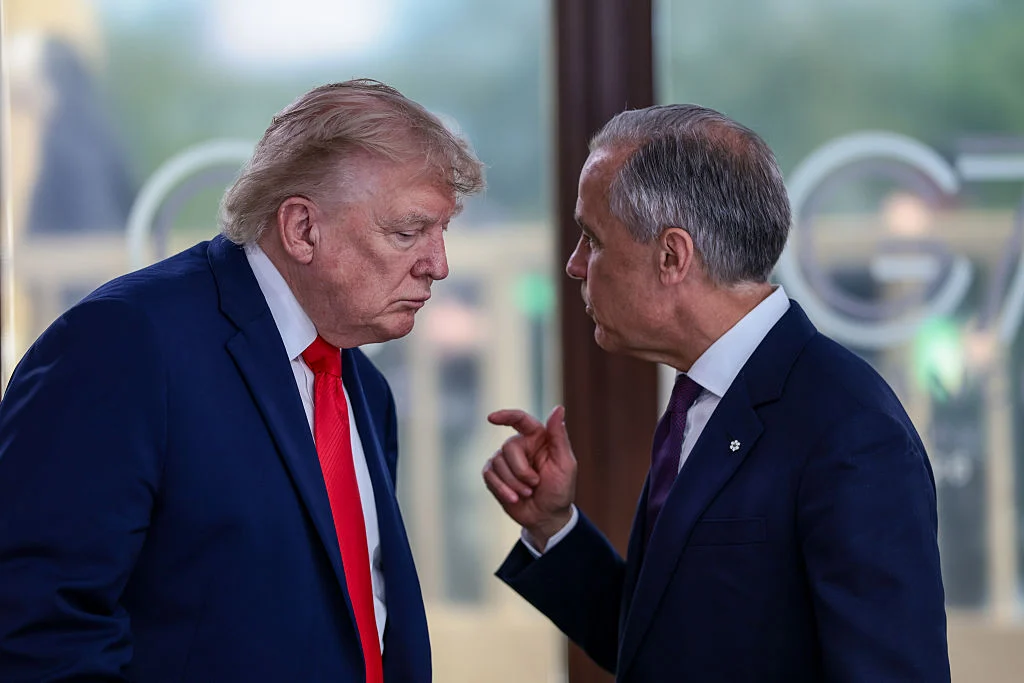
Yet look beyond the personal impulse, supporters say, and one might detect a canny political operator who knew that the hullaballoo about renaming the lake would obsess the media enough to distract from perhaps more serious political problems, like the ongoing Iranian war or the stubbornly high inflation and gas prices that it and other Trump policies have induced.
When Being "Strong" Looks Weak
Childish act of petulance or seasoned operative throwing bait to the press to toss them off the scent? One’s view on that question is likely almost entirely dependent on one’s view of Trump and his short-term political instincts.
Yet the bigger problem is that regardless of whether the decision to rename the lake was short-term folly or short-term genius, the longer-term effects are likely to be universally negative.
Consider the position, for example, of the Republican congressman seeking re-election: he faces a hostile political environment caused by the hostile economic environment. His opponent is likely to talk up the cost of living and the economy. Meanwhile, the Republican congressman must spend a week answering questions about the renaming of a lake. Not ideal.
That is the obvious political downside – but there is a broader geopolitical downside, which is this: superpowers who behave like this seem weak, not strong.
In précis: if Donald Trump were able to crush Canada in a trade war, he would not need to be so petty as to rename a lake and declare the renaming a victory. If he were able to reopen the Strait of Hormuz, he would not need to send a dozen tweets or “truths” a day declaring that the Strait is open, since global commerce would vindicate him without words.
Indeed, if Trump’s aim in renaming the lake was to show Canadians that he means business, the response he will have induced is entirely counterproductive. Canadians – as evidenced by the mocking reaction of their government – are likely to be both stiffened in their resolve through their sense of outrage and given confidence that they will ultimately triumph by the sheer toothlessness of the act.
A Legacy Easily Undone
The weakness that his actions project goes well beyond the geopolitical and to his own legacy: the easiest, cheapest publicity the next Democratic president will get will be to sign orders undoing Trump’s renaming of the Gulf of Mexico and Lake Ontario. For a Republican successor, the situation may even be worse: should that person undo the current president’s vanity-renaming projects, he will be assailed as treasonous to Trump’s memory and legacy, making it even more likely that that legacy will be undone by the next Democrat in the Oval Office. In short, Trump is creating enduring problems for Republicans and enduring opportunities for Democrats.
When he stood for election initially, in 2016, a large part of Trump’s political messaging and appeal was that he was not, and would not act like, a normal politician. That promise, certainly, he has kept. However, he has also provided the world with a useful reminder that normal politicians have their merits, particularly when it comes to the notion of restraint.
The Forgotten Value of Restraint
One of the undervalued qualities of restraint, especially when a country is the world’s most powerful nation or a person is the holder of its presidency, is that restraint is in itself a threat. When power is wielded lightly, there remains an implication and a fear that power could – if one so chose – be wielded much more aggressively. Or, to use an analogy, restraint gives the impression that underneath the velvet glove there may well be an iron fist.
The problem when there is no restraint is that the world sees the limits of American power as well as the extent of it. The Iranians, per their actions, appear considerably less frightened of the United States today than they were before the full might of American power was deployed against them.
Thus, the Trump trap: Canadians north of the border watch as he renames a lake and ask themselves: “Is that it?” Iranians looking out at the Strait of Hormuz watch his frantic tweets and ask: “Is that it?”
Trump’s central political notion has ever been that American power was constrained precisely because too many of his predecessors were “weak”: that if the US under his leadership was simply “strong”, the world would “respect” it more.
In reality, his version of strength has now been put on full display. It is scaring precisely none of his geopolitical foes. And precisely none of his domestic political opponents.
If this is, in fact, sixty-three-dimensional chess, then a few of the pieces have gone astray.