Surrogacy Advocates Use Statelessness Fears to Push Legalization
Pro-surrogacy advocates’ arguments for the rights of stateless children are a disingenuous attempt to foster public sympathy for legalizing international surrogacy.
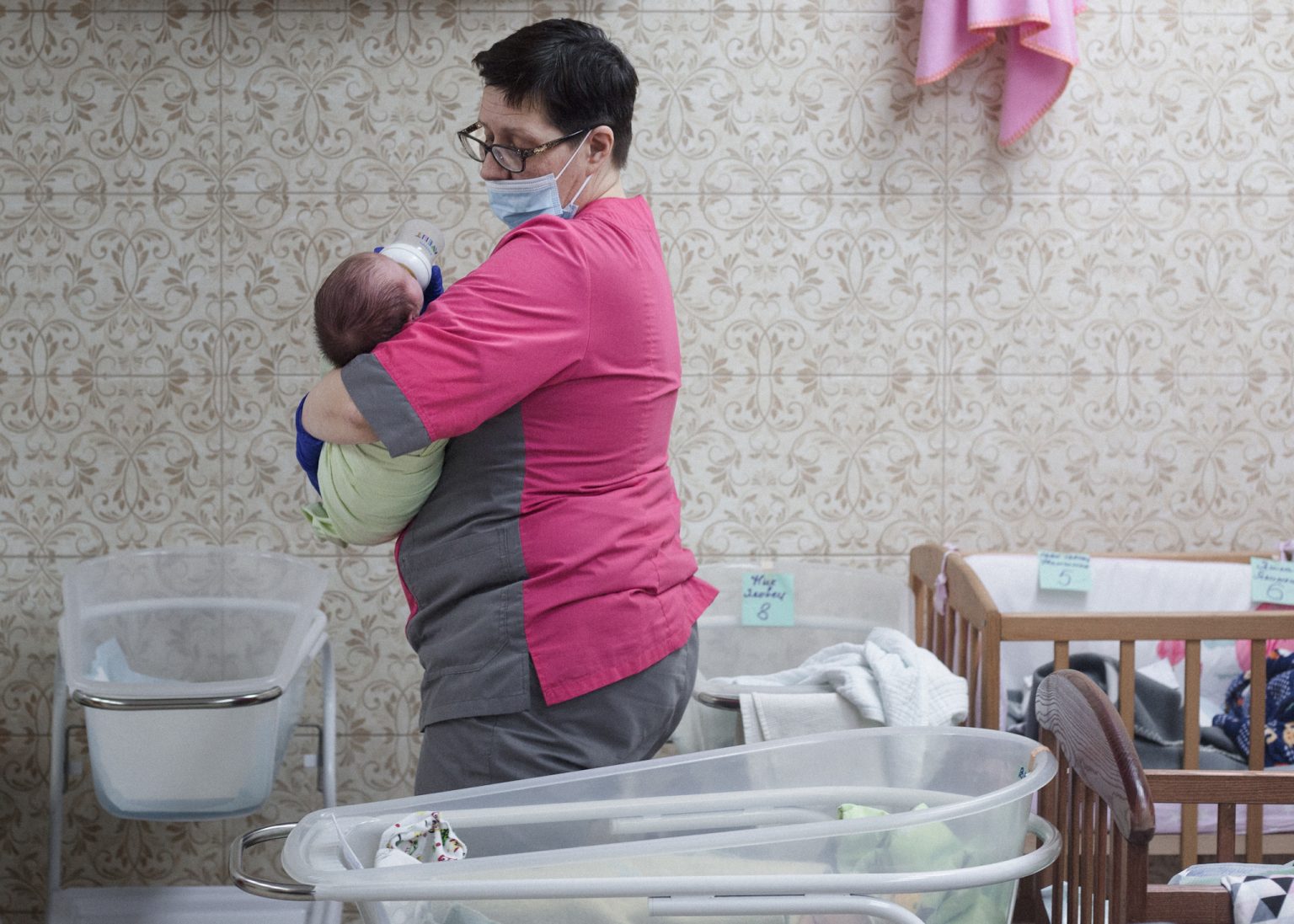
International surrogacy has come under renewed scrutiny over the past week. Photo: Anastasia Vlasova/Getty Images
|
After surrogacy made headlines around the world last week, a number of articles appeared in prominent media outlets that seemed designed to build support for the practice by raising fears that differences in national laws could leave children stateless.
A prominent German politician and one-time opponent of surrogacy, Jens Spahn, announced last week that he and his partner had acquired a child via surrogacy, despite the practice being illegal in his home country. It led to immediate public and political backlash, with Spahn resigning as leader of the Christian Democratic Union/Christian Social Union parliamentary group, which strongly opposes surrogacy.
Unsurprisingly, with global attention on the issue thanks to Spahn and amid the backlash, a number of pieces were run in prominent media outlets over the past week focusing on one of the issues surrogacy advocates say is caused by the differing regulations – the plight of stateless babies.
Germany is one of a number of European countries, including France and Italy, that ban the controversial reproductive practice, which also faces the opprobrium of sections of the European Parliament, as well as a number of United Nations experts.
Critics of surrogacy, including the UN’s rapporteur on violence against women and girls, Reem Alsalem, argue that it raises the risk of exploitation and trafficking of mothers and children, and the risk of adverse health outcomes.
However, the practice is legal in a considerable number of countries, most notably the United States and Ukraine, which account for a large proportion of the international surrogacy market.
This leads citizens such as Spahn, whose home countries ban surrogacy, to enter cross-border arrangements in jurisdictions where the practice is legal.
Anti-surrogacy campaigners have noted a sudden uptick in pro-surrogacy coverage over the past week.
The number of couples pursuing these arrangements is increasing. A study from the United Kingdom suggests the number of babies born through surrogacy has doubled since 2015, reaching almost 1,000 babies in 2025.
Stateless Children
With international attention on the issue, pro-surrogacy advocates have spent the past week arguing that as more gay couples and people affected by infertility seek to become parents, differing surrogacy laws from country to country lead to cross-border surrogacy arrangements and an increased risk that children will end up stateless.
This can happen when a country does not automatically grant nationality to a child born there and surrogacy is not legally recognized either in the country of birth or in the child’s final destination. The child may then be denied citizenship in both countries and left stateless.
The liberal newspaper The Guardian prominently quoted Professor Michael Hellner, who chaired an international working group for the Hague Conference on Private International Law (HCCH) that pushed for a framework for cross-border surrogacy. The working group collapsed earlier this year due to divisions between member states.
Hellner argued that a lack of coordination between states “leads to problems for the children and the risk of statelessness increases”. He blamed hugely differing opinions on the ethics of surrogacy between member states for this regulatory lacuna.
Hellner added that the HCCH’s efforts to establish a global surrogacy convention proved difficult because some countries were “violently opposed” to anything that could legitimize the practice.
Pressure From Surrogacy Advocates
His comments come as advocates in countries where surrogacy is illegal or only partially legal are pressing for updated surrogacy laws and international regulation. In the UK, just this weekend pro-surrogacy advocates claimed national legislation is “creaking at the seams” due to an increase in demand, leading parents to pursue “riskier” international arrangements.
The direction of travel is clear – governments in countries where surrogacy is illegal are being urged to respond to rising demand in the name of protecting children, who are put at risk because some countries allow the practice and others do not.
The laws are framed as the cause of the issue, but it is fair to ask if advocates are being transparent in this framing. After all, the issue of stateless children arises from citizens disrespecting the laws and policies of their own country in their desire to acquire a child.
If citizens did not circumvent domestic prohibitions, then statelessness would be less likely to come up as an issue, nor would they have to pursue “riskier” international arrangements.
If it truly is the case that child welfare is at the center of the surrogacy debate, then the answer is obvious: ban the practice outright.
While statelessness is a potential risk, exploitation and trafficking of children born via surrogacy have already occurred, including cases of single men turning up to claim children born via surrogacy, the discovery of dozens of surrogate-born children in Los Angeles mansions and the arrest of prominent figures within the international surrogacy movement on charges of child trafficking and abuse.
Coming to an international consensus to ban the practice entirely would not only solve issues arising from the risk of statelessness but also end the danger of children being exploited and trafficked.
But pro-surrogacy advocates are not satisfied with such an approach and instead campaign around difficult and emotive situations for parents and children, using these stories as the thin end of the wedge to drive their bid to legalize surrogacy internationally.
Already they have scored legal victories in Europe, with the French Court of Cassation ruling earlier this month that babies born to a surrogate mother abroad should be legally recognized as their intended parents’ children. It follows a 2019 advisory opinion from the European Court of Human Rights issued at the request of the French court.
However, as the backlash to Spahn shows, while surrogacy advocates have had some legal successes, they are by no means winning the battle for public opinion and political support, despite their best efforts.
Welcome to the comments section of the Štandard daily. Please take note of our guidelines, comments are moderated by us. You can contact the moderators at support@statement.com.
Participate in the discussion
Comments are available to subscribers only. If you'd like to join the discussion, choose a subscription starting at €6.72 per month.
All comments 0
Register
Comments are available to registered users only. If you'd like to join the discussion, register here.