Paris's Water-Saving Plan Is Killing Its Own Trees
Paris likes to boast about the thousands of trees it plants each year. Quietly, neglected irrigation and crumbling infrastructure are condemning the city's historic green spaces to decline.
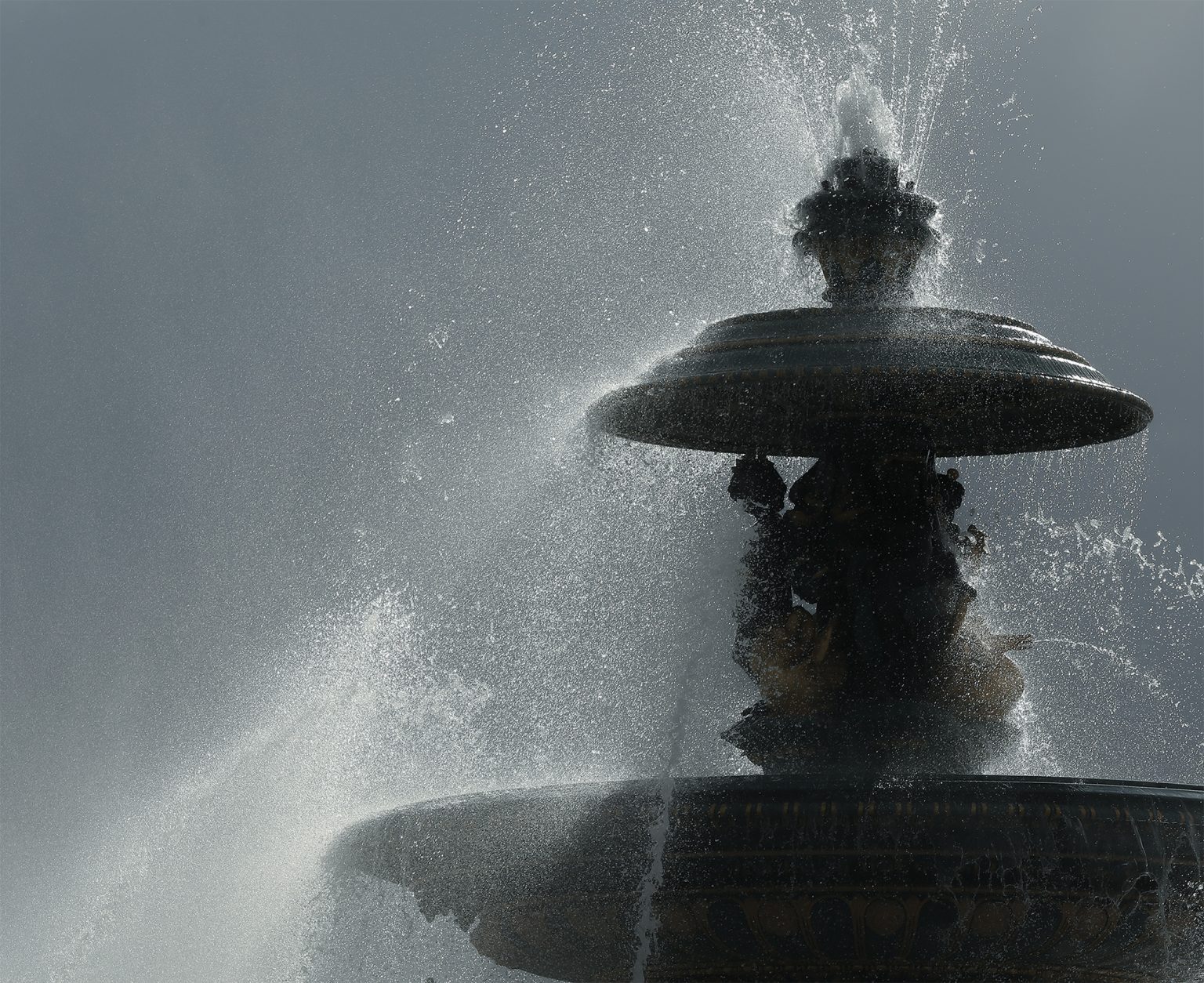
The Fontaine des Mers in Paris on 14 March 2026. Photo: Klaudia Radecka/NurPhoto via Getty Images
|
For years, the disastrous policies of the environmentalist-socialist alliance running Paris have been disfiguring France's capital. As heat wave follows heat wave, one particularly damning aspect of municipal negligence is coming to light: the slow, orchestrated death of trees and green spaces, all in the name of water conservation.
The City of Paris's promotional materials tell a different story. Often AI-generated, they show lush, vibrant-green trees lining neighborhoods supposedly renovated and redesigned to meet the climate emergency. This is a city notoriously heavy on concrete, ill-suited to extreme heat. A whole lexicon has sprung up to describe this fantasized reality. Projects for "urban forests", "green oases" and "vegetated sidewalks" abound, each designed, on paper, to conjure a sense of coolness for residents.
The reality is quite different. Passersby strolling through the capital's streets see stunted, parched trees and piles of dead leaves. Fall has not even begun.
According to an alarming column by the organization Aux arbres citoyens, written by architects Dominique Dupré-Henry and Tangui Le Dantec, the city government has drastically cut back on watering gardens and tree-lined streets as part of a water conservation plan. The consequences are dire. The youngest trees are dying. The others are suffering and losing their leaves.
Conserving water, a scarce resource, starts with good intentions in and of itself. But, as the French proverb goes, the road to hell is paved with good intentions.
If the goal is to help the city adapt to heat waves by creating cooling green spaces, the very least the city can do is water the trees. That is not the case. "Many trees in Paris will perish, not because of climate change but because the city has chosen to conserve water in the name of ecology, even though the only way to save them was to water them", lament the two architects, who have been denouncing the disaster of municipal management for years.
There is another form of collateral damage: the fountains. They are deliberately left empty, even though they could serve as welcome oases of coolness during hot weather.
A Forgotten Water Network
The situation is all the more tragic given that Paris possesses a resource unique in the world. An underground network of non-potable water, designed in the 19th century, comprises a total of 1,700 km of pipes that irrigate the entire city.
The network dates back to the Second Empire, at the height of the major urbanization projects led by Baron Haussmann, which gave the capital the look it has today. Two men, the architect Gabriel Davioud and the engineer Adolphe Alphand, designed the city's green spaces during this period. Their work became a model for the rest of the world. The idea was simple: no resident should be far from a green space, whether a park, a garden or a tree-lined avenue. A non-potable water network, designed by engineer Eugène Belgrand, made this ambitious project possible. His plan was extremely innovative for the time. It reserved potable water for domestic use and relied on less-treated water for technical purposes, thereby conserving resources.
The problem is that this system is in an advanced state of disrepair. While it could play a crucial role in cooling the city, it suffers from chronic neglect. Its cast-iron pipes, dating back more than 150 years, have not been replaced. Rather than undertaking their restoration, the current city administration has chosen to shut down 30% of the system.
The first to suffer are the lawns and trees. The second are the Parisians themselves. The third are the tourists, who are forced to acknowledge that the city has lost much of its appeal, with its parterres that look like stale bread and its empty fountains where trash piles up.
The Numbers Game
At City Hall, the death of Paris's trees is not a problem. It even fuels officials' proactive public relations campaign, as expert gardeners and landscape architects point out.
City Hall likes to announce that it has planted “170,000 trees”, the goal for this term of office. But the figure lumps together street trees, trees replanted after being cut down, and even shrubs planted on roadside embankments. These are entirely different things.
In Paris, the city plants and transplants trees in defiance of common sense. It cuts down century-old trees for dubious redevelopment projects, even though these are the trees that offer the greatest environmental benefits. Others go unwatered. They die. They are eventually replaced, ostensibly "due to disease". This allows the city to proudly showcase staggering figures in support of urban greening whenever new plants go in the ground.
For architect Le Dantec, the city's communications highlight the number of trees planted with obvious disingenuousness. The data says nothing about how many trees were removed, the actual net change in the city's tree population, or the potential loss of large, mature trees. What matters is the net result. Above all, what matters is the quality of the surviving tree population. None of this holds any interest for City Hall officials.
Meanwhile, residents can only watch their environment deteriorate. They lament, in vain, that what they see before their own eyes does not match the official narrative. All of this smacks of Soviet-style propaganda. But that does not matter: the left has long since mastered the art of denying reality.
Welcome to the comments section of the Štandard daily. Please take note of our guidelines, comments are moderated by us. You can contact the moderators at support@statement.com.
Participate in the discussion
Comments are available to subscribers only. If you'd like to join the discussion, choose a subscription starting at €6.72 per month.
All comments 0
Register
Comments are available to registered users only. If you'd like to join the discussion, register here.