According to the family, Stegemann had always refused to be killed via MAiD. She was a devout Christian who wanted to die a natural death. But while her granddaughter was away on a 10-day trip, the subject apparently resurfaced. It was during this very period that she submitted a request for euthanasia. The family said they could not determine who had initiated the renewed conversations about an assisted death.
A Question of Capacity
When her granddaughter returned, Stegemann was reportedly caught off guard by the appointment, which had already been scheduled. According to the family, she cried and asked whether she really had to die on Friday, saying at one point that she had made a mistake.
The family also questions the assessment of Stegemann's decision-making capacity. According to the relatives, she was unable to correctly answer certain questions about her own life during related conversations. She reportedly did not know, for instance, that she had been one of 14 siblings or that some of them were still alive. She was nonetheless assessed as having decision-making capacity.
When Consent Can Be Waived
Canada's MAiD system sets out several requirements for death on request. The person concerned must have decision-making capacity, must act voluntarily and must give informed consent. Two qualified physicians or nurse practitioners must confirm that these conditions are met. In principle, the person must also be given one final opportunity, immediately before the lethal medication is administered, to withdraw consent.
Canadian law does, however, allow exceptions to this final consent requirement in certain cases. If a patient has already given written consent and is at risk of losing decision-making capacity, renewed explicit consent immediately before death can, under certain conditions, be waived. But if the person shows resistance or refusal through words, sounds or gestures, the killing may not go ahead.
Without a Final Word
It remains unclear which of these provisions applied in Stegemann's case. The family says they had been assured that the treating physician would seek her explicit consent once more, immediately before administering the medication. According to the relatives, that did not happen.
On 10 July, the family's account goes, Stegemann first sat on the nursing home's terrace eating strawberry ice cream while she waited for her pastor. She was later brought to her room, where she folded her hands in prayer. She gave no explicit verbal consent at that moment. The lethal medication was then administered.
From Exception to Routine
The case comes at a time when Canada's MAiD program has expanded significantly since its introduction. Canada legalized medical assistance in dying in 2016, initially under comparatively narrow conditions, but the rules have since been amended multiple times. Among other changes, the requirement that natural death be imminent was dropped for certain groups, and exceptions were introduced to the once strictly mandatory final consent requirement.
Canada's department of health describes this as a legal framework that has continuously evolved since MAiD's introduction. With each expansion, a new group of people became eligible for a medically assisted death.
This shift changed not only the role of the state but also that of the healthcare system. An act once treated as a criminal offense was initially permitted only in narrowly defined exceptional cases. Within just a few years, however, those exceptions had grown into a regulated medical procedure, to the point that hospitals now employ MAiD coordinators who proactively present euthanasia to patients, unprompted, as just another treatment option.
The Slippery Slope
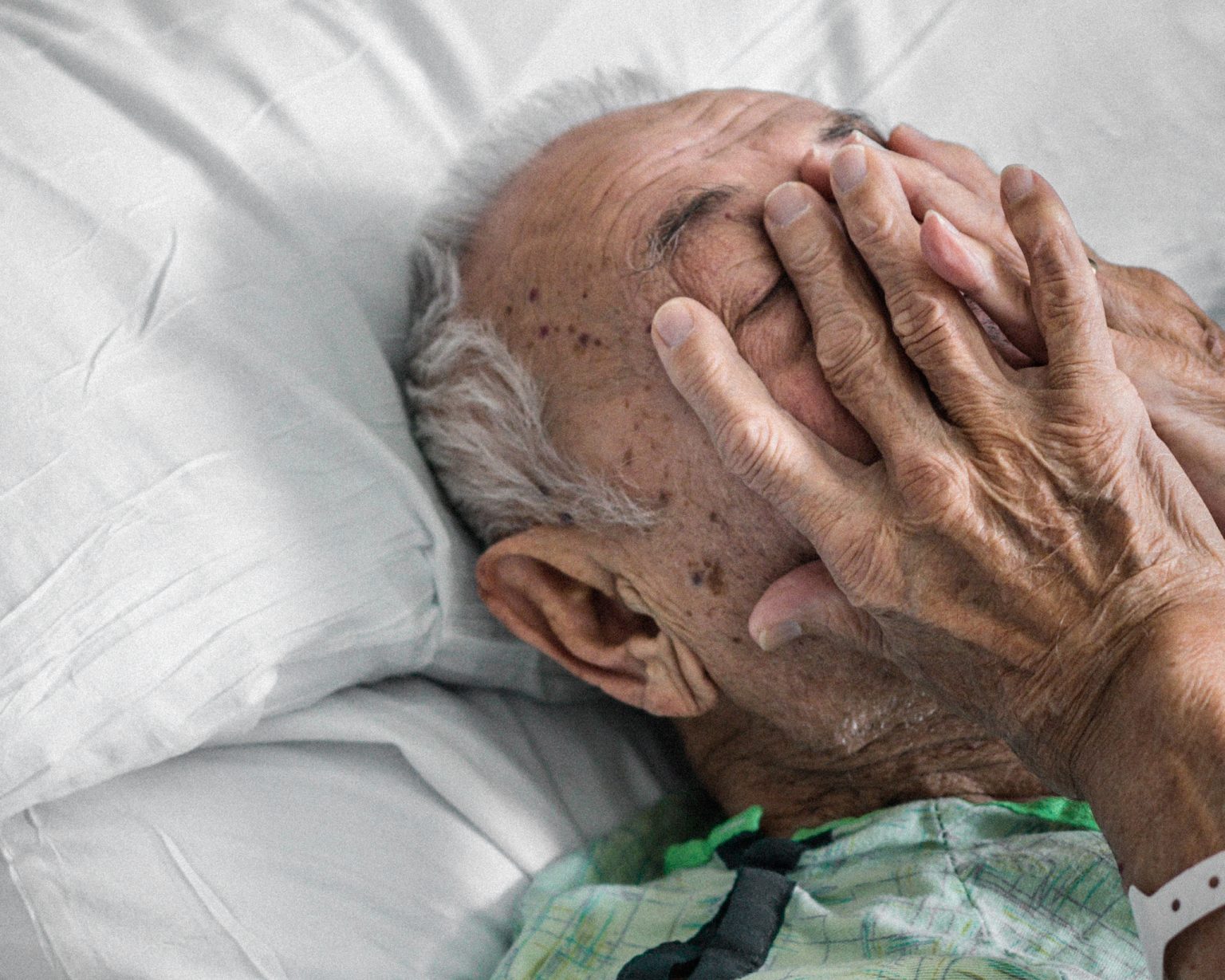
The Stegemann case raises questions about how the system treats especially vulnerable people. An 83-year-old woman with cancer, significant hearing loss and, her family says, declining orientation, lived in a facility where strangers had been entrusted with her care, her medication and the scheduling of her appointments.
In the end, it was this same environment that arranged her death. Whether Canadian law or medical regulations were violated in the process has yet to be examined. But the family's accusation stands: that the patient was deliberately steered toward her own death.
Regardless of that question, the Stegemann case exemplifies a broader trend. What is sold today as a right to die could become an obligation tomorrow, leaving the severely ill, burdensome and costly patient to justify his insistence on staying alive.
German Catholic social ethicist Manfred Spieker put it succinctly in a 2025 lecture at the Cologne University of Catholic Theology: wherever continuing to live is merely one of two legally available options, every seriously ill person becomes accountable for that choice. Like other experts, Spieker warns of a "slippery slope" in end-of-life care, in which assisted suicide turns into euthanasia on request, and euthanasia on request turns into euthanasia without request.