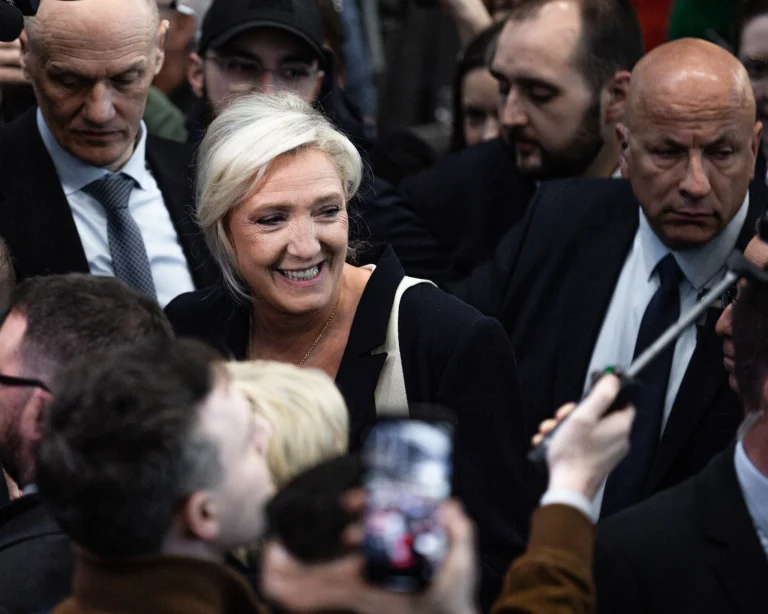
As Mélenchon denounces white, Catholic France, he is staking his presidential ambitions on the country’s demographic transformation.
Mélenchon has turned against France’s historic working class, betting instead on an electorate shaped by immigration and Islam. Photo: Sylvain Lefevre/Getty Images
|
For several months now, Jean-Luc Mélenchon, president of the far-left party La France Insoumise (LFI) has been intensifying his attacks on what he seems to view as the old France – white and Catholic – while celebrating the emergence of a new France.
As the presidential election approaches, the Insoumis leader appears determined to push his rhetoric of identity-based confrontation even further, risking the confinement of his party to an electorate incapable of securing him a national majority.
This shift is by no means trivial. It appears to be part of a strategy that is both ideological and electoral: definitively turning away from a segment of the former left-wing electorate to build a new majority centered on minorities, immigration and, in particular, Muslim communities.
In March, in Saint-Denis, Mélenchon launched into a strange digression on the origins of the architectural techniques used in French cathedrals. After explaining that some of their forms originated in the Middle East, he turned to his audience and declared, “You are all white, you are all ugly”. The remark sparked a national controversy, which his colleague MP Mathilde Panot immediately dismissed as “a minor provocation”, insisting that Mélenchon was speaking about the history of the human race.
A few weeks later, the leader of LFI crossed a new line. On 9 April, at the Institut La Boétie, he declared: “If you are counting on white Catholic workers to bring about socialism in France, it will not happen.” The remark is revealing. The man who was long considered one of the heirs to the labor left is no longer seeking to win back that electorate. He now seems to regard part of it as politically lost.
Dropping the Working Class for a New Coalition
This shift, however, did not begin with Mélenchon. It had been theorized 15 years earlier by Terra Nova, the leading think tank affiliated with the French Socialist Party. In its 2011 report, The Left: What Electoral Majority for 2012?, the foundation made an observation that would profoundly shape the debate on the left’s electoral strategy: “It is no longer possible for the left to seek to restore its historic class-based coalition.” The working class, the report explained, “is no longer the core of the left-wing vote” and could no longer serve as the driving force behind its electoral majority.
Terra Nova therefore proposed building a new electoral coalition – one that was younger, more urban, better educated, more female and composed of a greater proportion of minorities. Strictly speaking, this was not a matter of mechanically substituting immigrants for workers, but rather of acknowledging a profound transformation in the electoral sociology of the left: from now on, the left had to rely less on a social class than on an alliance of culturally more progressive groups.
Mélenchon seems to have taken this logic much further. Where Terra Nova described the end of the working-class coalition using the subdued vocabulary of electoral sociology, LFI now offers a much more confrontational interpretation of it. The problem is no longer simply a matter of finding a new majority; it is about defining who belongs to the France of tomorrow and who represents the France of yesterday.
Mélenchon’s “white, Catholic workers” are precisely the embodiment of this old France. They are simultaneously white, Catholic and from the working class: three characteristics that, each in their own way, set them apart from the new electorate favored by the radical left.
Immigration, LFI’s New Electoral Reservoir
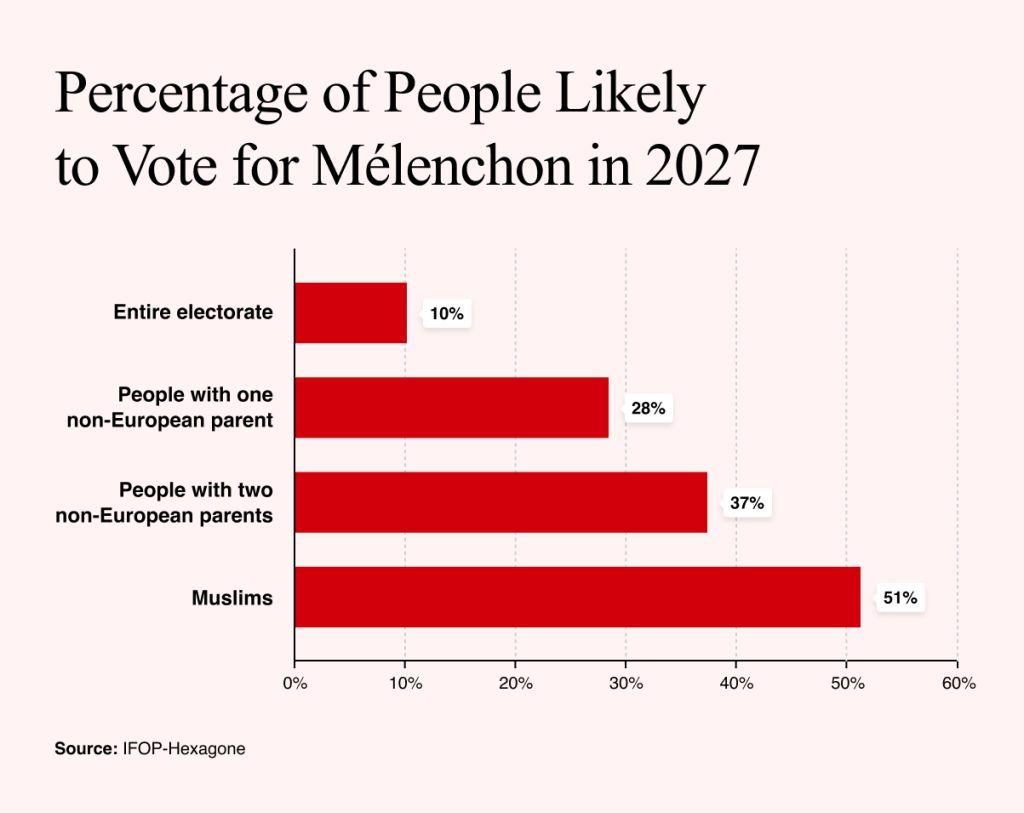
The research of the Observatory on Immigration and Demography (OID) sheds welcome light on this bias. In one of its recent reports, OID Director Nicolas Pouvreau-Monti estimates that approximately 7.5 million French citizens of voting age come from an immigrant background – whether they are naturalized immigrants or descendants of immigrants who have acquired the right to vote. Above all, his analysis reveals strong correlations between the presence of young populations of immigrant origin and LFI’s election results, particularly in Seine-Saint-Denis and in several neighborhoods of Marseille.
Source: IFOP-Hexagone
The phenomenon is particularly striking when considering the Muslim electorate. Drawing on recent polls, Pouvreau-Monti highlights the fact that this group constitutes a large pool of potential voters for Mélenchon’s party: 59% of Muslims in higher socioeconomic categories stated that they intended to vote for Mélenchon in 2027, compared to 58% in lower socioeconomic categories. Economic factors therefore appear insufficient to explain this alignment: immigrant background or religious affiliation appear to play a decisive role.
Mélenchon’s strategic choice thus becomes more understandable. If a large portion of the traditional working class has drifted away from the left – notably toward the Rassemblement National (RN) – why devote efforts to winning back this electorate? Another majority may be taking shape: that of the new France, of which LFI sees itself as the vanguard.
The Far Left’s Marriage with Islamism
This electoral shift is accompanied by an ideological one. The Palestinian cause has become one of the main points of convergence for LFI and certain Islamist networks, fueled by an ill-fated alliance between the far left and Islamism. An investigation conducted for Le Figaro Magazine notably highlighted the ties forged by LFI leaders with activists close to Islamist movements, as well as the increasingly frequent references to their vocabulary and symbols.
LFI has made the fight against Islamophobia, the defense of the Palestinian cause and the denunciation of racism central tenets of its political identity. At the same time, it enjoys exceptionally high support among the Muslim electorate. Electoral calculations and ideological evolution thus reinforce one another.
In this context, Mélenchon’s statements about white people and Catholics take on their full meaning. The remarks clearly reflect his taste for provocation. Yet unlike similar provocations by Jean-Marie Le Pen on the right, they have not drawn the same level of media condemnation. More importantly, they help define the contours of the new political community Mélenchon seeks to build.
A Risky Bet
It remains to be seen whether this strategy can actually win a presidential election, as winning over a committed electorate and controlling certain urban areas is not enough to secure a national majority.
Mélenchon’s gamble could prove risky. By so insistently portraying white, Catholic France as a thing of the past, he risks provoking a reaction directly opposed to the one he seeks: uniting against him all those who refuse to see their country redefined in defiance of its history, culture and traditional population.
Mélenchon has understood that demographics are gradually transforming the French electoral landscape. But this same demographic shift is also fueling a political backlash in regions and among segments of the population that feel marginalized by this change. Immigration is therefore not only transforming the left-wing electorate; it is also helping to bolster support for the Rassemblement National (RN) among parts of the population.
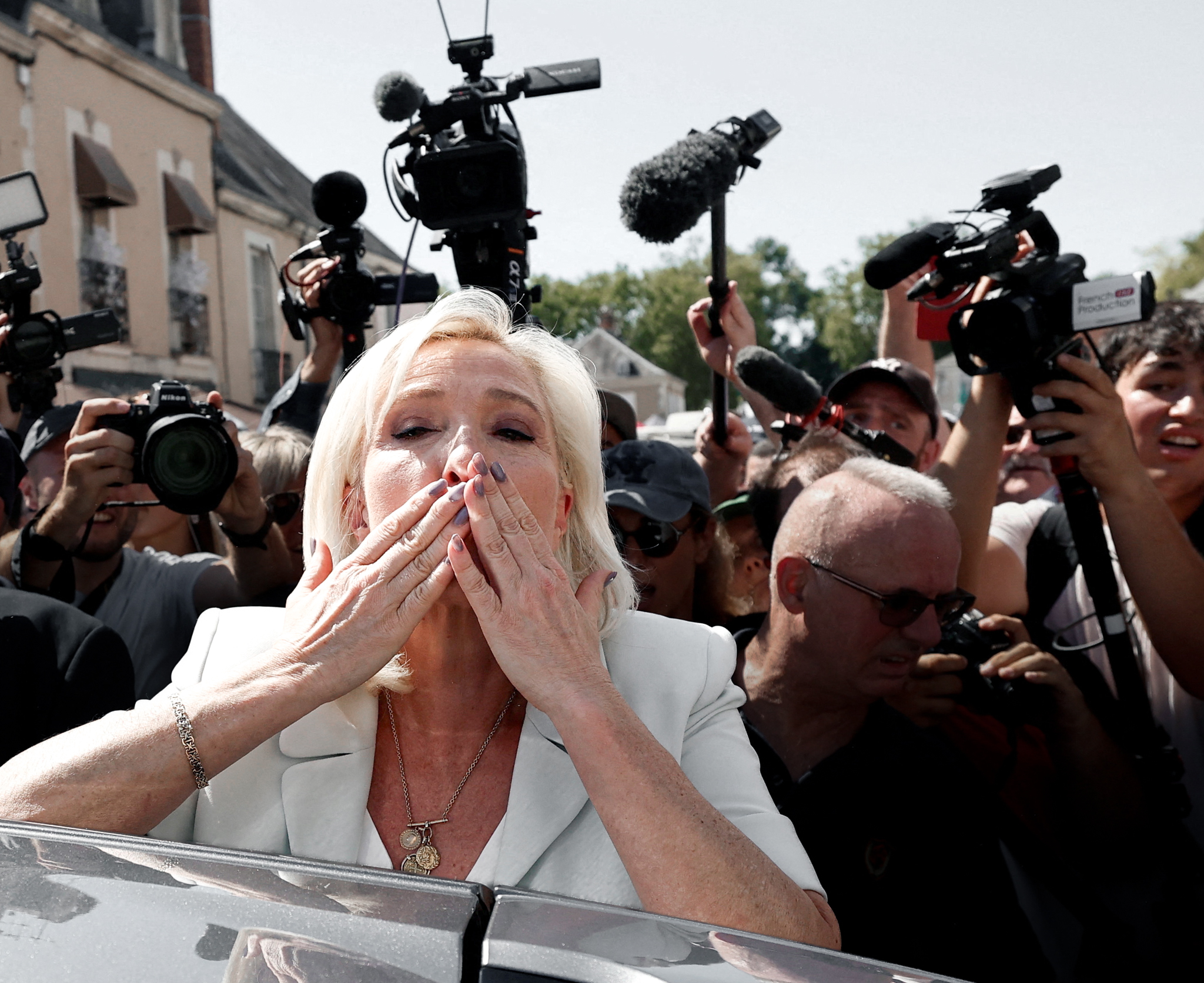
A runoff between Marine Le Pen and Jean-Luc Mélenchon would perfectly illustrate this paradox. An Ifop poll from July 2026 showed Marine Le Pen winning by a wide margin in this scenario: 70% to 30% – the best result she could hope to achieve. Mélenchon may well hope to win over the new France, but he runs a high risk of rallying a majority of French people against it.
Welcome to the comments section of the Štandard daily. Please take note of our guidelines, comments are moderated by us. You can contact the moderators at support@statement.com.
Participate in the discussion
Comments are available to subscribers only. If you'd like to join the discussion, choose a subscription starting at €6.72 per month.
All comments 0
Register
Comments are available to registered users only. If you'd like to join the discussion, register here.