In February 2026, National Assembly President Yaël Braun-Pivet announced the suspension of the project, as it did not comply with the requirements of the 7th arrondissement’s preservation and enhancement plan – notably due to its excessive height and the need to excavate underground spaces.
Back from the Dead
The project was thought to be dead and buried – but that was not the case, and now it has resurfaced in the middle of summer. In fact, in July, with a view to constructing this new pavilion, the prefect of Île-de-France had initiated a procedure to amend the urban planning regulations applicable within this protected zone, which required consultation with the City of Paris, the Architecte des Bâtiments de France and the local commission for remarkable heritage sites. During the session held from 15 to 18 July 2026, the Paris City Council issued a favorable opinion on the project.
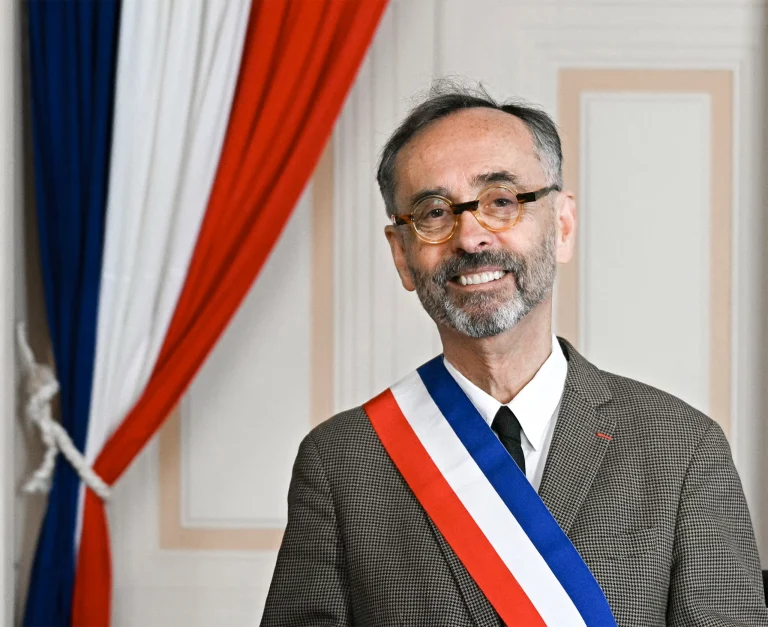
The procedure has therefore been restarted. In his explanatory statement, Socialist Mayor Emmanuel Grégoire noted that “the proposed buildings are in line with the scale of existing structures and were designed in accordance with the site’s architectural and heritage characteristics”, emphasizing that the new pavilion “follows the compositional principles of the historic façade of the Palais-Bourbon”.
Anyone who looks at the renderings of the future pavilion cannot help but be appalled upon reading this opinion.
Known only to a few insiders at first, the scandal has gained momentum, thanks in large part to the mobilization of Paris enthusiasts and heritage preservation groups, who have widely shared on social media the images of the eyesore that is about to rise from the ground. Prominent figures have joined the chorus of protests: Stéphane Bern, the iconic Mr. Heritage; rapper Joey Starr and a whole host of lawmakers from both the right and the left. Parisian heritage organizations have also opposed the project. For instance, the Paris Historique organization “remains resolutely opposed to the project, which would irrevocably shatter the harmony of an exceptional architectural ensemble”. The Commission du Vieux Paris has expressed “its firm and unanimous opposition”.
The battle is raging. Opponents of the new pavilion are, of course, branded as far-right.
Heritage Rules Bypassed
Yet this mobilization comes as no surprise. The construction project raises numerous issues. To begin with, there is the building’s questionable aesthetic, which, for ideological reasons, enjoys a level of approval in the corridors of power that is completely disproportionate to its physical reality. But above all, there is the circumvention of the preservation procedures meant to prevent this sort of architectural intervention, thanks to the involvement of high-ranking figures, such as the mayor of Paris.
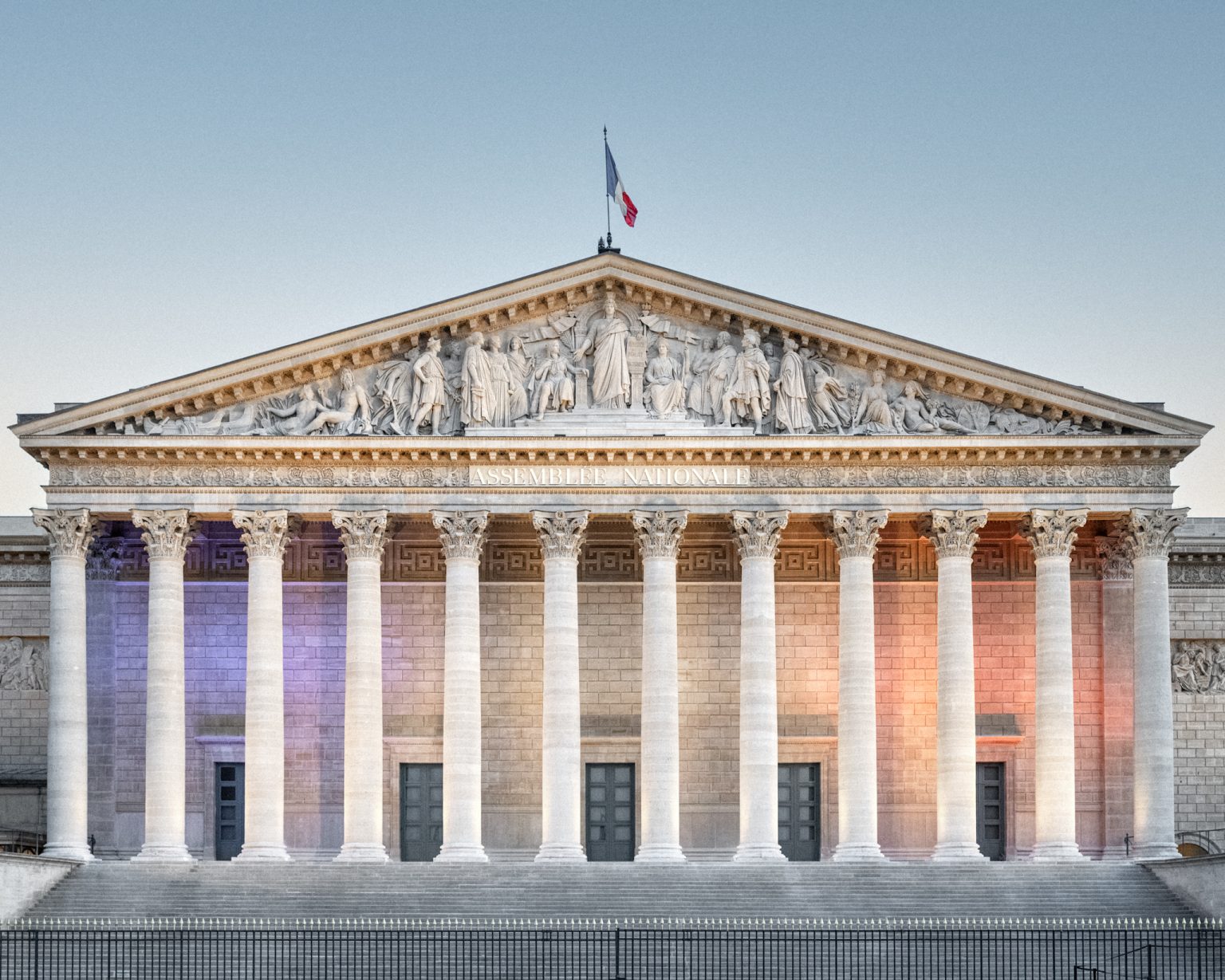
The Palais Bourbon, located in Paris’s 7th arrondissement, is designated as a remarkable heritage site – a classification that imposes certain restrictions on the construction and alteration of historic buildings. That does not matter. The banks of the Seine are designated as a UNESCO World Heritage Site. That does not matter either. Through the will of a few, anything becomes possible.
The vista leading to the Palais Bourbon is one of the most elaborate in Paris. Facing it, on the right bank of the Seine, stands the Church of La Madeleine, which also echoes the style of an ancient temple. The two neoclassical façades harmoniously mirror each other on either side of the river that flows through the capital. The construction of the new visitor center would destroy this near-perfect symmetry.
And to what end? Art historian and heritage enthusiast Pierre Téqui mocks the building’s intended purpose, which will mainly be to serve coffee in paper cups and sell tricolor key chains or caps made in China.
The Tide Is Turning
The debate eventually made its way onto the national television news, in no uncertain terms: “A project that raises eyebrows at a time when our country is engaged in a perpetual quest for cost savings. The National Assembly must shell out nearly 53,000,000 euros for the renovation of one of its buildings”, the news anchor explained on the evening of 8 August.
Supporters of this absurdity are beginning to sense the tide turning. Yaël Braun-Pivet said she was a bit “overwhelmed” by the controversy. Officials are starting to explain to the press that the amendment to the zoning plan is not linked to any specific project, or that the approval process will still take a very long time. The minister of culture is sidestepping the issue, stating that the project presented today is “not necessarily the one that will be carried out”.
But the reality is different. The resolution passed by the Paris City Council explicitly refers to the project by the Moatti & Rivière agency chosen by Braun-Pivet and specifies that “the amendment is a relatively quick procedure”. The request to amend the urban planning document was made by the Île-de-France prefecture, through the ministry’s administration.
Mired in scandal and sensing growing discontent – the petition has surpassed 130,000 signatures – supporters of the project no longer dare to stand by their decision. There is still time to backtrack.
This case highlights the importance of civil society mobilizing through its own channels to put pressure on elected officials and decision-makers, who do not always act in the interest of the common good.